
RV Shore Power and Inverter-Charger Wiring Diagram
Shore power, an inverter-charger, roof solar and the battery bank, all in one RV wiring diagram.
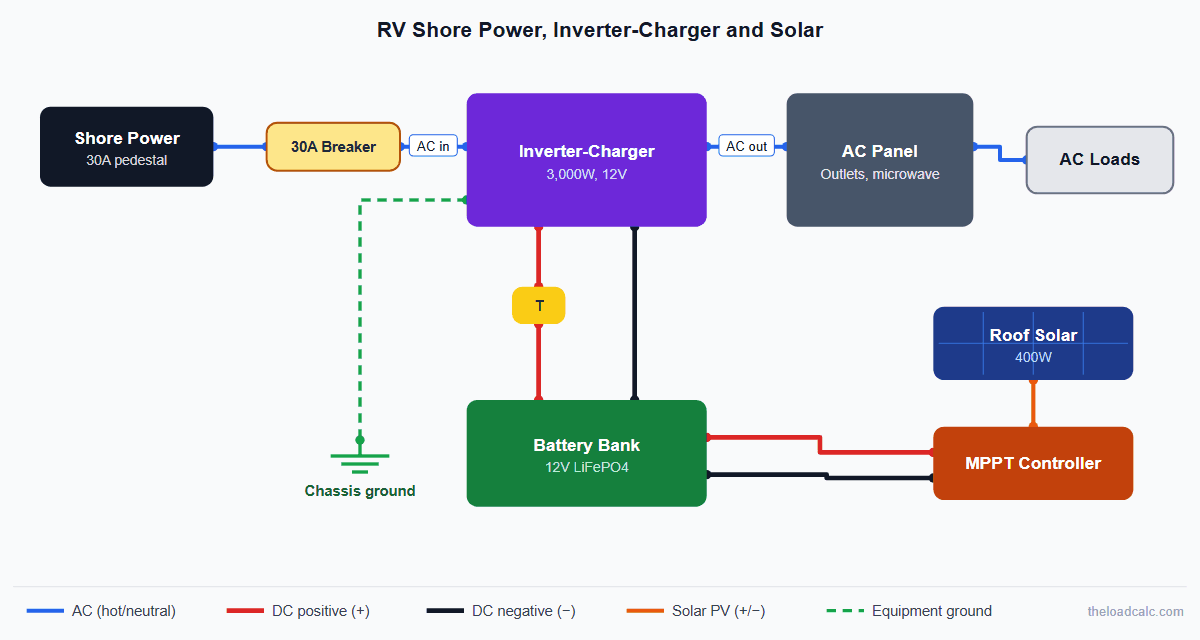
Most RV electrical systems revolve around an inverter-charger. Plugged into shore power, it passes AC through to the RV's panel and charges the batteries. Unplugged, it inverts battery power to run the same outlets. Add roof solar with its own charge controller and you have a system that works at campgrounds and off-grid alike.
Key takeaways
- Shore power enters through a breaker, then the inverter-charger's AC input.
- The inverter-charger's AC output feeds the RV's AC panel, whether on shore power or battery.
- The battery cable to a 3,000W 12V inverter carries up to about 300A. It needs 4/0 AWG and a Class T fuse.
- Solar charges the battery through a separate MPPT controller.
Components
| Component | Typical spec | Role |
|---|---|---|
| Shore power inlet | 30A (TT-30) or 50A (14-50) | Brings campground power in |
| Input breaker | 30A or 50A | Protects the inverter-charger input |
| Inverter-charger | 2,000-3,000W, pure sine, with transfer switch | Inverts, charges and transfers |
| Class T fuse | 300-400A for 3,000W at 12V | Protects the main battery cable |
| Battery bank | 12V LiFePO4, 200-600Ah | Stores energy |
| MPPT controller | Sized to the roof array | Charges from solar |
Step-by-step wiring
- 1Wire the shore inlet through the input breaker to the inverter-charger AC input terminals.
- 2Run the inverter-charger AC output to the RV's main AC panel. Outlets you want powered off-grid must be on this panel.
- 3Connect the battery to the inverter-charger with short, heavy cables and a Class T fuse within inches of the battery.
- 4Connect the MPPT controller to the battery bus with its own fuse, then connect the roof array.
- 5Bond the inverter-charger chassis to the RV chassis ground.
- 6Set the charger profile, shore input current limit and low-battery cutoff in the inverter settings.
Disconnect all sources before working, follow the equipment manuals and local electrical codes, and use a licensed electrician for work on home wiring and panels.
Shore input current limit
Set the inverter-charger's input current limit to match the pedestal (30A or a 15A household outlet). It then reduces charging when the RV's loads rise, so you do not trip the campground breaker. Some units can even add battery power on top of shore power when a load exceeds the limit.
Converting from lead-acid to lithium? The charger settings and converter are covered in our RV lithium upgrade guide.
Neutral-ground bonding in an RV
On shore power, the neutral-ground bond is at the campground. When inverting, the inverter-charger must create its own bond, and most RV-rated units switch this automatically. Use a unit designed for RV use, and do not add a separate bond in the RV panel. For the general principles see the grounding diagram.
Common mistakes
- Leaving the old converter connected so it fights the new charger.
- Undersizing the inverter battery cable or skipping the Class T fuse.
- Putting outlets you need off-grid on a circuit the inverter does not feed.
- Using a non-RV inverter that does not manage neutral-ground bonding.
Frequently asked questions
Does an inverter-charger replace the RV converter?
Usually, yes. Its charger replaces the converter's charging role. If you keep the converter for DC loads, disable its charging so the two do not conflict.
What size cable for a 3,000W 12V inverter?
Up to about 300A, so 4/0 AWG for short runs, with a Class T fuse of around 350-400A per the inverter manual.
Can solar and shore power charge at the same time?
Yes. Both chargers feed the battery, and each regulates its own output.
Size your RV inverter
Add your AC loads to find the right inverter and battery size.
Related diagrams and guides
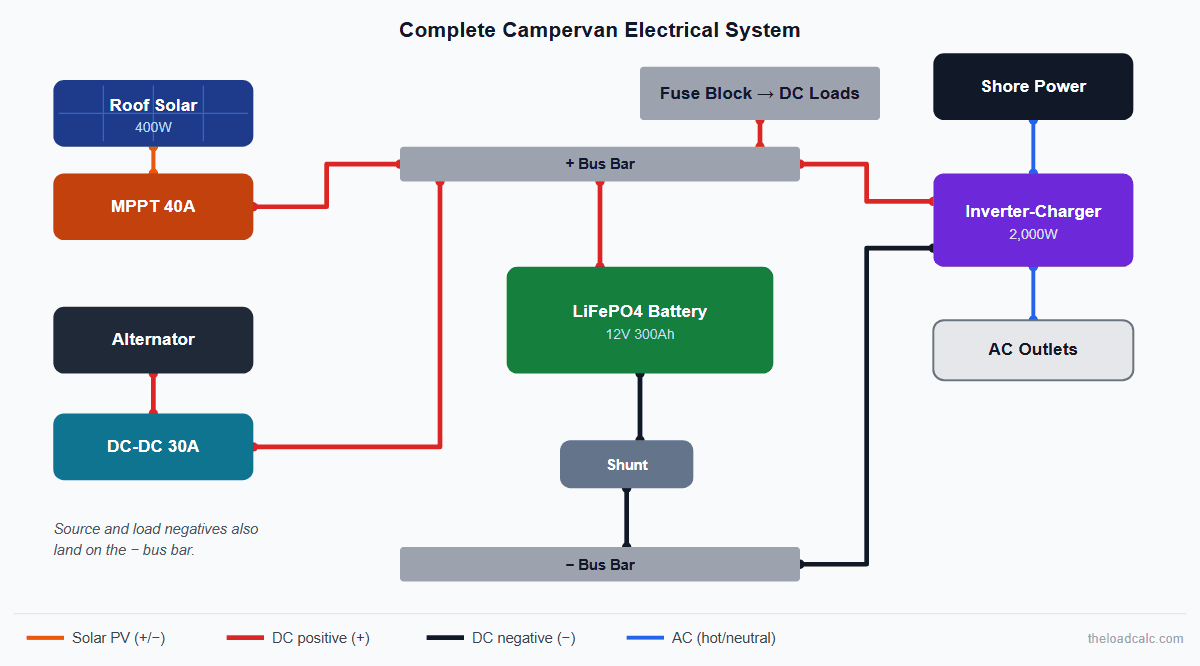
Complete Campervan Electrical Wiring Diagram
Solar, alternator and shore charging into one LiFePO4 battery, with bus bars, shunt, fuse block and inverter-charger.
Read more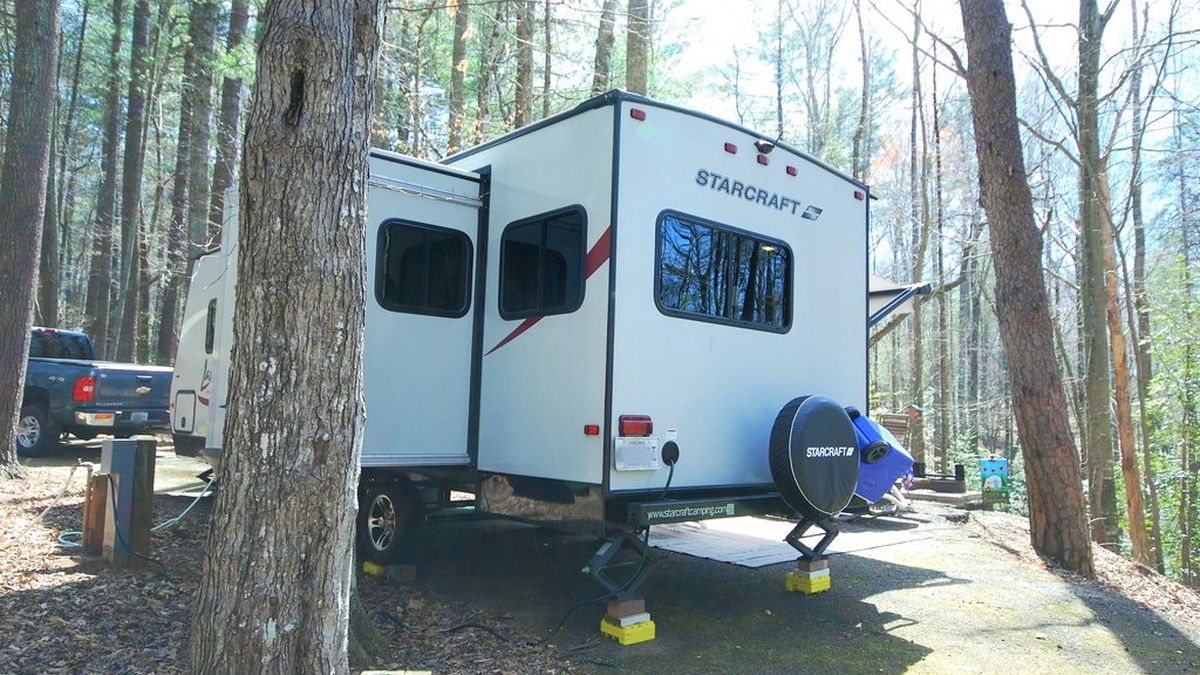
Upgrading Your RV to Lithium Batteries: A Complete Guide
Swapping lead-acid for LiFePO4 is more than a battery swap. Chargers, the alternator and monitoring all need attention.
Read moreRV Power Systems: Complete Guide
How to power your RV with solar panels, batteries, inverters and generators, and build the right system for life on the road.
Read more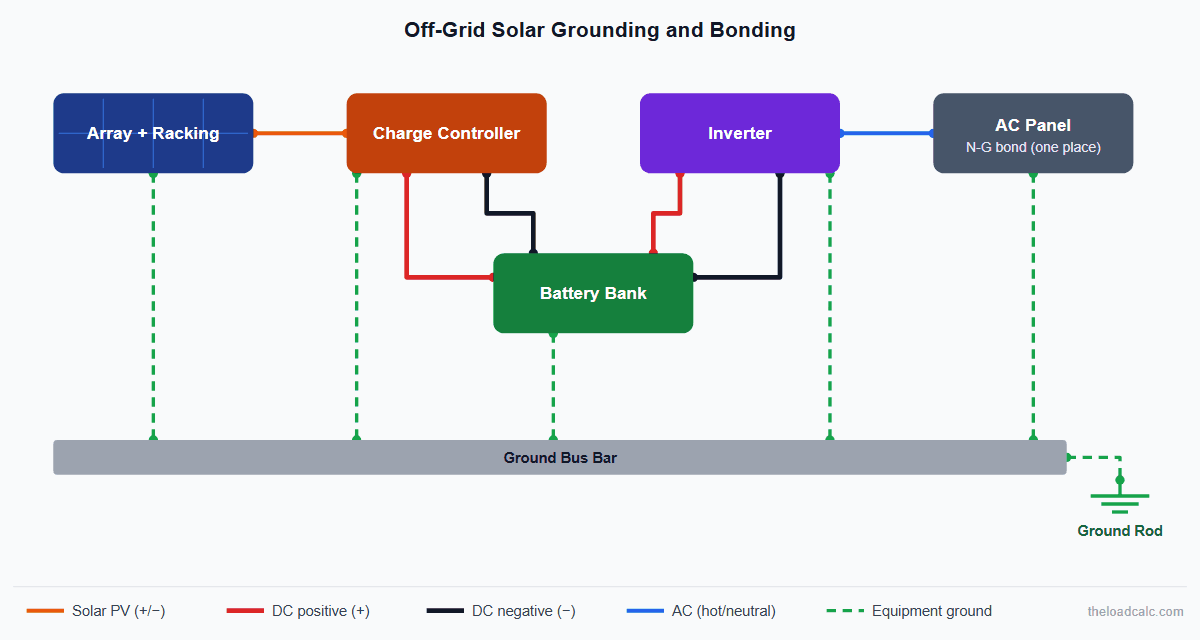
Off-Grid Solar Grounding and Bonding Diagram
Equipment grounds, the single DC bond and neutral-ground bonding explained in one diagram.
Read more