
Off-Grid Solar Grounding and Bonding Diagram
Equipment grounds, the single DC bond and neutral-ground bonding explained in one diagram.
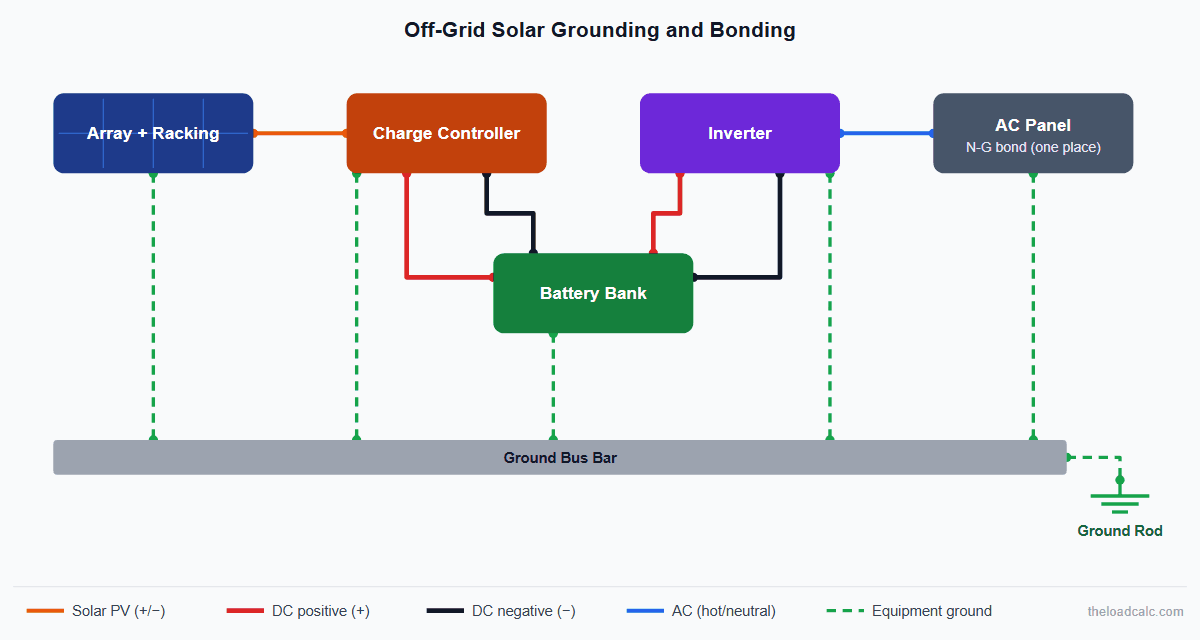
Grounding and bonding are the most misunderstood parts of solar wiring. Equipment grounding connects metal frames and enclosures so a fault trips a breaker instead of energizing the metal. Bonding connects the system's current-carrying conductor (DC negative or AC neutral) to ground in exactly one place.
Key takeaways
- Every metal frame and enclosure gets an equipment grounding conductor back to the ground bus.
- Bond DC negative to ground at one point only, if your system design calls for it.
- Bond AC neutral to ground at one place only, usually the main AC panel or the inverter.
- Connect the ground bus to a grounding electrode (ground rod) as local code requires.
Components
| Component | Typical spec | Role |
|---|---|---|
| Ground bus bar | In or near the main panel | Collects equipment grounds |
| Equipment grounding conductors | Sized per code to the circuit protection | Bond frames and enclosures |
| Grounding electrode | Ground rod(s) or other approved electrode | Earth connection |
| Grounding electrode conductor | Sized per code | Bus to rod |
| Array bonding hardware | Listed lugs or bonding clips | Ground panel frames and racking |
Step-by-step wiring
- 1Bond solar panel frames and racking with listed grounding lugs or bonding clips, and run an equipment ground from the array.
- 2Run equipment grounding conductors from the charge controller, inverter and battery enclosure to the ground bus.
- 3Make the single DC negative-to-ground bond where the manufacturer and code specify (some systems are left ungrounded).
- 4Make sure AC neutral is bonded to ground in one place only. Remove extra bonds in subpanels.
- 5Connect the ground bus to the grounding electrode with an appropriately sized conductor.
Disconnect all sources before working, follow the equipment manuals and local electrical codes, and use a licensed electrician for work on home wiring and panels.
Grounding is not a current path
In normal operation, no current flows on ground conductors. If neutral is bonded to ground in two places, normal current splits between neutral and ground wires, which can energize metal and confuse protective devices. That is why subpanels keep neutral and ground bars separate. See the critical loads subpanel diagram.
Grounding requirements depend on your system type, equipment and local electrical code (in the US, NEC Article 690 and 250). Follow the equipment manuals, and have a licensed electrician or inspector review permanent installations.
Ground mounts and lightning
Ground-mounted arrays need their racking bonded and connected to a grounding electrode. Long wire runs between an array and the house benefit from surge protection devices at both ends. Our ground-mount installation guide covers this, and the fuse and breaker sizing guide covers overcurrent protection.
Common mistakes
- Bonding neutral to ground in both the inverter and the AC panel.
- Using the ground wire as a current-carrying conductor.
- Leaving panel frames and racking unbonded.
- Multiple DC negative-to-ground bonds.
Frequently asked questions
Do off-grid solar systems need a ground rod?
Most permanent installations do, for equipment grounding and lightning protection. Mobile systems (vans, RVs) bond to the vehicle chassis instead.
Where should neutral be bonded to ground in an off-grid system?
In one place only, typically the main AC panel or inside the inverter, depending on the inverter design. Check the inverter manual.
Should DC negative be grounded?
Many off-grid systems bond DC negative to ground at a single point, but some equipment requires an ungrounded system. Follow the manufacturer's instructions and local code.
Plan the protection too
Size breakers and grounding hardware for your system.
Related diagrams and guides
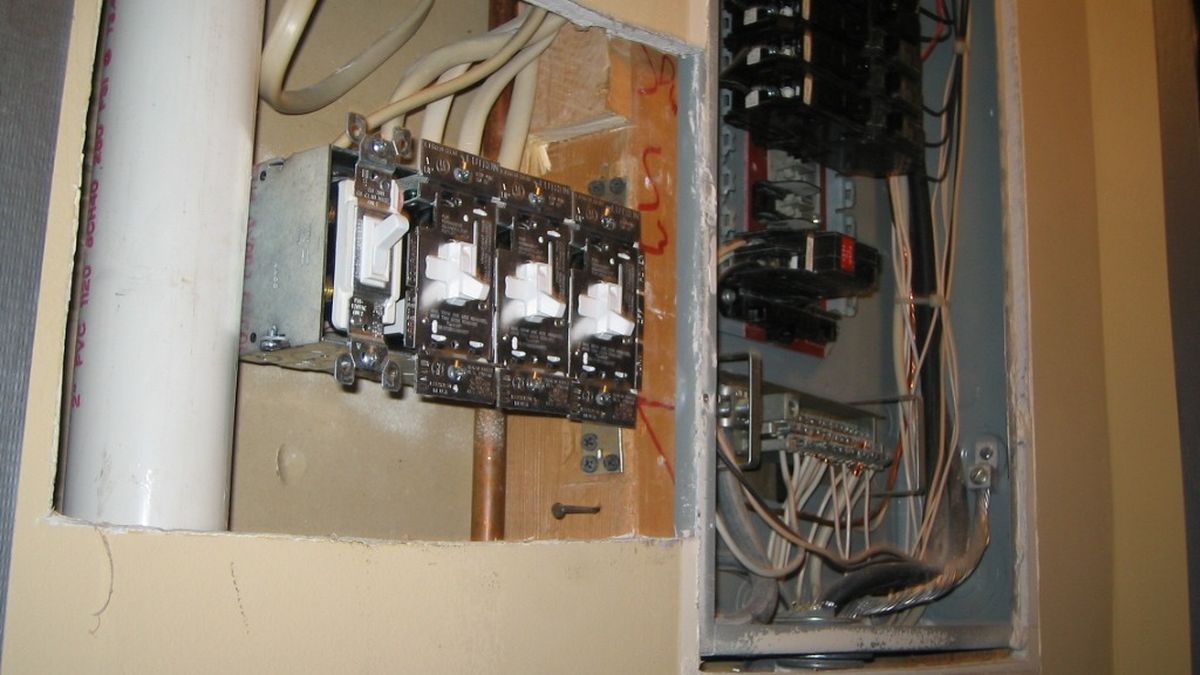
Solar Fuse and Breaker Sizing: Protecting Every Wire
Every positive wire leaving a battery needs protection. Where fuses and breakers go, how to size them, and which types handle DC safely.
Read more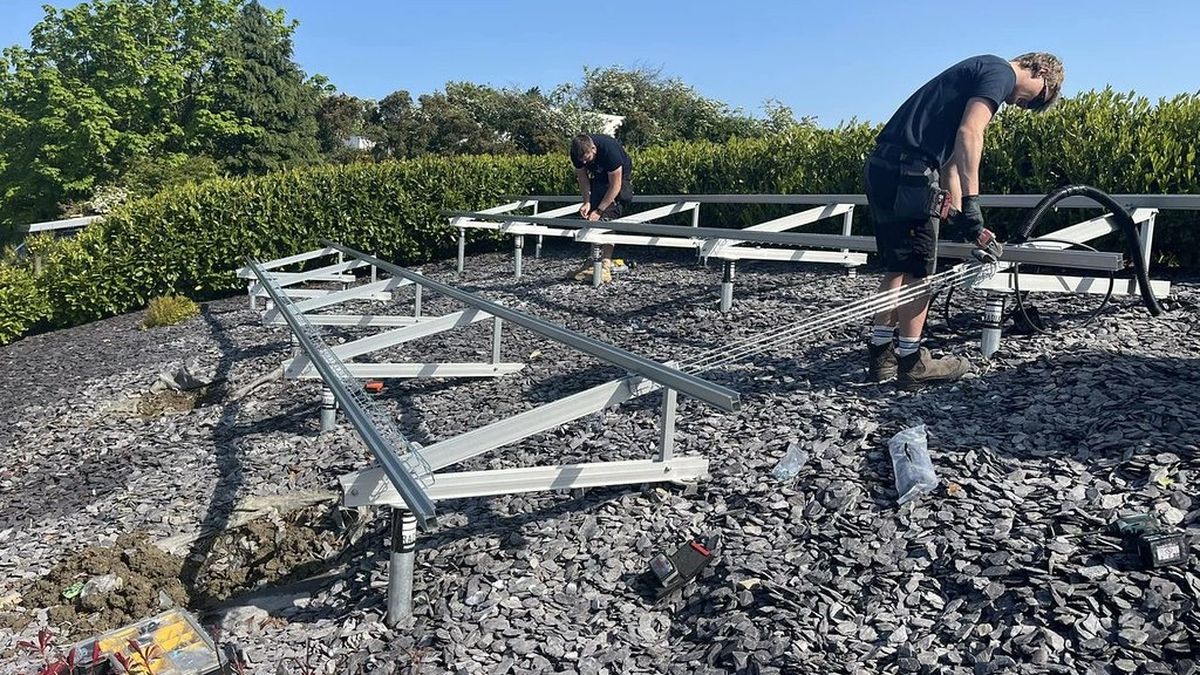
How to Install a Ground-Mount Solar Array
Siting, foundations, racking, trenching and grounding: how to build a ground mount that survives wind, snow and decades of sun.
Read more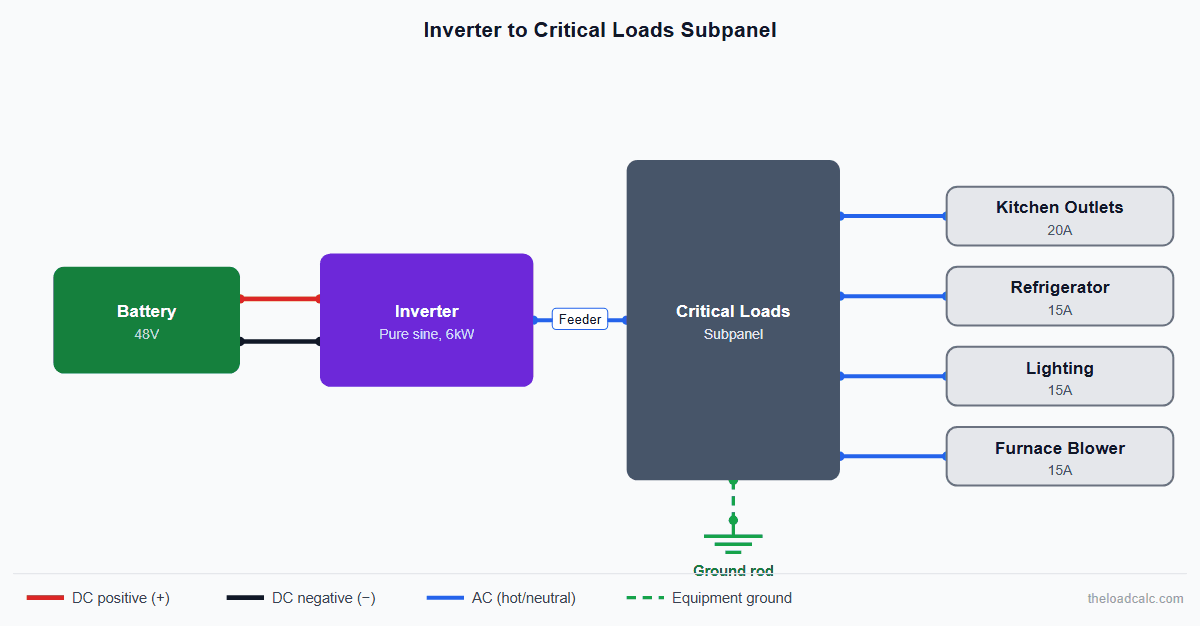
Inverter to Critical Loads Subpanel Wiring Diagram
Move your essential circuits to a subpanel that the inverter keeps powered when the grid goes down.
Read moreBasic Off-Grid Solar Wiring Diagram
A complete wiring diagram for a basic off-grid solar system: panels, charge controller, battery, inverter and fuses.
Read more