
MPPT vs PWM Charge Controllers: Is MPPT Worth the Money?
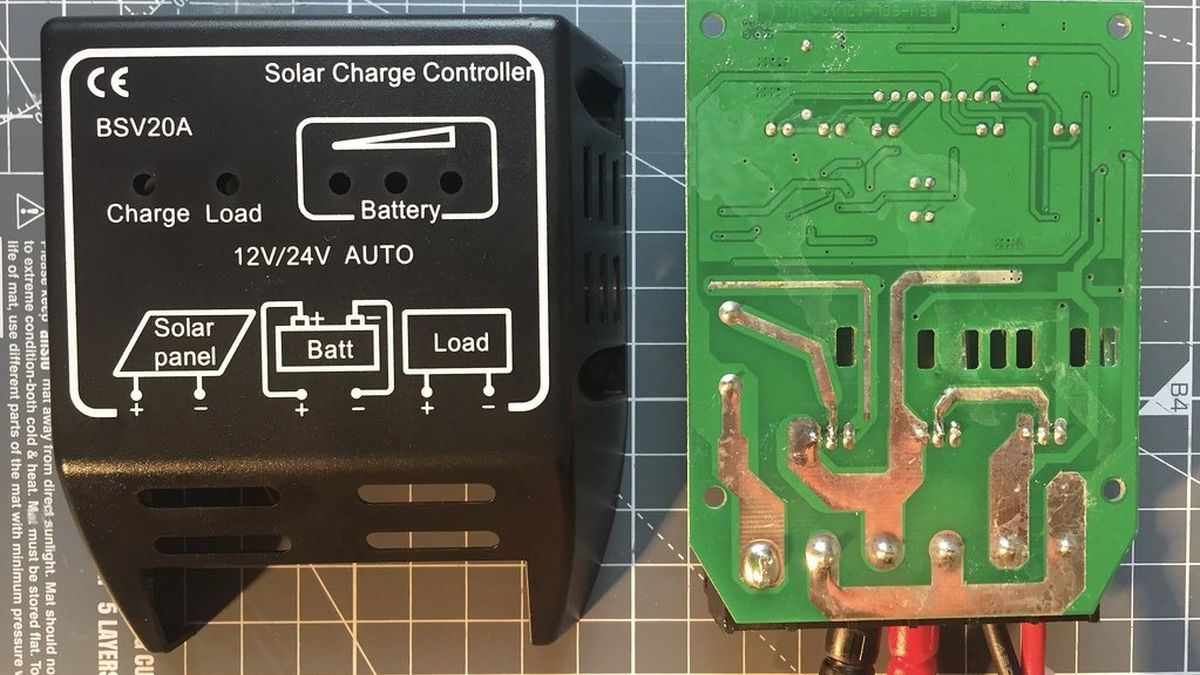
A charge controller sits between your solar panels and your battery, and there are two kinds: cheap PWM and pricier MPPT. Marketing aside, the difference comes down to one thing: what happens to the gap between panel voltage and battery voltage. With PWM, it is thrown away. With MPPT, it is converted into extra charging current.
Key takeaways
- PWM connects the panel directly to the battery, pulling panel voltage down to battery voltage.
- MPPT converts excess voltage into extra current, recovering typically 10-30% more energy.
- With high-voltage residential panels on a 12V battery, PWM can waste more than half the power.
- PWM is fine for small 12V systems using matched "12V" panels, roughly under 200W.
How PWM works
A PWM (pulse width modulation) controller is essentially a fast switch. During bulk charging it connects the panel straight to the battery, so the panel is forced to operate at the battery's voltage, around 13-14V for a 12V bank. Near full charge it switches on and off rapidly to hold the voltage steady.
The problem: solar panels produce their maximum power at their own voltage, called Vmp. A "12V" panel has a Vmp around 18V. Forced down to 13.5V, it delivers the same current, but at lower voltage, so less power.
How MPPT works
An MPPT (maximum power point tracking) controller is a DC-DC converter. It continuously finds the voltage where the panel produces the most power, then converts that down to battery voltage, and the excess voltage becomes extra current. Good MPPT controllers are 95-98% efficient.
The math: one 100W panel
Take a typical 100W panel: Vmp 18V, Imp 5.56A, charging a 12V LiFePO4 battery at 13.5V.
| PWM | MPPT | |
|---|---|---|
| Panel operates at | 13.5V (battery voltage) | 18V (max power point) |
| Current to battery | ~5.6A | ~7.1A |
| Power to battery | ~75W | ~96W |
| Energy over 5 sun hours | ~375Wh | ~480Wh |
That is about 28% more energy from the same panel. In cold weather, when panel voltage rises, the gap grows. On very hot days it shrinks, because heat lowers panel voltage. Our temperature coefficient calculator shows the effect.
With a 60-cell residential panel (Vmp around 32V) on a 12V battery, a PWM controller would hold it at about 13.5V and deliver roughly 125W from a 300W panel. Never pair high-voltage panels with PWM.
When PWM is still fine
- Small 12V systems under about 200W: a shed light, a trickle-charger for a boat or RV battery.
- Panels sold as "12V" (36-cell, Vmp around 18V) matched to a 12V battery.
- Hot climates, where panel voltage sags closer to battery voltage anyway.
- Tight budgets, where the extra $80-150 for MPPT would buy another panel instead.
For everything else, especially systems over 400W, 24V/48V banks, or series-wired panels, MPPT pays for itself quickly. It also lets you wire panels in series at higher voltage, using thinner cables. See 12V vs 24V vs 48V.
Buying tips
- Check the max PV input voltage (Voc), such as 100V or 150V, and make sure your string's cold-weather Voc stays below it. Use the PV string voltage calculator.
- Size the current rating with the charge controller sizing calculator.
- Beware fake MPPT. Very cheap, light controllers labeled MPPT are sometimes PWM inside. A real MPPT unit has a substantial heatsink and inductors, and lists tracking efficiency.
- Power stations already have MPPT built in. You only choose a controller for DIY battery systems.
Getting less than expected even with MPPT? That is normal. See why solar panels produce less than rated. Browse charge controllers, or see how controllers fit into a full system in our tiny house sizing example and portable solar panel buying guide.
Frequently asked questions
Is MPPT really better than PWM?
Yes, typically 10-30% more energy with matched 12V panels, and far more with higher-voltage panels. PWM only makes sense for small, budget 12V systems.
Can I use a 24V panel with a 12V PWM controller?
It will work, but wastes roughly half of the panel's power because the panel is pulled down to battery voltage. Use MPPT instead.
What size MPPT controller do I need?
Divide total array watts by battery voltage, then add about 25% headroom. A 400W array on 12V needs roughly a 40A controller.
Pick the right controller
Get amps and voltage limits for your array and battery.
Keep reading
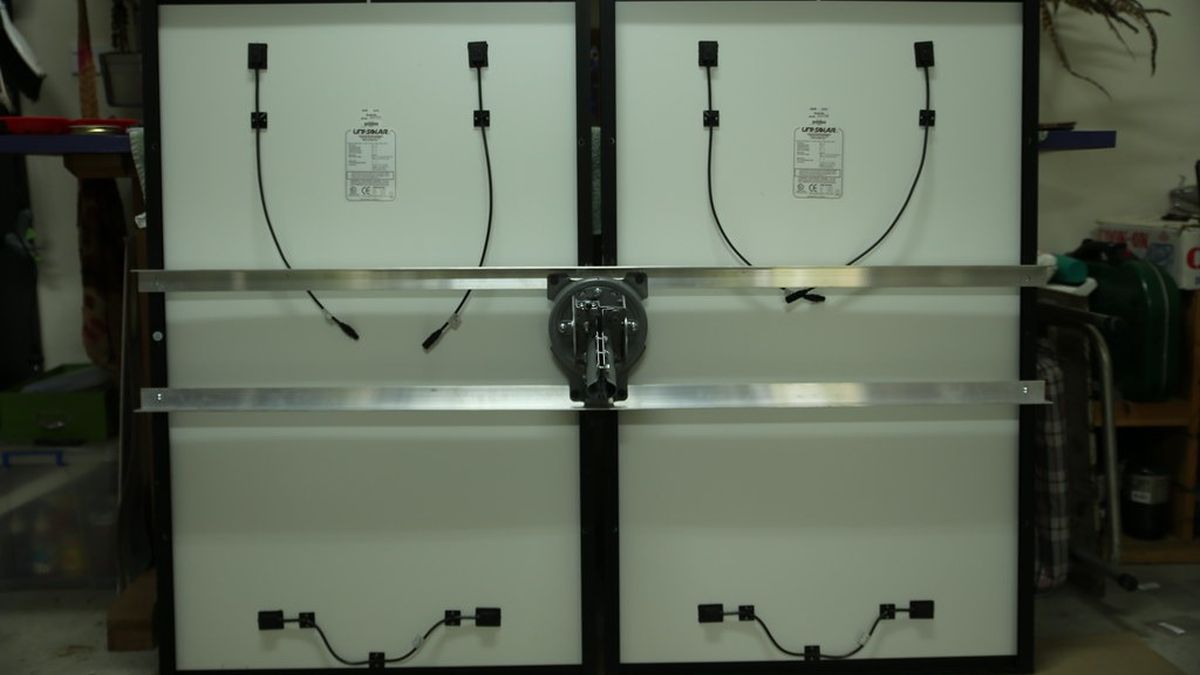
12V vs 24V vs 48V: Choosing Your Solar System Voltage
System voltage is the first decision in any off-grid build and the hardest to change later. Here is how current, cable size and controller cost decide it.
Read more
Why Your Solar Panel Produces Less Than Its Rated Watts
Seeing 70W from a 100W panel is normal, not a fault. Here is where the missing watts go and the number to plan with instead of the label.
Read more
Portable Solar Panel Buying Guide: Folding vs Rigid and What Specs Matter
The wrong panel either cannot recharge your power station in a day or will not plug into it at all. The specs that matter, and the ones that are just marketing.
Read more
Tiny House Solar System Sizing: A Complete Worked Example
We size a full off-grid system for a typical tiny house, from the appliance list to the battery bank, so you can repeat the process with your own numbers.
Read more