
How to Choose a Solar Charge Controller
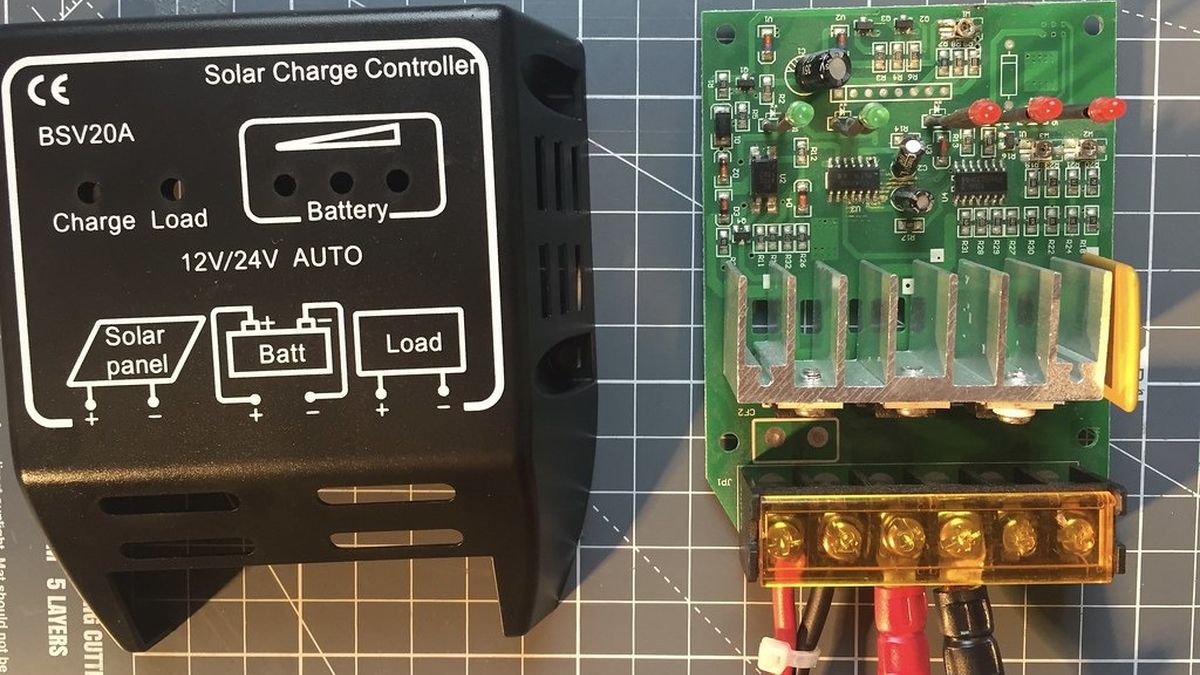
The charge controller decides how much of your panels' power reaches the battery, and protects the battery from overcharging. Choosing one means picking MPPT or PWM, sizing the current rating, and making sure the maximum PV input voltage can handle your array on the coldest morning.
Key takeaways
- MPPT is the right choice for nearly every system above about 200W.
- Current rating ≈ array watts ÷ battery voltage × 1.25.
- Cold-weather array Voc must stay below the controller's maximum input voltage.
- Program the correct battery profile, especially for LiFePO4.
MPPT or PWM?
PWM controllers connect the panel directly to the battery, forcing the panel to operate at battery voltage and wasting the difference. MPPT controllers convert surplus voltage into extra current, typically recovering 10-30% more energy, and allow high-voltage strings. The full comparison is in MPPT vs PWM.
Sizing the current rating
Controller amps = array watts ÷ nominal battery voltage × 1.25 (safety margin)
| Array | 12V battery | 24V battery | 48V battery |
|---|---|---|---|
| 400W | ~40A | ~20A | ~10A |
| 800W | ~80A | ~40A | ~20A |
| 1,600W | Use 24V/48V | ~80A | ~40A |
| 3,000W | Use 48V | Use 48V | ~80A |
Some MPPT controllers allow modest array oversizing and simply cap their output, which is useful in winter. Check the manual. The charge controller sizing calculator does the math.
The cold-morning voltage check
Panel Voc rises as temperature falls, typically 10-20% above the rated Voc on a sub-freezing morning. Exceeding the controller's maximum PV voltage, even briefly, can destroy it.
String Voc (cold) ≈ panel Voc × panels in series × temperature correction (about 1.1-1.2)
Use the PV string voltage calculator with your coldest local temperature.
Overvoltage damage is usually not covered by warranty. Leave margin below the maximum input voltage.
Features worth paying for
- Programmable LiFePO4 profile with adjustable absorption and float.
- Battery temperature sensor or BMS communication to stop charging in freezing conditions.
- Bluetooth or networking for monitoring and synchronizing multiple controllers.
- Load output with low-voltage disconnect for small systems.
More than one array?
Arrays with different orientations or panel types each deserve their own controller, connected in parallel at the battery. See two charge controllers on one battery. Single-controller wiring is shown in the charge controller diagram. Fuse the controller output close to the battery, as explained in fuse and breaker sizing. Shop charge controllers.
Frequently asked questions
What size charge controller do I need for 400 watts of solar?
About 40A on a 12V battery, 20A on 24V or 10A on 48V, all with MPPT.
Can a charge controller handle more solar than its rating?
Many MPPT controllers allow some oversizing and limit output to their rated current. Never exceed the maximum input voltage.
Do I need a charge controller with a power station?
No. Power stations include an MPPT controller. Just stay within their solar input limits.
Size your controller
Get the current rating and check string voltage.
Related guides and diagrams
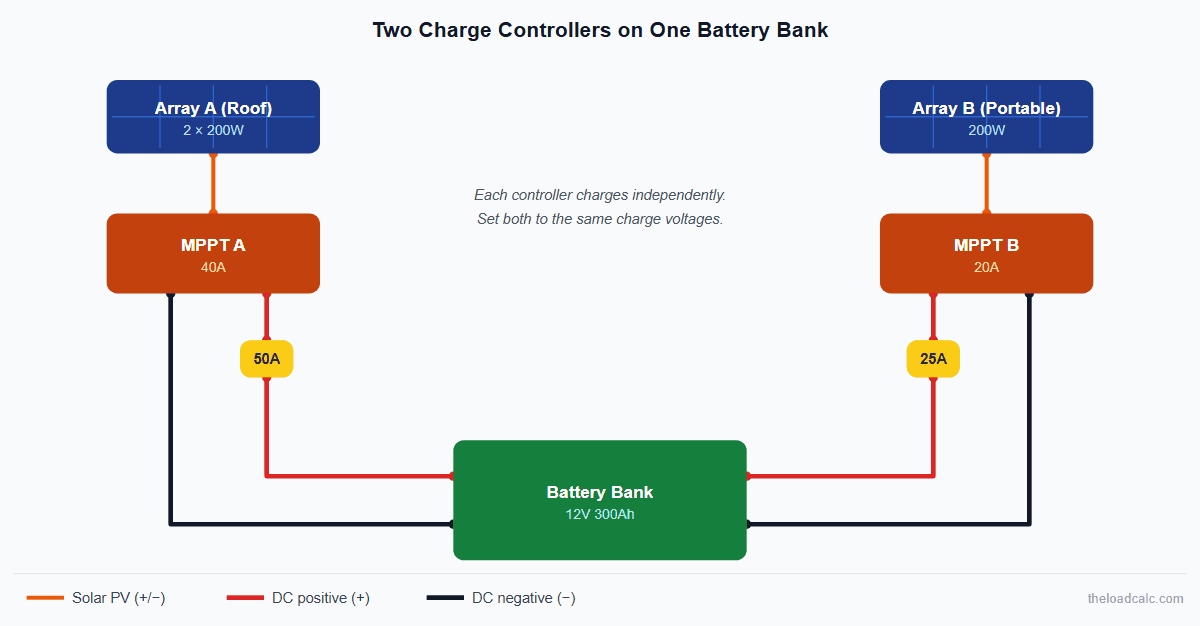
Two Charge Controllers on One Battery: Wiring Diagram
Two arrays, two controllers, one battery bank: how to wire it and keep the controllers from fighting.
Read moreCharge Controller Wiring Diagram
How to connect a solar charge controller to your panels and battery bank in the right order, with fusing.
Read more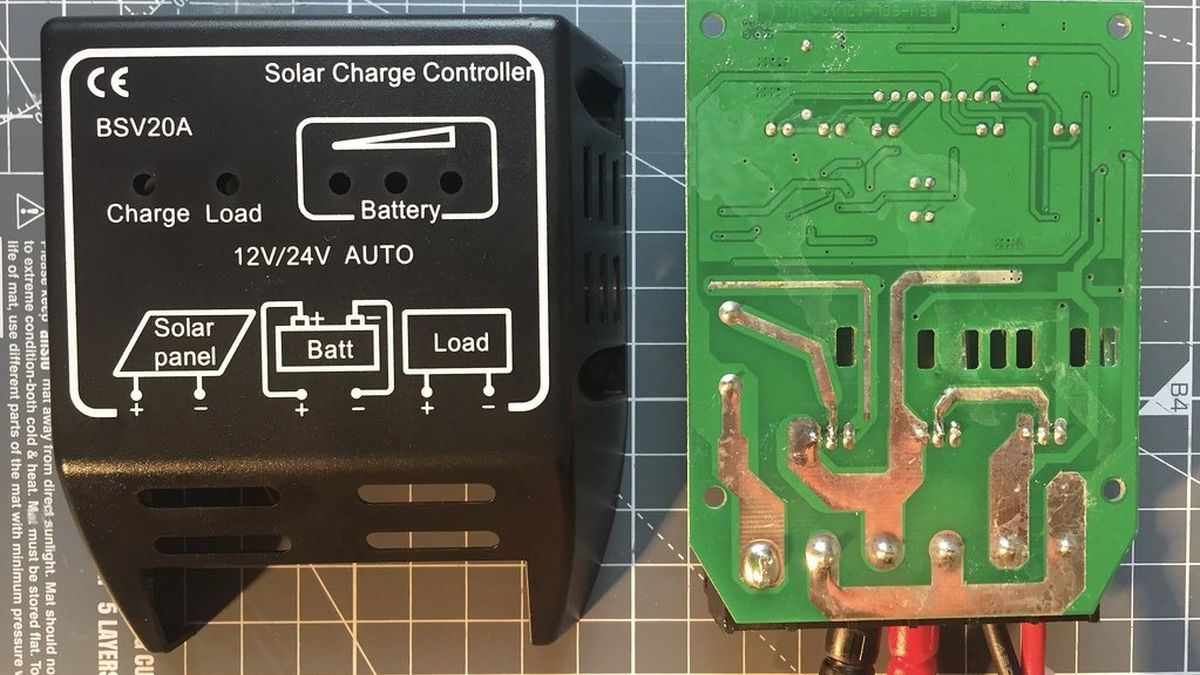
MPPT vs PWM Charge Controllers: Is MPPT Worth the Money?
A PWM controller can throw away a quarter of your panel output. We show the math for a 100W panel and explain when the cheaper controller is still the right call.
Read more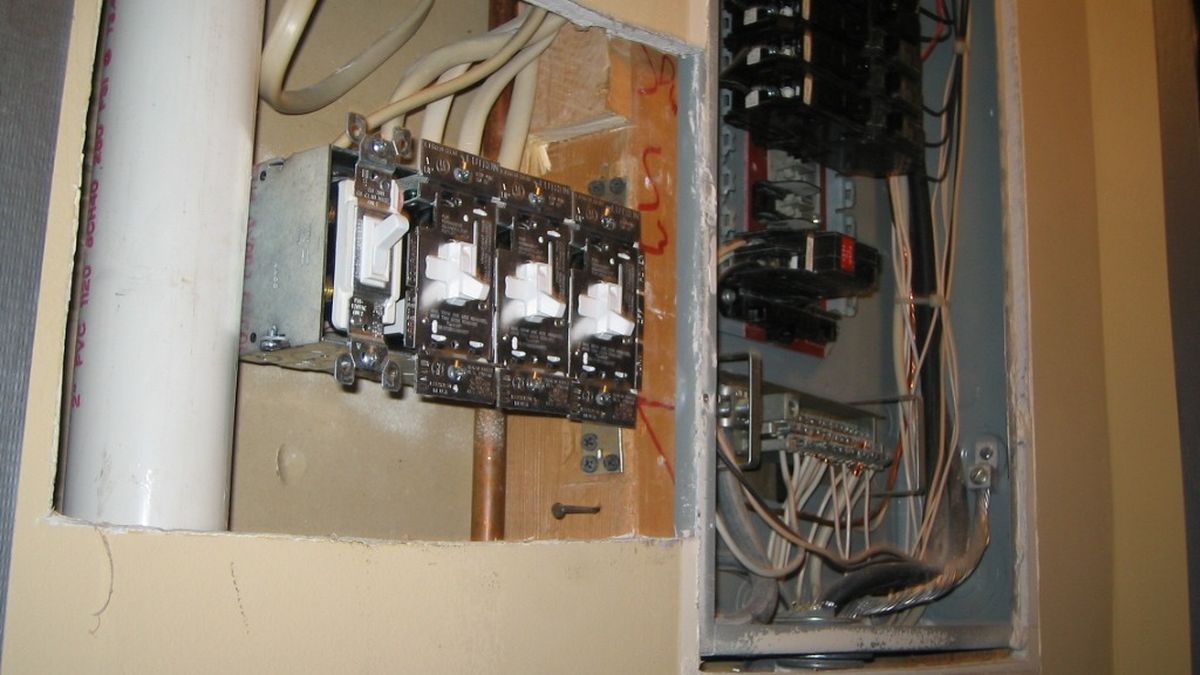
Solar Fuse and Breaker Sizing: Protecting Every Wire
Every positive wire leaving a battery needs protection. Where fuses and breakers go, how to size them, and which types handle DC safely.
Read more