
Hurricane Power Preparedness: Backup Power Before the Storm
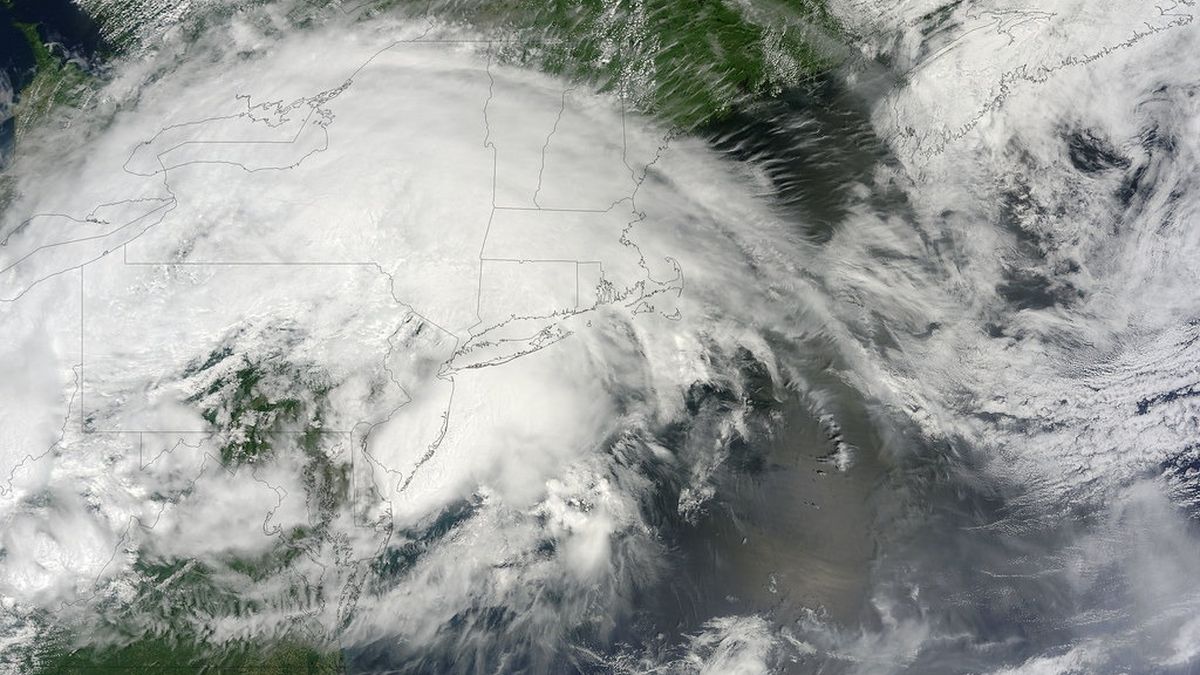
Hurricane outages are different from ordinary blackouts. Damage can keep power off for one to three weeks, fuel becomes scarce, and heat and humidity make cooling a health issue. Planning backup power before the season starts, with a mix of batteries, solar and fuel, makes those weeks far safer and more bearable.
Key takeaways
- Plan for at least 7-14 days without grid power after a major hurricane.
- Batteries plus solar keep essentials running without fuel, which may be unavailable.
- Never run generators indoors, in garages or near windows. Carbon monoxide kills after every major storm.
- Prioritize refrigeration, fans, phones, medical devices and water.
Priority loads after a hurricane
| Load | Power | Daily energy |
|---|---|---|
| Refrigerator | 100-250W running | 1-2kWh |
| Box or ceiling fans (2) | 50-100W each | 0.6-1.5kWh |
| Phones, radio, lights | 20-60W | 0.2-0.4kWh |
| Internet | 20-40W | 0.5-1kWh |
| CPAP (no humidifier) | 30-60W | 0.25-0.5kWh |
| Window AC (small, 8 hrs) | 450-600W | 3.5-5kWh |
| Well pump (if applicable) | 1-2kW | 0.5-1kWh |
Without air conditioning, essentials total about 3-5kWh per day. A small window AC in one room roughly doubles that. Size your plan with the daily energy use calculator.
Batteries + solar vs generators
| Battery + solar | Gas generator | Propane generator | |
|---|---|---|---|
| Fuel after storm | None needed | Often scarce | Stores long-term |
| Indoor use | Safe | Never | Never |
| Noise | Silent | Loud | Loud |
| High loads (AC, well) | Limited by size | Good | Good |
| Running cost | Free after purchase | Fuel + maintenance | Fuel + maintenance |
Many households combine them: a power station or home battery with 400-800W of solar for daily essentials, and a generator for short runs of heavy loads. Larger home systems use a hybrid inverter with battery.
Connecting backup power to the house
Running extension cords for two weeks is miserable. A power inlet and interlock let a generator or large power station feed selected circuits safely. See the power station to home inlet diagram and transfer switch vs interlock kit. Have it installed well before the season.
Pre-storm checklist
- Charge every power station, battery, phone and power bank to 100%.
- Store portable solar panels indoors until the storm passes; check roof-mounted arrays afterwards before use.
- Fill generator fuel safely with stabilizer, or confirm propane supply.
- Turn the fridge and freezer to their coldest settings; freeze water jugs.
- Test the generator and transfer setup.
- Raise batteries and power stations above potential flood levels.
- Install battery-powered CO alarms.
After the storm
- Keep generators outside, at least 20 feet from doors and windows, pointing away from the house.
- Do not use equipment that has been submerged.
- Recharge batteries with solar during the day; run heavy loads while the sun is up.
- Watch the forecast for the next storm and keep batteries topped up.
Related reading: emergency power setup, blackout survival guide, and how long a power station runs a chest freezer.
Frequently asked questions
How long does power stay out after a hurricane?
From hours to several weeks depending on damage. After major hurricanes, outages of 1-3 weeks are common in hard-hit areas.
Can a solar generator run an air conditioner during a hurricane outage?
A small window AC can run on a large power station (2kWh+, 1,500W+ inverter) for several hours, especially with solar recharging during the day. Central AC needs a much larger system.
Should I leave solar panels up during a hurricane?
Permanently installed, engineered arrays stay up. Store portable panels indoors before the storm.
Build your hurricane power plan
Work out how much battery and solar your essentials need.
Related guides and diagrams
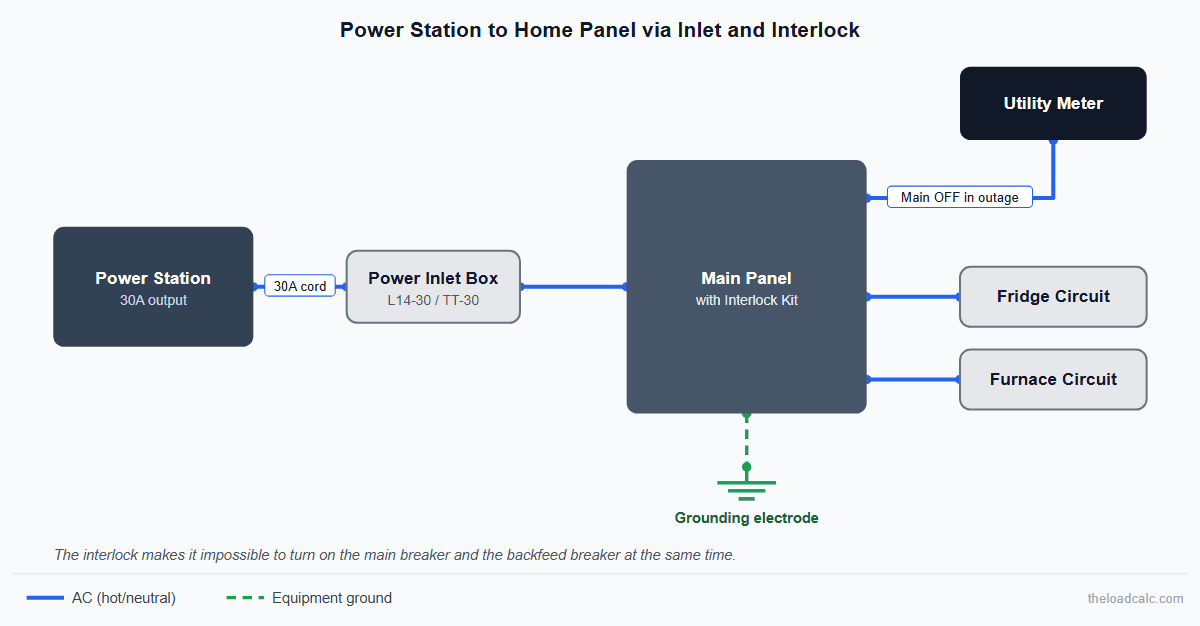
Power Station to House Wiring: Inlet Box and Interlock
Feed selected home circuits from a power station safely, with an outdoor inlet and an interlocked backfeed breaker.
Read more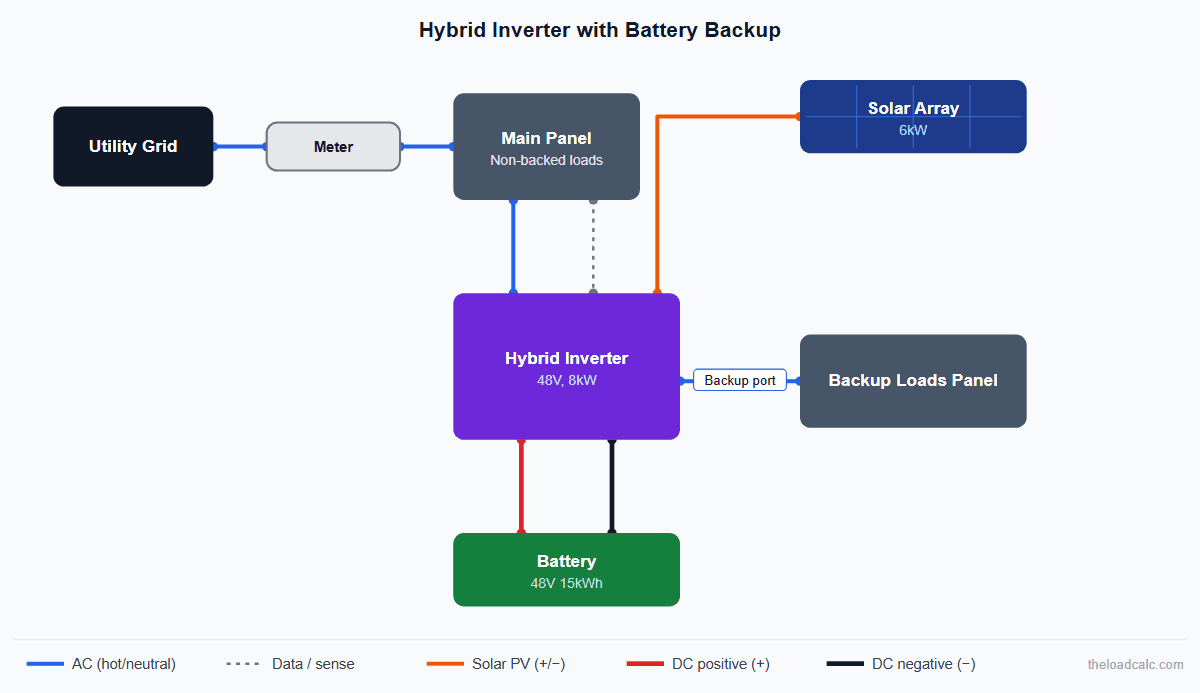
Hybrid Inverter with Battery Backup Wiring Diagram
Solar that keeps working in a blackout: grid, PV, battery and a backup loads panel all meet at the hybrid inverter.
Read more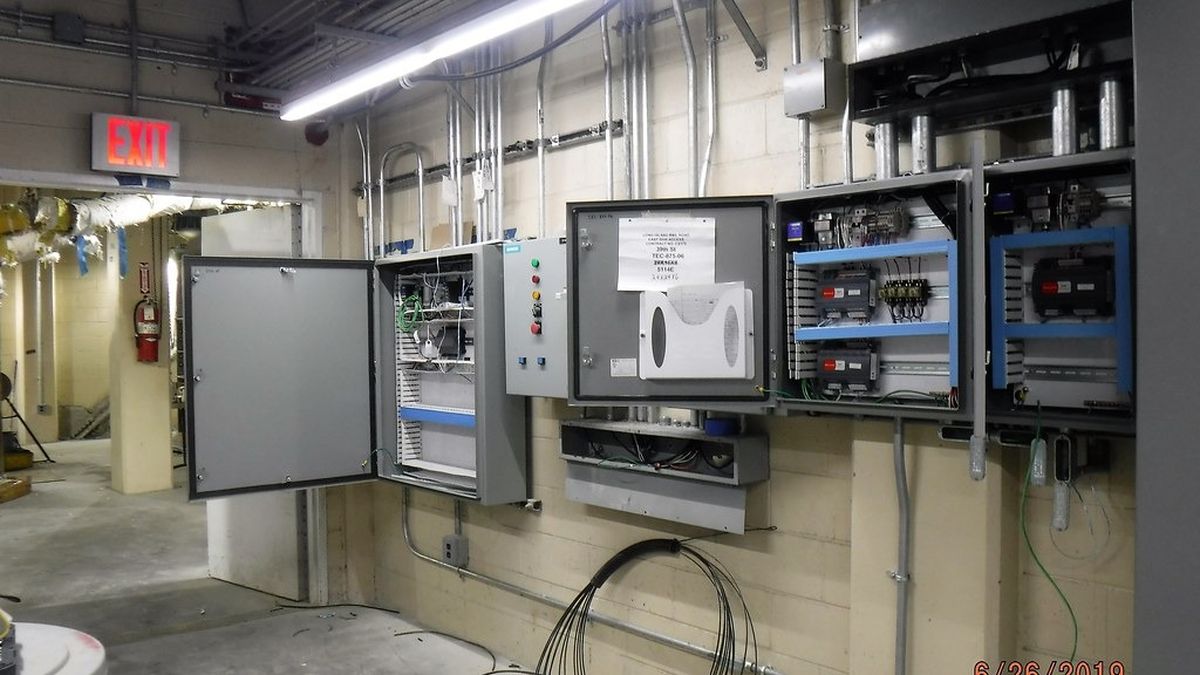
Transfer Switch vs Interlock Kit: Connecting Backup Power to Your House
Extension cords get old fast in a long outage. Here is how transfer switches and interlock kits let a generator or power station feed your home circuits safely.
Read moreHow to Set Up Emergency Power at Home
Set up emergency backup power to protect your food, medications and home during outages, step by step.
Read more