
Power Station to House Wiring: Inlet Box and Interlock
Feed selected home circuits from a power station safely, with an outdoor inlet and an interlocked backfeed breaker.
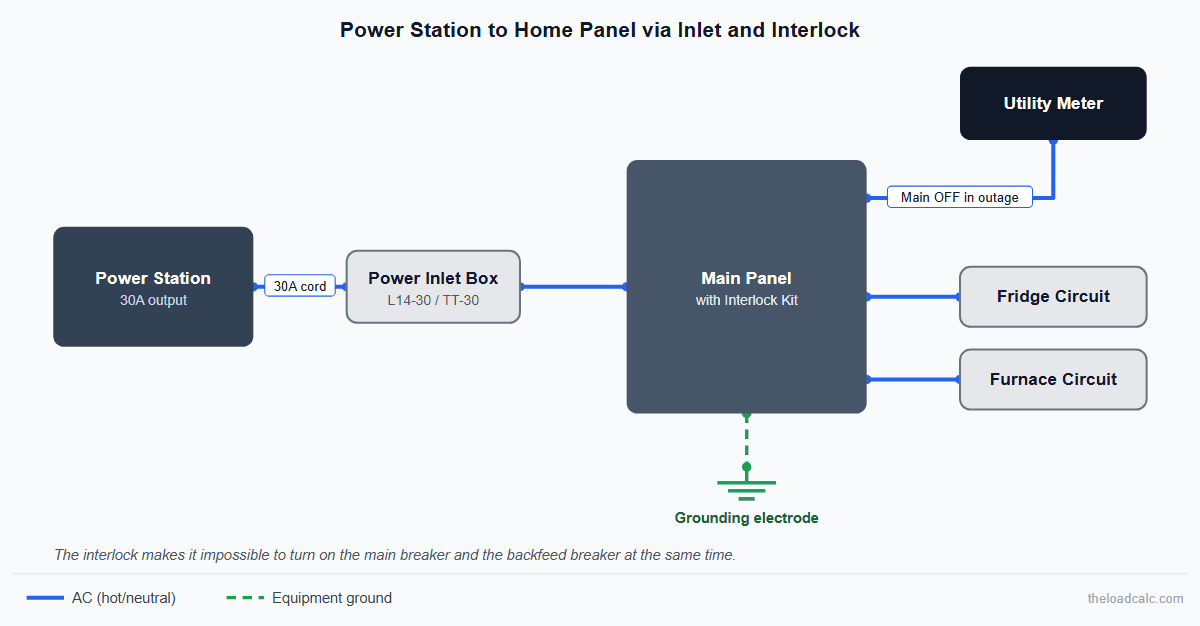
A large portable power station or generator can power selected home circuits during an outage, without extension cords, if it connects through a power inlet box and an interlock kit on your main panel. The interlock physically prevents the main breaker and the backfeed breaker from being on at the same time, so power can never flow back onto utility lines.
Key takeaways
- The power station plugs into an outdoor inlet box with a matching cord (often TT-30 or L14-30).
- The inlet feeds a dedicated backfeed breaker in the main panel.
- An interlock kit blocks the backfeed breaker unless the main breaker is off.
- Turn on circuits one at a time to stay within the power station's output and surge rating.
Components
| Component | Typical spec | Role |
|---|---|---|
| Power station or generator | 30A output, pure sine | Backup source |
| Generator cord | Matches outlet and inlet (TT-30 or L14-30) | Connects source to inlet |
| Power inlet box | Outdoor rated, matching receptacle type | Connection point |
| Backfeed breaker | Sized to inlet and wiring (e.g. 30A) | Feeds the panel |
| Interlock kit | Listed for your specific panel | Prevents backfeeding the grid |
Step-by-step wiring
- 1Have an electrician install the inlet box, wiring and backfeed breaker, and fit the interlock kit (permit required in most areas).
- 2During an outage: switch off the main breaker, then slide the interlock and switch on the backfeed breaker.
- 3Switch off all branch breakers, connect the cord, and power on the power station.
- 4Turn on essential circuits one at a time, watching the power station's output reading.
- 5When grid power returns: switch off the backfeed breaker, slide the interlock, switch the main breaker back on, then disconnect the cord.
Disconnect all sources before working, follow the equipment manuals and local electrical codes, and use a licensed electrician for work on home wiring and panels.
Matching the power station to the inlet
A 120V-only power station with a TT-30 outlet can feed one leg of the panel; 240V circuits will not work. Units with an L14-30 outlet and split-phase output can run 240V loads such as a well pump. Check whether your unit has a floating or bonded neutral, since with an interlock the neutral stays bonded at the main panel.
Comparing options? Read transfer switch vs interlock kit, and see our hurricane power preparedness guide for planning loads during long outages. For a permanently installed alternative, see the critical loads subpanel.
Common mistakes
- Using a double-ended "suicide cord" instead of an inlet. It is dangerous and illegal.
- Installing an interlock not listed for your panel model.
- Turning on every breaker at once and overloading the power station.
- Placing a fuel generator near doors or windows. Keep it at least 20 feet away and outside.
Frequently asked questions
Can I connect a power station to my house?
Yes, through a properly installed inlet box and an interlock kit or transfer switch. Never plug into a wall outlet with a double-ended cord.
What size inlet do I need?
Match your power station's largest outlet, commonly TT-30 (120V 30A) or L14-30 (120/240V 30A).
Will a 120V power station power my whole panel?
It can power circuits on one leg of the panel only, and only up to its rated output. 240V circuits need a split-phase source.
Check your backup load
Make sure your power station can start and run the circuits you choose.
Related diagrams and guides
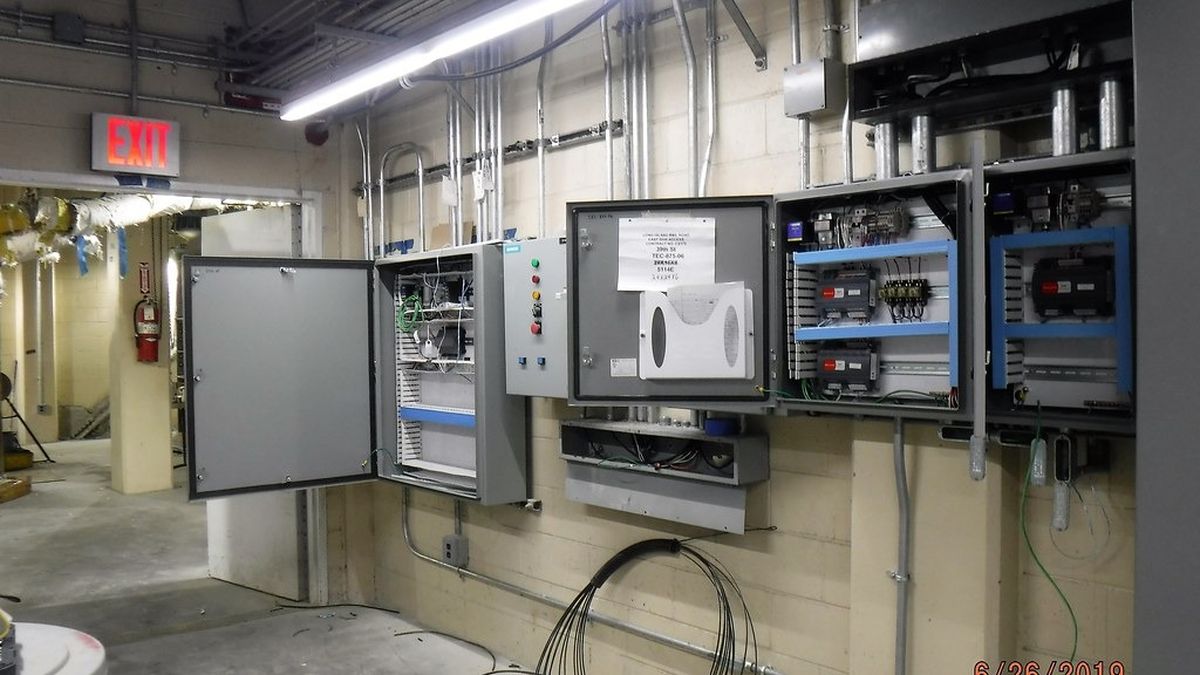
Transfer Switch vs Interlock Kit: Connecting Backup Power to Your House
Extension cords get old fast in a long outage. Here is how transfer switches and interlock kits let a generator or power station feed your home circuits safely.
Read more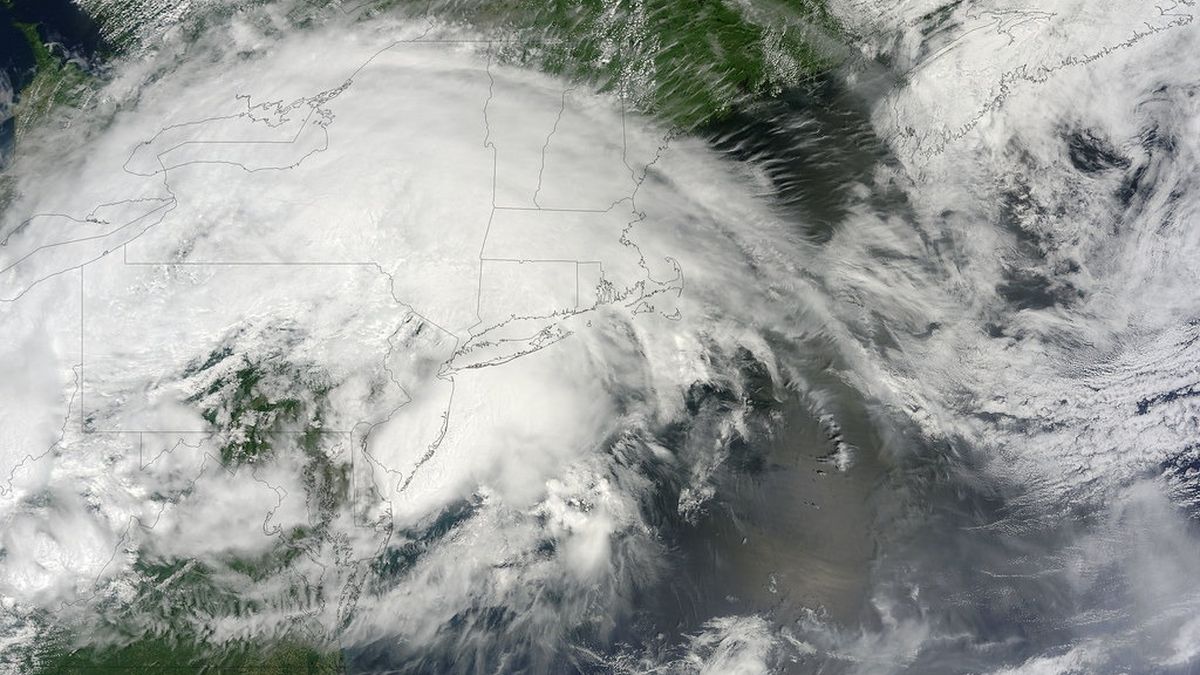
Hurricane Power Preparedness: Backup Power Before the Storm
Hurricane outages can last weeks. How to plan backup power, fuel and solar recharging before the storm, and stay safe after it.
Read more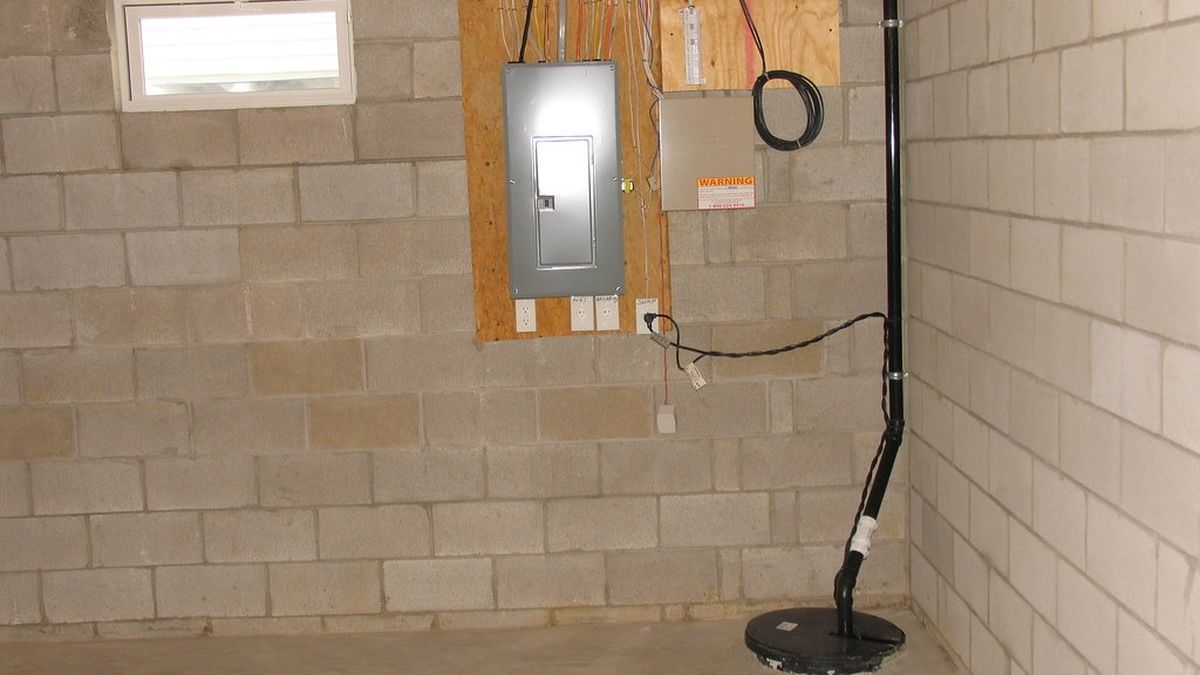
Can a Power Station Run a Sump Pump? Battery Backup Sizing Guide
Storms and power cuts arrive together. Here is how to size a power station for a 1/3 or 1/2 HP sump pump, and when a dedicated DC backup pump is the better buy.
Read more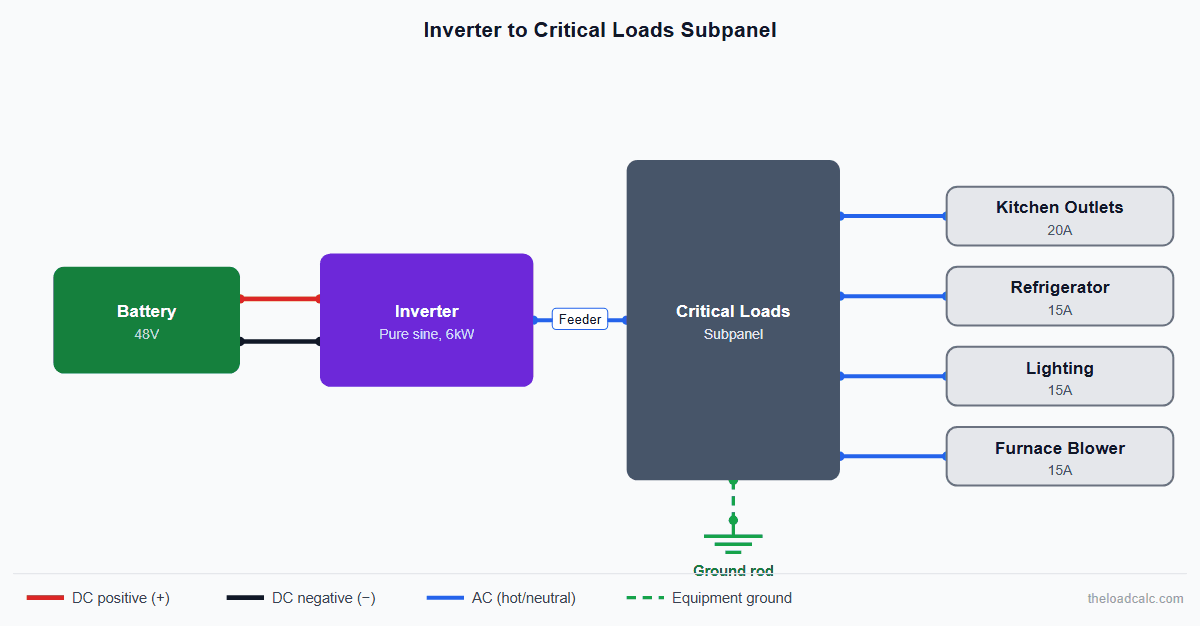
Inverter to Critical Loads Subpanel Wiring Diagram
Move your essential circuits to a subpanel that the inverter keeps powered when the grid goes down.
Read more