
Can a Power Station Run a Sump Pump? Battery Backup Sizing Guide
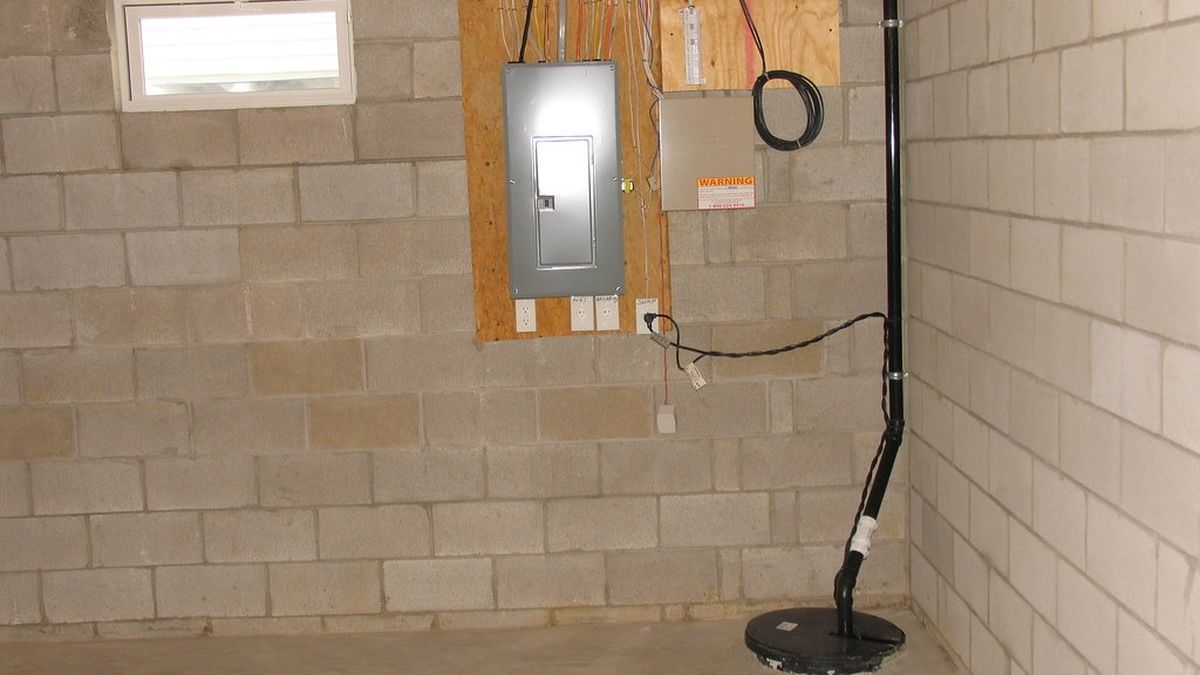
The storms that knock out power are the same storms that fill your sump pit. A pump that stops during a downpour can put inches of water in a basement within hours, which is why a sump pump is one of the first loads people want on backup power. The good news: a sump pump uses surprisingly little energy. The catch: it needs a big kick of power every time it starts.
Key takeaways
- A 1/3 HP sump pump draws roughly 800W running and 1,300-2,000W for a split second at startup.
- Surge capacity decides whether a power station can start the pump; battery capacity decides how long it lasts.
- In a heavy storm, expect 2-5 kWh per day. In light rain, often under 1 kWh.
- A power station only helps if it switches over automatically, or someone is home to plug the pump in.
How many watts does a sump pump use?
Sump pumps use induction motors, and induction motors draw several times their running current for the first fraction of a second. That startup draw is called surge or inrush, and it is the number that trips undersized inverters. We cover the general principle in surge watts vs running watts, but here are typical figures for sump pumps:
| Pump size | Running watts | Startup (surge) watts |
|---|---|---|
| 1/4 HP | 600-700W | 1,000-1,500W |
| 1/3 HP | 750-850W | 1,300-2,000W |
| 1/2 HP | 950-1,100W | 2,000-2,500W |
| 3/4 HP | 1,300-1,500W | 2,500-3,500W |
Check the label on your own pump: it lists running amps. Multiply amps by 120 to get running watts, then plan for at least two to three times that for surge.
How much battery does a sump pump need?
A sump pump does not run continuously. It switches on when the float rises, empties the pit in 10-30 seconds and stops. How much energy it uses depends almost entirely on how much water is coming in. To see the difference between power and energy, read watts vs watt-hours. In short, energy = watts × hours of actual running time.
| Conditions | Pump runs | Energy per day (1/3 HP, 800W) |
|---|---|---|
| Dry weather | A few cycles | Under 0.1 kWh |
| Steady rain | 5-10% of the time | 1.0-1.9 kWh |
| Heavy storm, high water table | 15-25% of the time | 2.9-4.8 kWh |
So a 2 kWh power station can cover a day of moderate rain, while a multi-day storm calls for 3-5 kWh of storage, solar recharging, or a gas generator to top the battery up.
Time a few pump cycles during the next rain: note how many seconds it runs and how often it starts. That gives you your real duty cycle instead of a guess. Then use the battery runtime calculator with your numbers.
Choosing a power station for a sump pump
- Continuous output of at least 1.5× the pump's running watts (1,200W+ for a 1/3 HP pump).
- Surge rating above the pump's startup draw. Most units list a surge or peak figure, often 2× continuous.
- Pure sine wave output. Motors run hotter and noisier on modified sine. Every mainstream LiFePO4 power station is pure sine.
- UPS or automatic switchover. Without it, the pump only gets backup power once someone notices the outage and swaps the plug. See pass-through charging and UPS mode.
- LiFePO4 chemistry for thousands of cycles and safe indoor storage in a basement.
Browse battery backup systems and portable power stations that meet these specs, or run your numbers through the inverter sizing calculator first.
Power station vs dedicated sump pump backup
There are two other common ways to protect a basement, and each makes sense for different homes:
| Option | Pros | Cons |
|---|---|---|
| Power station on UPS mode | Also powers fridge, lights and phones; no extra plumbing | Higher cost; must handle surge |
| 12V battery backup pump | Purpose-built, installs beside the main pump, automatic | Lower flow; only powers the pump; battery needs replacing |
| Water-powered backup pump | No battery at all, runs on city water pressure | Needs municipal water; uses a lot of water; check local code |
Many homeowners combine them: a 12V backup pump for unattended protection, and a power station that also handles the refrigerator and other essentials during long outages.
Connecting it to the house
Most sump pumps simply plug into a receptacle near the pit, so a heavy-gauge extension cord to the power station works. If the pump is hard-wired, or you want to back up several circuits at once, the clean solution is a transfer switch or interlock kit. We compare them in transfer switch vs interlock kit.
Never connect a generator or power station to your house with a double-ended (male-to-male) cord. It can send power back down the utility line and electrocute line workers.
Planning for the whole house? Pair this with our well pump guide and the winter power outage checklist, and see the emergency power setup guide for a full plan.
Frequently asked questions
Can a 1,000W power station run a sump pump?
Only a small pump. A 1/4 HP pump may start on a 1,000W unit with a 2,000W surge rating, but a 1/3 HP or larger pump usually needs 1,500W+ continuous and a surge rating above 2,000W.
How long will a sump pump run on battery?
Divide usable battery watt-hours by the pump's daily energy use. A 2,000Wh station delivers about 1,700Wh usable, which is roughly a day of steady rain for a 1/3 HP pump, or several days in light rain.
Do I need a pure sine wave inverter for a sump pump?
Yes. Induction motors run hotter, louder and less efficiently on modified sine wave power, and some will not start at all.
Size your backup for the whole basement
Add the sump pump, freezer and furnace blower to get one number for your outage battery.
Keep reading

How to Run a Well Pump During a Power Outage
No power means no water on a private well. A well pump uses little energy but a lot of startup current, and that changes what kind of backup you need.
Read more
Transfer Switch vs Interlock Kit: Connecting Backup Power to Your House
Extension cords get old fast in a long outage. Here is how transfer switches and interlock kits let a generator or power station feed your home circuits safely.
Read more
Surge Watts vs Running Watts: Why Your Inverter Trips
Your fridge uses 150 watts, so why does it trip a 600W inverter? Startup surge explained, with a table of real appliances and how to size around it.
Read more
Winter Power Outage Checklist: Stay Warm, Fed and Connected
Winter outages last longer and the cold makes them dangerous. Use this checklist to prepare heat, food, water and backup power before the next ice storm.
Read more