
Surge Watts vs Running Watts: Why Your Inverter Trips
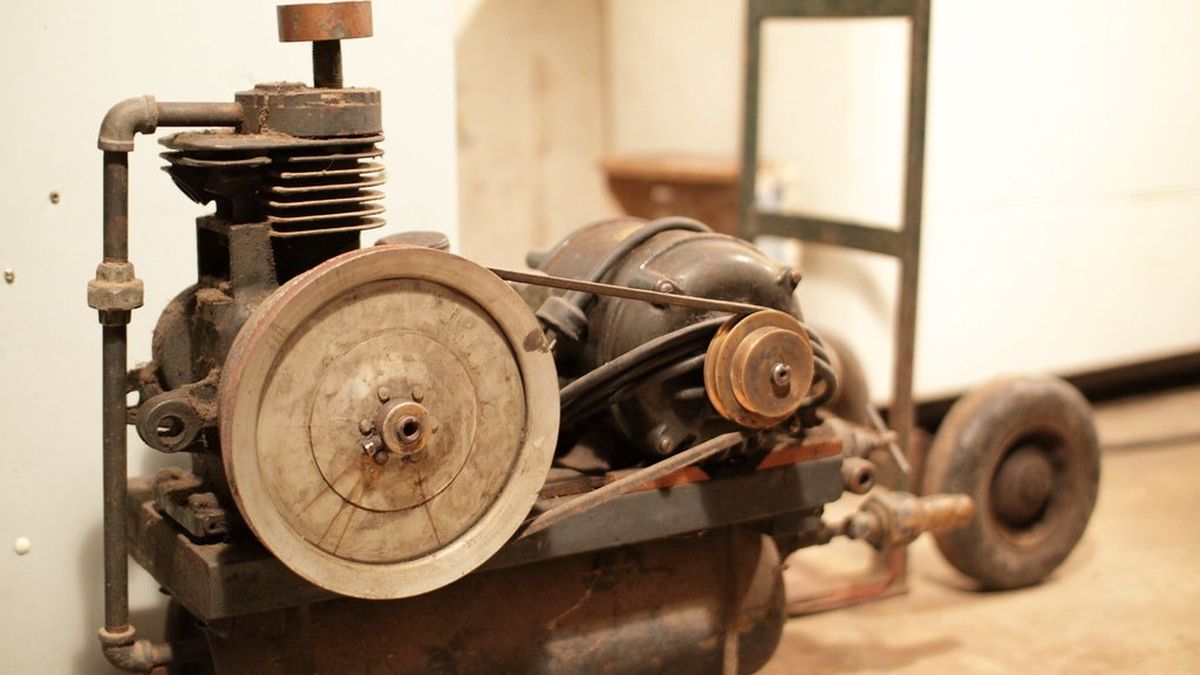
Your refrigerator's label says 150W, your power station is rated 600W, and yet the moment the compressor kicks in, the inverter beeps and shuts off. The culprit is startup surge: the brief burst of current a motor needs to get moving. Understanding it is the key to choosing an inverter that will not trip.
Key takeaways
- Running (rated) watts is the steady draw once a device is going.
- Surge (starting) watts is the momentary spike at startup, often 2-7× running watts for motors.
- Heaters, kettles and incandescent bulbs have little or no surge.
- Size the inverter so its surge rating exceeds the largest startup load plus everything else running.
Why motors surge
A stationary electric motor has no back-EMF, the voltage a spinning motor generates that opposes the supply. Until it spins up, the motor looks almost like a short circuit and draws its "locked rotor" current, often several times normal. That lasts from a fraction of a second up to a couple of seconds for a compressor starting against pressure.
Resistive loads such as heaters, toasters and hair dryers have no motor to start, so their surge is negligible. Electronics with switching power supplies have a tiny inrush spike that inverters usually ignore.
Running and surge watts for common appliances
| Appliance | Running watts | Startup watts (typical) |
|---|---|---|
| Refrigerator | 100-250W | 600-1,200W |
| Chest freezer | 60-100W | 300-600W |
| Window AC (5,000-8,000 BTU) | 450-800W | 1,200-2,200W |
| Sump pump (1/3 HP) | 750-850W | 1,300-2,000W |
| Well pump (1 HP, 240V) | 1,600-2,000W | 5,000-7,000W |
| Circular saw | 1,200-1,800W | 2,300-3,500W |
| Air compressor (pancake) | 900-1,600W | 2,500-4,000W |
| Furnace blower (1/2 HP) | 500-800W | 1,200-2,000W |
| Microwave (1,000W cooking) | 1,400-1,600W | Little surge |
| Space heater | 1,500W | No surge |
| CPAP | 30-60W | No meaningful surge |
These are typical ranges. Your appliance may differ, so check the label for "LRA" (locked rotor amps) on compressors, or measure with a clamp meter that records inrush.
Microwaves are rated by cooking output, not by what they draw. A "1,000W" microwave pulls about 1,500W from the outlet.
How inverter surge ratings work
Inverters list a continuous rating and a surge or peak rating, often twice the continuous rating, but that peak may only last milliseconds. Low-frequency inverters with heavy transformers handle long motor starts better than lightweight high-frequency designs with the same numbers on paper.
Some power stations offer a voltage-reduction mode that lets them run resistive loads above the rated output by lowering the voltage. It works for kettles and heaters, but not for motors, which need full voltage to start.
Add up everything running when the motor starts. If your fridge starts while the microwave is on, the inverter sees microwave running watts plus fridge startup watts at the same moment.
Sizing an inverter around surge
- List every device you might run at the same time and add their running watts.
- Find the single largest surge (startup watts) and replace that device's running watts with its startup watts.
- Your inverter's surge rating should exceed that total. Its continuous rating should exceed the running total by 20-25%.
Example: fridge (150W running, 1,000W start) + TV (100W) + lights (60W) + laptop (60W). Running total: 370W. Peak moment: 1,000 + 100 + 60 + 60 = 1,220W. A 1,000W continuous / 2,000W surge inverter handles it comfortably.
The inverter sizing calculator does this for you, and the inverter oversizing calculator shows the cost of going too big.
Reducing surge
- Soft starters for air conditioners and pumps ramp the motor up and often cut starting current by half or more.
- Inverter-driven (variable speed) appliances, such as inverter mini-splits and inverter fridges, ramp up gently and barely surge.
- Stagger starts. Turn loads on one at a time after an outage instead of all at once.
Surge is the deciding factor in several of our guides: sump pumps, well pumps and power tools on a solar generator. If watts versus watt-hours is still fuzzy, start with watts vs watt-hours.
Frequently asked questions
What is the difference between surge watts and running watts?
Running watts is what a device draws continuously. Surge watts is the short spike it needs to start, which for motors can be 2-7 times higher.
How many surge watts does a refrigerator need?
Typically 600-1,200W for a full-size fridge, though some older models need more. Inverter-compressor fridges need much less.
Does a bigger battery help with surge?
Not directly. Surge is limited by the inverter. A larger battery only helps if it comes with a larger inverter.
Size your inverter correctly
Enter your appliances and get both the continuous and the surge rating you need.
Keep reading
Watts vs Watt-Hours: The Difference That Decides What You Can Run
Every power station lists two numbers that people mix up. Once you know the difference between watts and watt-hours, sizing a battery takes one line of math.
Read more
Can a Power Station Run a Sump Pump? Battery Backup Sizing Guide
Storms and power cuts arrive together. Here is how to size a power station for a 1/3 or 1/2 HP sump pump, and when a dedicated DC backup pump is the better buy.
Read more
Running Power Tools on a Solar Generator: Saws, Drills and Compressors
A quiet, fume-free power station is great on a jobsite or remote project, if it can handle the startup kick of a saw. Here is what works and what does not.
Read more
How to Run a Well Pump During a Power Outage
No power means no water on a private well. A well pump uses little energy but a lot of startup current, and that changes what kind of backup you need.
Read more