
Boat Dual Battery Wiring Diagram: Start and House Banks
Keep the engine starting no matter how much the house bank is used, with a selector switch and an automatic charging relay.
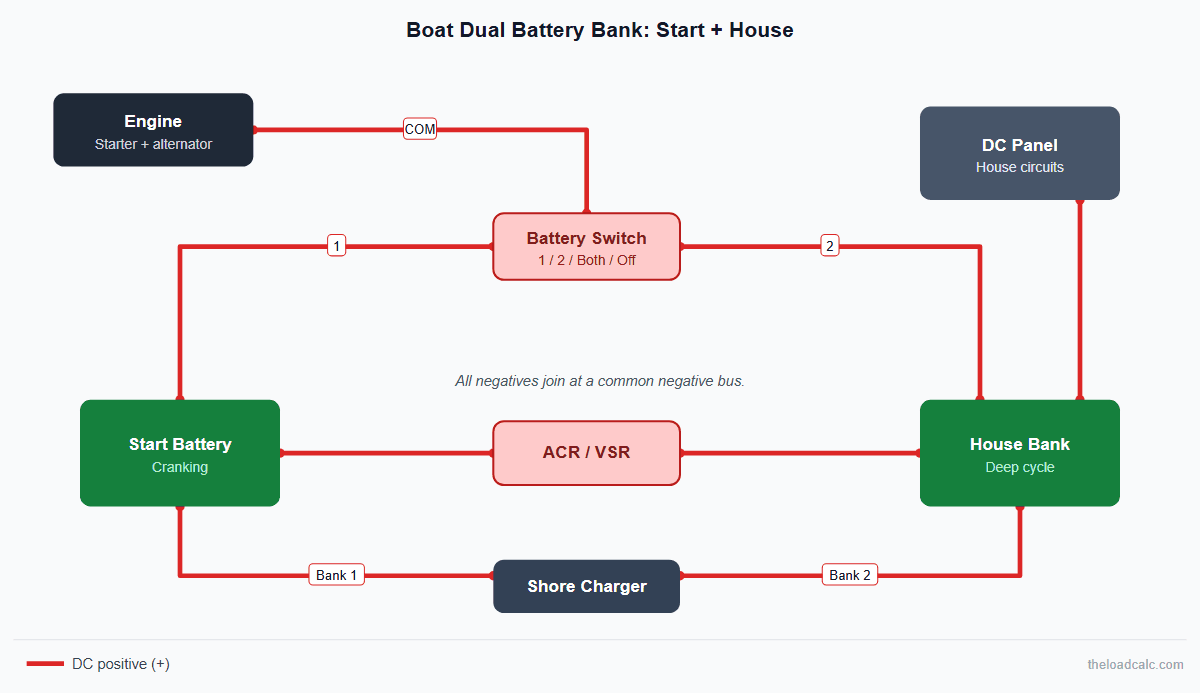
Boats separate a start battery for the engine from a house bank for everything else. A battery selector switch lets you choose which bank feeds the engine, and an automatic charging relay (ACR) links the banks when the alternator or a charger is running, so both stay charged while the start battery stays protected.
Key takeaways
- The selector switch (1 / 2 / Both / Off) sets which bank feeds the engine and main loads.
- The ACR combines the banks automatically while charging and separates them at rest.
- Marine practice calls for tinned copper wire and overcurrent protection close to the battery.
- A multi-bank shore charger keeps both banks topped up at the dock.
Components
| Component | Typical spec | Role |
|---|---|---|
| Battery selector switch | 1 / 2 / Both / Off, 300A+ | Selects banks; isolates in an emergency |
| ACR / VSR | 120A+ | Combines banks while charging |
| Start battery | Marine cranking battery | Engine starting |
| House bank | Deep-cycle AGM or LiFePO4 | Lights, electronics, fridge |
| Shore charger | 2-3 bank, marine rated | Charges at the dock |
| Tinned cable | Sized for current and length | Resists corrosion |
Step-by-step wiring
- 1Connect the start battery positive to switch terminal 1 and the house bank positive to terminal 2.
- 2Connect the switch common terminal to the engine starter and the main DC panel feed.
- 3Install the ACR between the two battery positives, with fuses near each battery.
- 4Feed the house DC panel from the house bank through a fuse, so house loads never drain the start battery.
- 5Connect each output of the shore charger to one bank, with its own fuse.
- 6Join all negatives at a common negative bus connected to the engine block.
Disconnect all sources before working, follow the equipment manuals and local electrical codes, and use a licensed electrician for work on home wiring and panels.
Lithium house banks on boats
LiFePO4 house banks are increasingly common, but they need care: an alternator can be overloaded by lithium's low resistance, and a BMS disconnect can cause a damaging voltage spike at the alternator. Use a DC-DC charger or an alternator regulator designed for lithium, and follow the battery maker's marine guidance. Our boat solar guide covers solar on boats, and how to choose solar batteries compares chemistries.
Overcurrent protection on boats
ABYC standards call for overcurrent protection within 7 inches of the battery for most conductors (with limited exceptions for sheathed cables and the starter cable). Use marine-rated fuses and breakers, and keep connections dry and protected. A battery monitor on the house bank makes energy use visible at anchor.
Common mistakes
- Leaving the switch on "Both" at anchor, which drains the start battery with the house bank.
- Using untinned automotive wire that corrodes in salt air.
- Turning the selector switch to "Off" with the engine running, which can damage the alternator.
- Feeding house loads from the switch common without protection.
Frequently asked questions
Do I need an ACR if I have a selector switch?
Not strictly, but an ACR charges both banks automatically, so you do not have to remember to switch to "Both" while motoring and back afterwards.
Which battery should start the engine?
Normally the start battery (position 1). Use "Both" only to start with a weak start battery.
Can I add solar to this setup?
Yes. Connect a solar charge controller to the house bank. The ACR will share surplus charge with the start battery.
Size your house bank
Work out how much battery you need for days at anchor.
Related diagrams and guides

Boat Solar Power: Panels, Batteries and Marine Wiring
Arches, biminis and rails: how to add solar to a boat, size it for days at anchor, and wire it to survive salt and vibration.
Read more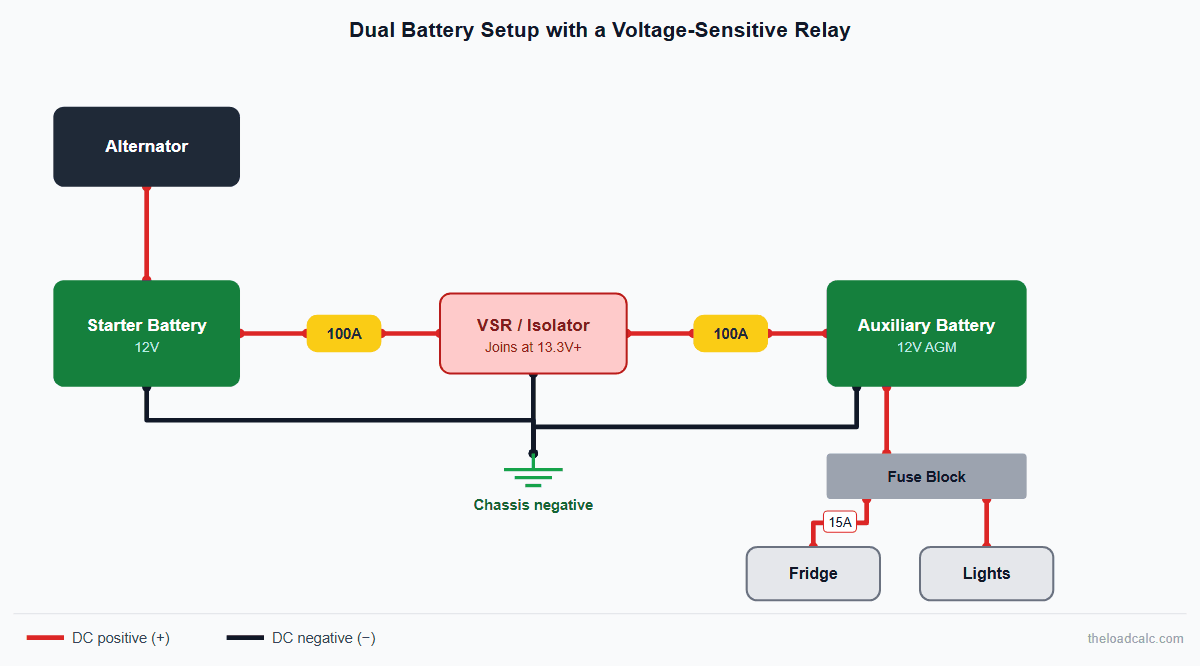
Dual Battery Wiring Diagram with a VSR / Isolator
A simple auxiliary battery for a fridge and lights that charges while you drive and never flattens your starter battery.
Read more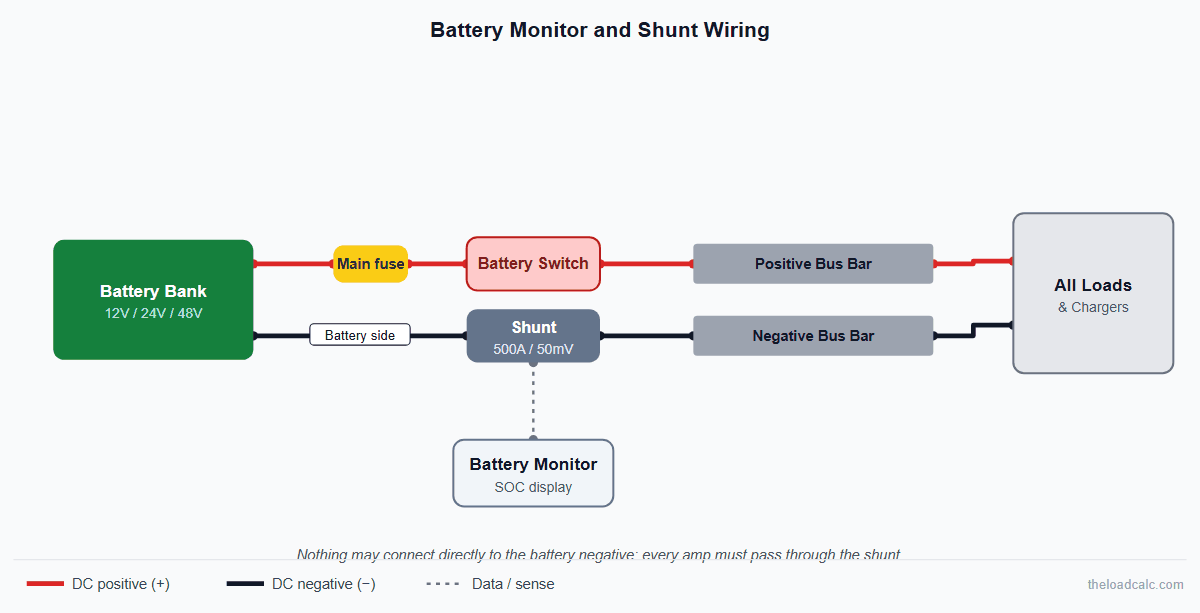
Battery Monitor Shunt Wiring Diagram
Wire a shunt so every amp in and out of the battery is counted, and your state-of-charge reading stays accurate.
Read more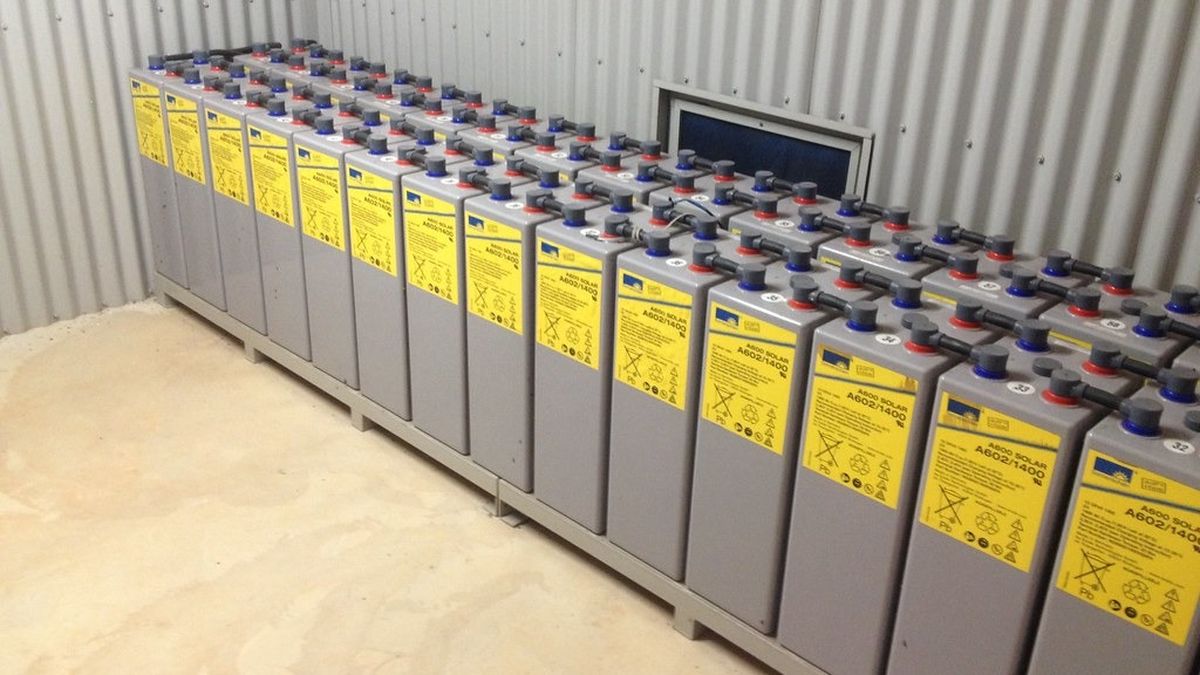
How to Choose Solar Batteries: LiFePO4, AGM and Server-Rack Packs
Chemistry, usable capacity, BMS features and lifetime cost per kWh: a practical framework for choosing the battery your system depends on.
Read more