
How to Choose Solar Batteries: LiFePO4, AGM and Server-Rack Packs
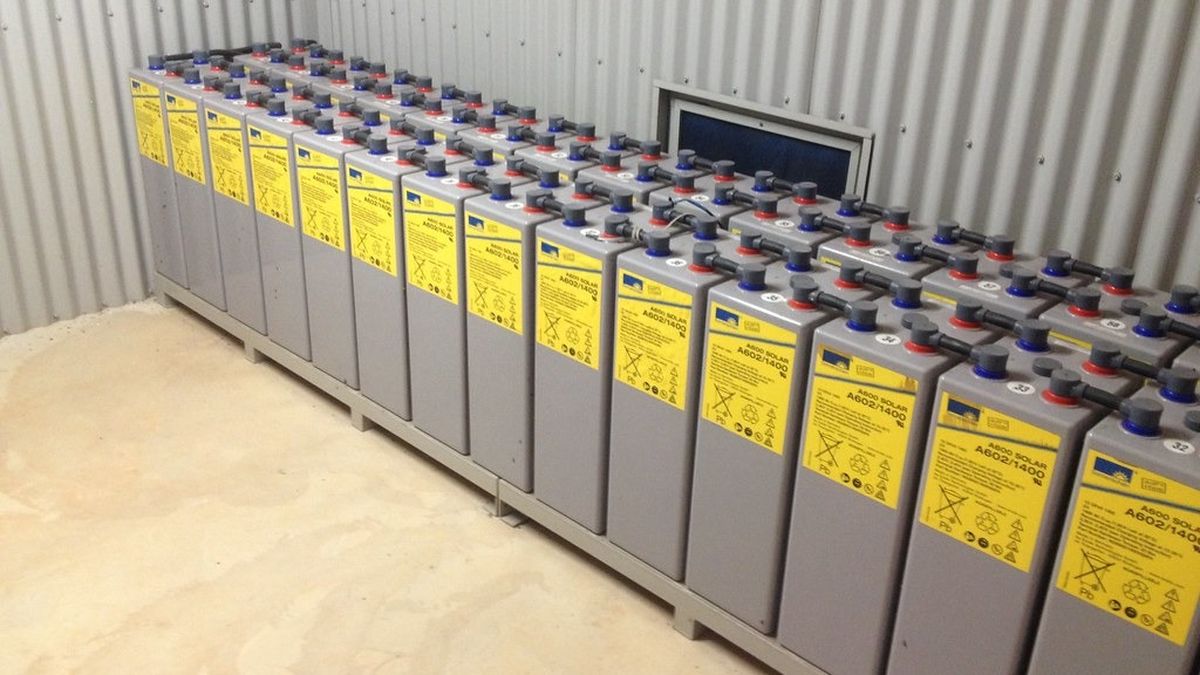
The battery is the most expensive component in most off-grid systems and the one that determines how long it lasts. LiFePO4 has become the default for good reasons, but within it there are big differences in BMS quality, cold-weather protection, voltage options and warranty. Here is how to choose.
Key takeaways
- LiFePO4 offers the best lifetime value: 3,000+ cycles, 80-100% usable capacity and strong safety.
- Compare usable capacity and cost per kWh delivered over the battery's life, not sticker price per Ah.
- Check BMS current limits, low-temperature charge protection and communications.
- Choose battery voltage to match your system size: 12V small, 48V for homes.
Battery chemistries compared
| Chemistry | Usable capacity | Cycle life | Maintenance | Best for |
|---|---|---|---|---|
| LiFePO4 | 80-100% | 3,000-6,000+ | None | Almost all new systems |
| NMC lithium-ion | 80-90% | 1,000-2,000 | None | Compact portable units |
| AGM | 50% | 400-800 | None | Low-cost, occasional use |
| Flooded lead-acid | 50% | 500-1,200 | Watering, equalizing | Budget off-grid with maintenance |
| Gel | 50-60% | 500-1,000 | None | Niche: deep discharges, heat |
See the battery technology explainer for more on each chemistry.
Lifetime cost, not purchase price
Cost per kWh delivered = price ÷ (capacity kWh × usable fraction × cycle life)
A $600 100Ah 12V AGM battery delivers about 0.64kWh per cycle for perhaps 600 cycles. A $500 100Ah 12V LiFePO4 delivers about 1.15kWh for 4,000 cycles. Per kWh delivered, lithium is many times cheaper. Run your own numbers with the battery lifetime cost calculator and battery DoD degradation calculator.
BMS features to check
- Continuous and peak discharge current: must cover your inverter. A 3,000W 12V inverter can draw 300A, beyond most single 100Ah batteries.
- Low-temperature charge cutoff or self-heating: essential for cold climates. See LiFePO4 in cold weather.
- Communications (CAN/RS485/Bluetooth): lets inverters follow the battery's charge limits and shows cell data.
- Series and parallel limits: how many units you can combine.
- Certifications such as UL 9540A/UL 1973 for home installations, where required.
Form factors and voltage
| Form factor | Typical voltage | Use |
|---|---|---|
| 12V drop-in (Group 24/27/31) | 12.8V | Vans, RVs, boats |
| Server-rack modules | 48V (51.2V) | Home and cabin systems |
| Wall-mount home batteries | 48V or high voltage | Grid-tied backup |
| DIY cell kits | Any | Experienced builders |
Choosing voltage: see 12V vs 24V vs 48V. Combining batteries: see the balanced parallel bank diagram and battery bank wiring.
Sizing and monitoring
Battery size comes from daily energy and days of autonomy, covered step by step in how to size an off-grid system. Once installed, a shunt-based monitor is the only accurate fuel gauge for lithium. See battery monitor setup. Shop battery backups when you are ready.
Frequently asked questions
Is LiFePO4 worth the extra cost over AGM?
Usually yes. Higher usable capacity and many times the cycle life make LiFePO4 far cheaper per kWh delivered over its life.
How many batteries do I need for solar?
Divide your required battery watt-hours (daily use × days of autonomy ÷ usable fraction) by each battery's watt-hours.
Can I mix old and new batteries?
It is not recommended. Mismatched batteries share load unevenly and the bank ages to the weakest unit.
Size your battery bank
Find capacity, count and layout for your system.
Related guides and diagrams
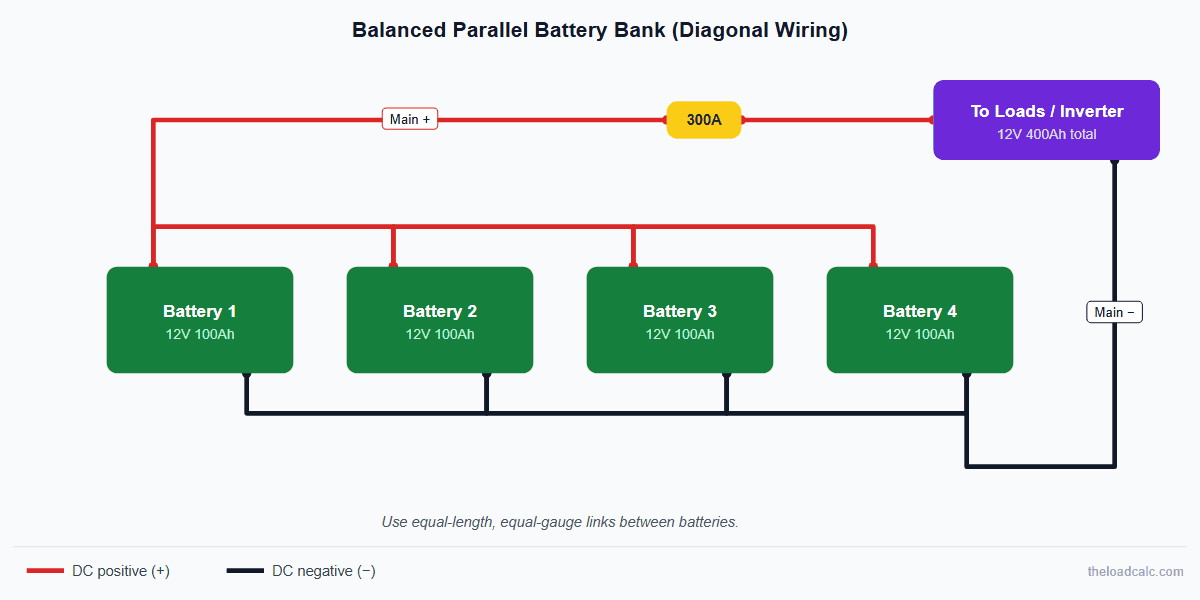
Balanced Parallel Battery Bank Wiring Diagram
Why the first battery in a parallel bank works hardest, and the diagonal wiring that makes every battery share evenly.
Read more
How to Install and Set Up a Battery Monitor (Shunt)
A shunt-based monitor is the only accurate fuel gauge for a lithium battery. How to wire it so every amp is counted, and how to set it up.
Read more
LiFePO4 Batteries in Cold Weather: Charging Below Freezing
Lithium iron phosphate is the best battery chemistry for solar, with one big caveat: cold charging. Here is what happens below freezing and how to work around it.
Read more
How to Size an Off-Grid Solar System: Step-by-Step
Six steps from your appliance list to a complete component list, with the formulas and a worked example you can copy.
Read more