
Balanced Parallel Battery Bank Wiring Diagram
Why the first battery in a parallel bank works hardest, and the diagonal wiring that makes every battery share evenly.
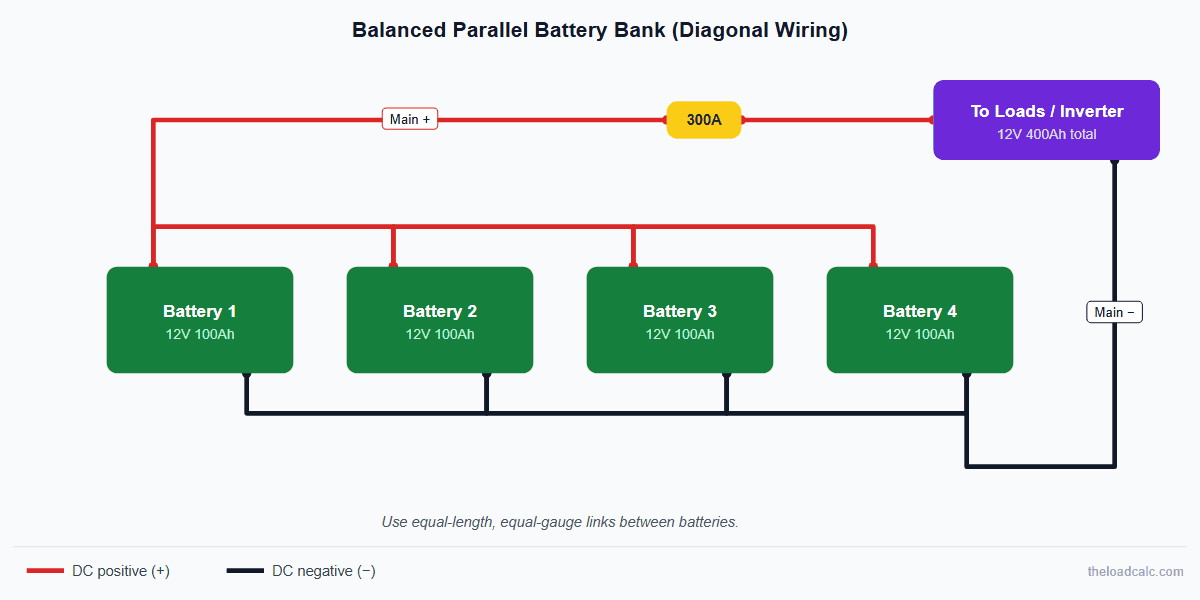
Wiring batteries in parallel adds capacity at the same voltage, but how you connect the main cables matters. If both main cables attach to the first battery, it does more work than the others, ages faster and drags the whole bank down. Taking the positive from one end and the negative from the other end balances the current.
Key takeaways
- Parallel wiring adds amp-hours; voltage stays the same.
- Take the main positive from the first battery and the main negative from the last (diagonal wiring).
- Use equal-length, equal-gauge links between batteries.
- For more than about four batteries, use bus bars with equal-length cables to each battery.
Components
| Component | Typical spec | Role |
|---|---|---|
| Batteries | Identical model, age and state of charge | Capacity |
| Interconnect links | Same gauge as main cables, equal lengths | Join batteries |
| Main fuse | Sized for total system current | Protects main cable |
| Optional bus bars | Rated for total current | Better balance for larger banks |
| Optional per-battery fuses | Sized per battery | Isolates a faulty battery |
Step-by-step wiring
- 1Charge every battery fully and individually before connecting them.
- 2Place the batteries side by side and link all positives together and all negatives together with equal-length cables.
- 3Connect the main positive (through the main fuse) to the first battery's positive.
- 4Connect the main negative to the last battery's negative.
- 5Check the bank voltage, then connect the system.
Disconnect all sources before working, follow the equipment manuals and local electrical codes, and use a licensed electrician for work on home wiring and panels.
Why diagonal wiring works
Every link has a small resistance. When both main cables attach to battery 1, current from battery 4 must cross six links; current from battery 1 crosses none. Battery 1 ends up supplying a larger share, and it is charged harder too. With diagonal wiring, every battery's current path crosses the same number of links, so the load is shared evenly.
Bus bars do the same job even better: run an equal-length positive and negative cable from each battery to a pair of bus bars, and take the system connections from the bars. See our general battery bank wiring diagram for series and series-parallel options.
Parallel or higher voltage?
Four 12V batteries in parallel give 12V 400Ah. The same four in series give 48V 100Ah, the same energy at a quarter of the current. For systems over about 2kW, a higher voltage is usually the better choice. See 12V vs 24V vs 48V and how to choose solar batteries.
Common mistakes
- Mixing old and new batteries, or different brands or capacities.
- Connecting batteries at different states of charge, causing large balancing currents.
- Using links of different lengths or gauges.
- Exceeding the manufacturer's maximum number of batteries in parallel.
Frequently asked questions
How many batteries can I connect in parallel?
Check the manufacturer's limit. Many LiFePO4 makers allow 4 or more. Beyond about four, bus bars with equal cables give better balance.
Should each battery have its own fuse?
It is good practice, especially for lithium: a fuse per battery isolates a shorted battery so the others cannot dump current into it.
Do parallel LiFePO4 batteries balance each other?
Their voltages equalize at rest, and each internal BMS balances its own cells. Start with every battery fully charged and the bank stays well matched.
Plan your battery bank
Find the right series/parallel layout and capacity.
Related diagrams and guides
Battery Bank Wiring Diagram: Series & Parallel
How to wire a battery bank in series, parallel or series-parallel to get the voltage and capacity you need.
Read more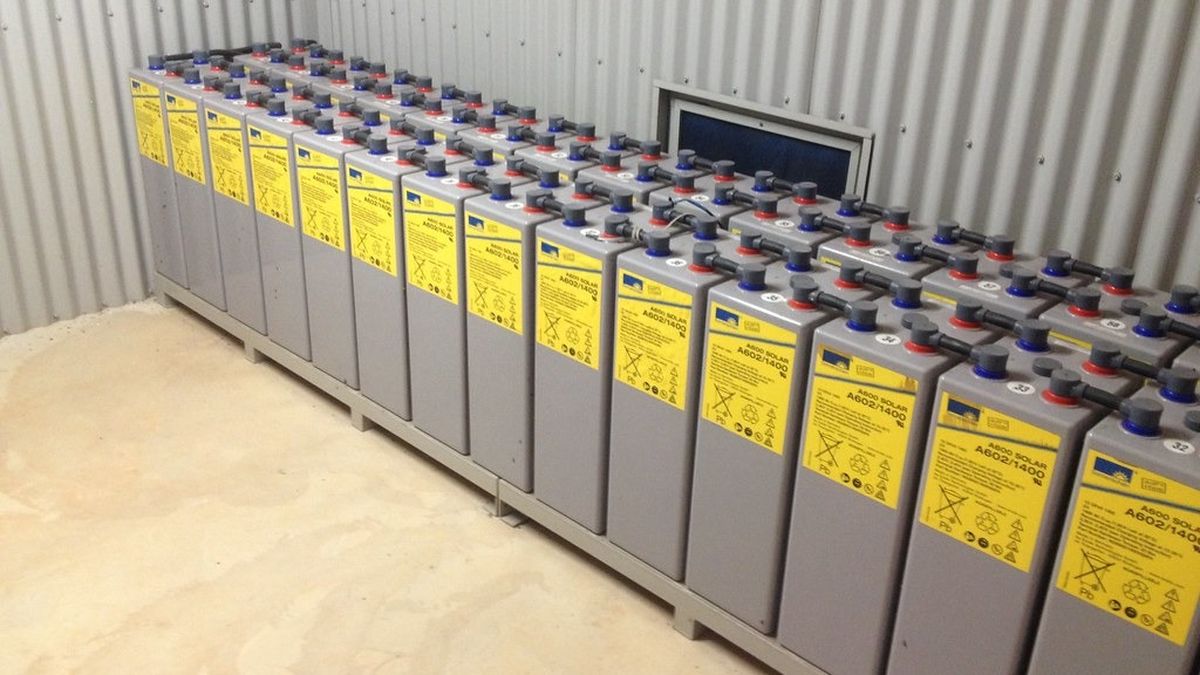
How to Choose Solar Batteries: LiFePO4, AGM and Server-Rack Packs
Chemistry, usable capacity, BMS features and lifetime cost per kWh: a practical framework for choosing the battery your system depends on.
Read more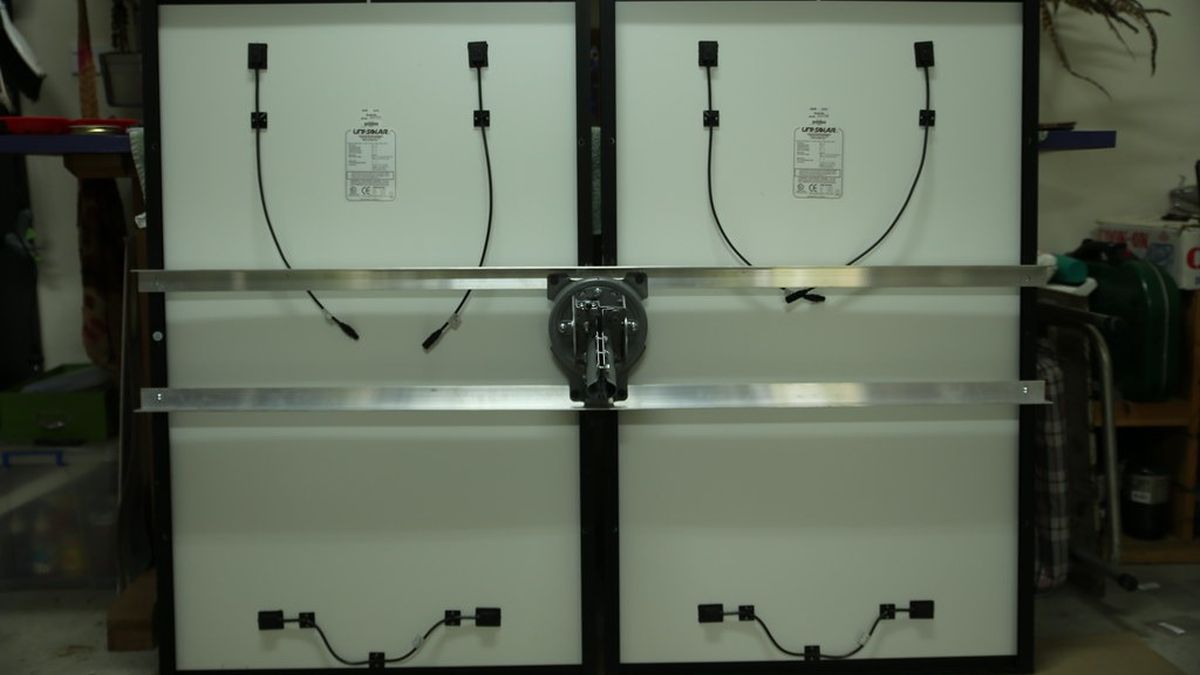
12V vs 24V vs 48V: Choosing Your Solar System Voltage
System voltage is the first decision in any off-grid build and the hardest to change later. Here is how current, cable size and controller cost decide it.
Read more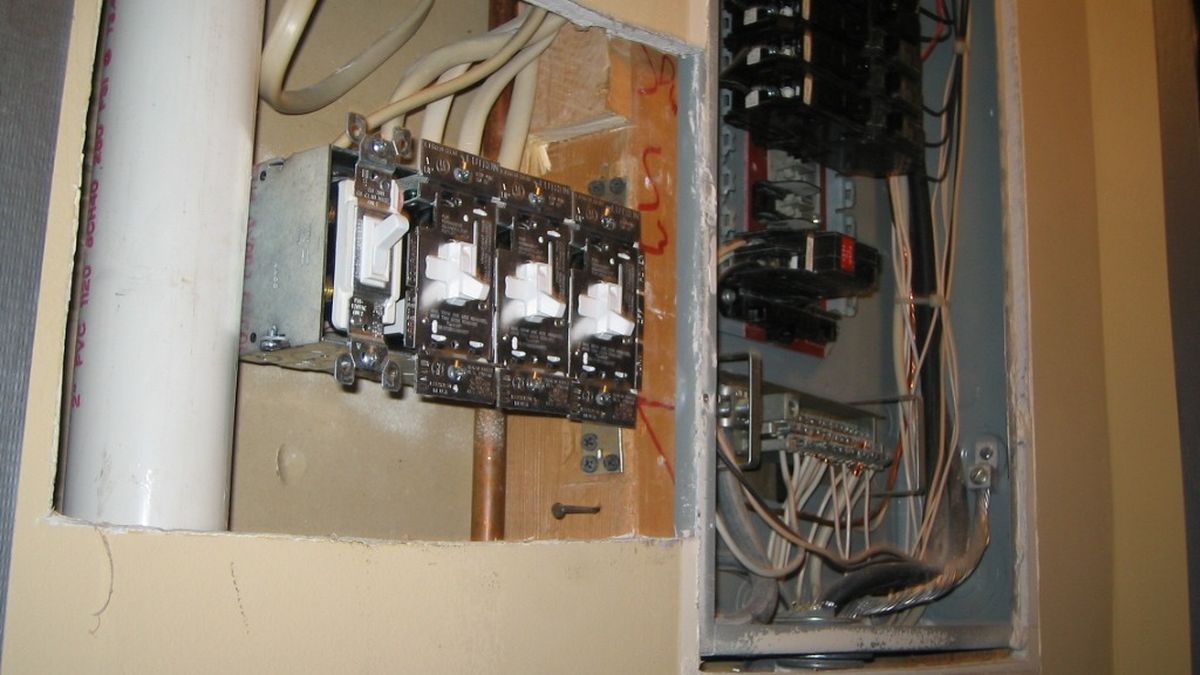
Solar Fuse and Breaker Sizing: Protecting Every Wire
Every positive wire leaving a battery needs protection. Where fuses and breakers go, how to size them, and which types handle DC safely.
Read more