
Solar Power for Apartments and Renters
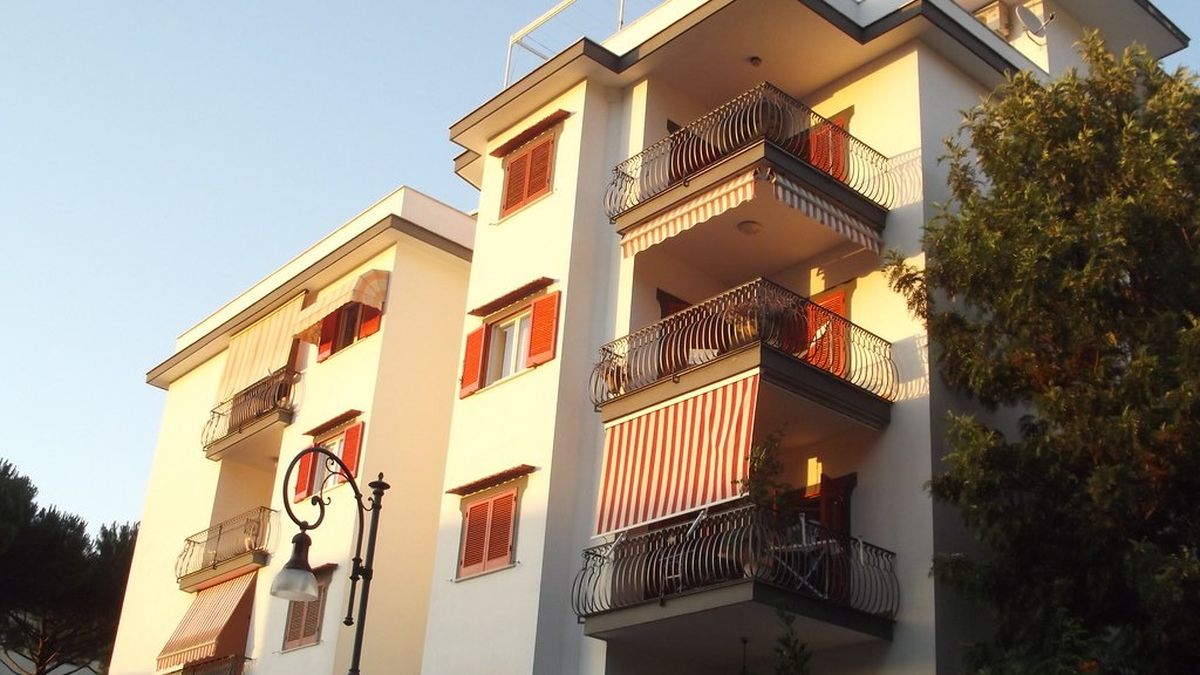
No roof of your own does not have to mean no solar. Renters and apartment dwellers can use balcony panels with a power station, plug-in "balcony solar" where it is allowed, or community solar subscriptions. The numbers are smaller than a rooftop system, but they are real, and a battery adds outage protection too.
Key takeaways
- A 200-400W balcony panel can produce roughly 0.3-1.2kWh per day depending on orientation and season.
- A power station with a balcony panel needs no wiring or landlord approval for the electrical side.
- Plug-in grid-connected balcony solar is legal in some places; check local rules first.
- Community solar lets renters buy into a solar farm and receive bill credits.
Option 1: balcony panel + power station
Mount one or two panels on a balcony railing or stand, and run a cable inside to a power station. Use it to charge devices, run a desk setup or keep the fridge and internet on in an outage. See keeping the internet on during an outage.
| Panel setup | South-facing, good sun | East/west or partly shaded |
|---|---|---|
| 200W, tilted | ~0.6-0.8kWh/day | ~0.3-0.5kWh/day |
| 200W, vertical on railing | ~0.4-0.6kWh/day | ~0.2-0.4kWh/day |
| 400W, tilted | ~1.2-1.5kWh/day | ~0.6-1.0kWh/day |
Connection details are in the panels to power station diagram, and panel choice in the portable solar panel buying guide.
Option 2: plug-in balcony solar
Plug-in systems use one or two panels with a small microinverter that plugs into an outlet and feeds power into your apartment's circuits, reducing what you draw from the grid. They are widespread in parts of Europe, and a growing number of US jurisdictions are allowing them, but rules vary widely, and some utilities require notification or prohibit them. Check local regulations and your lease first.
They work like a miniature microinverter grid-tie system, and like any grid-tie system, they shut off in a power outage.
Option 3: community solar
In many US states, you can subscribe to a share of a local solar farm and receive credits on your electric bill, with nothing installed at home. It is often the biggest bill saving available to renters. Search your state's community solar programs or ask your utility.
Practical tips
- Secure panels against wind. Use proper railing mounts, never loose panels that could fall.
- Check your lease and building rules about balcony fixtures.
- Tilt panels when you can. Vertical mounting loses significant output in summer.
- Bring batteries indoors; avoid charging LiFePO4 below freezing.
Comparing all your options? See grid-tie vs off-grid vs hybrid.
Frequently asked questions
Can I put solar panels on my apartment balcony?
Usually yes, with secure mounting and your landlord's permission for fixtures. A panel feeding a power station needs no electrical connection to the building.
Is plug-in balcony solar legal?
It depends on where you live. It is common in parts of Europe and allowed in some US jurisdictions. Check local rules and your utility before buying.
How much can a balcony solar panel save?
A 400W system might produce 300-450kWh a year in good conditions, which is a modest but real bill reduction.
See what your balcony could produce
Estimate output for your location and orientation.
Related guides and diagrams
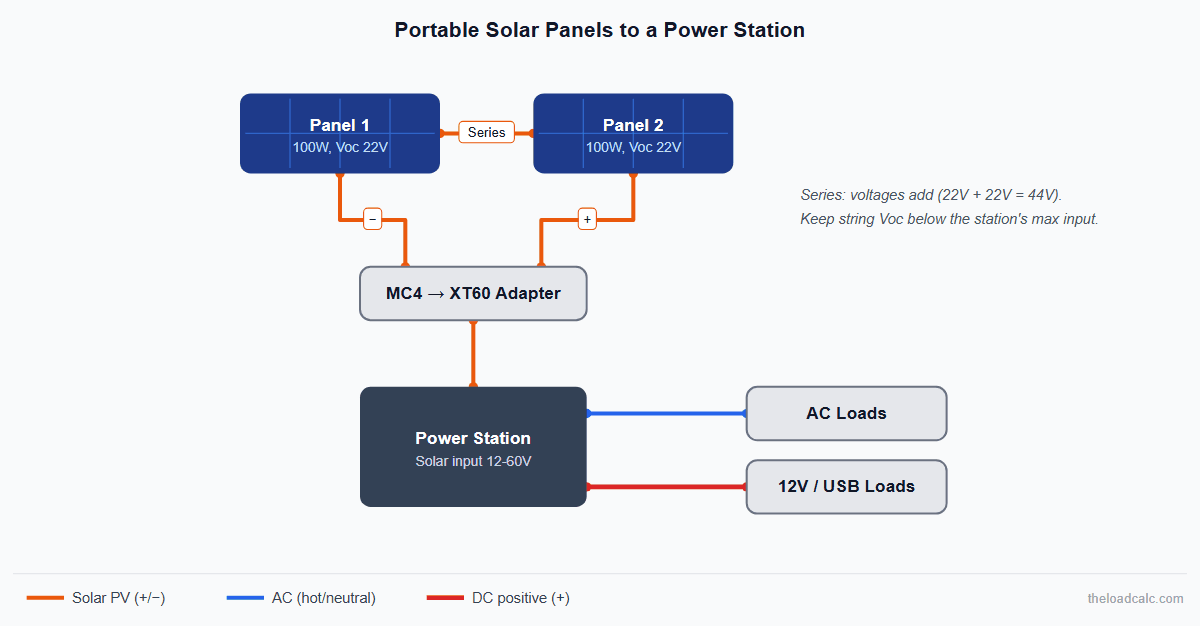
Portable Solar Panels to Power Station Wiring Diagram
Series or parallel? How to connect two or more portable panels to a power station without exceeding its input limits.
Read more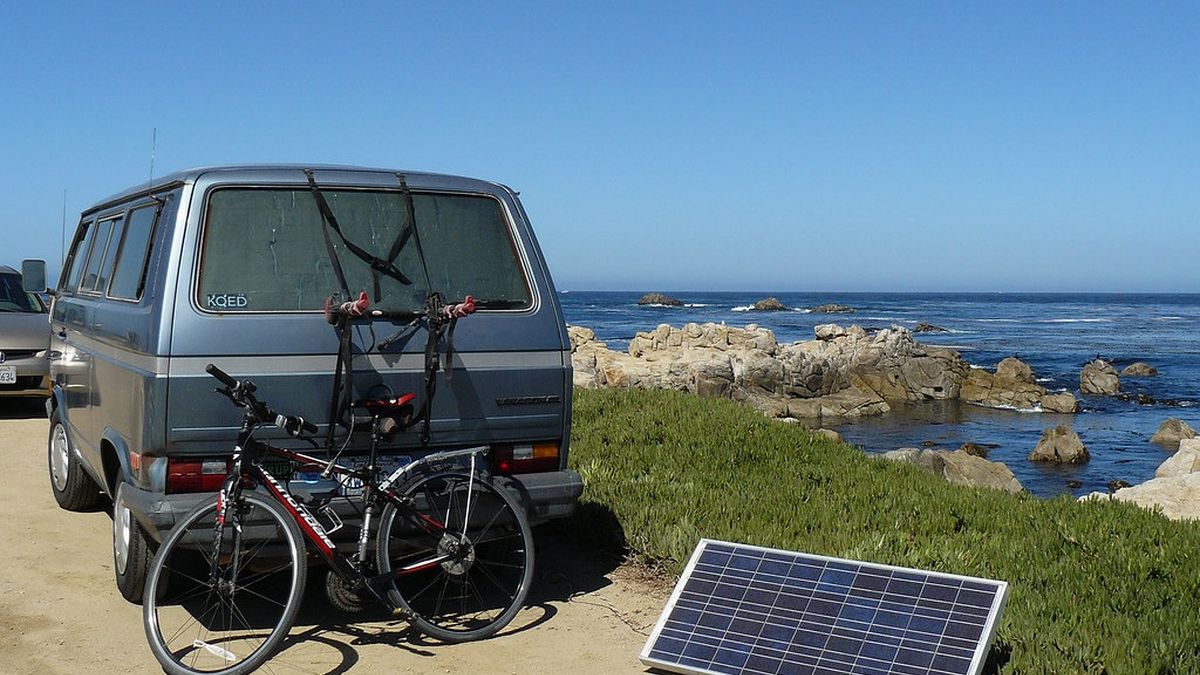
Portable Solar Panel Buying Guide: Folding vs Rigid and What Specs Matter
The wrong panel either cannot recharge your power station in a day or will not plug into it at all. The specs that matter, and the ones that are just marketing.
Read more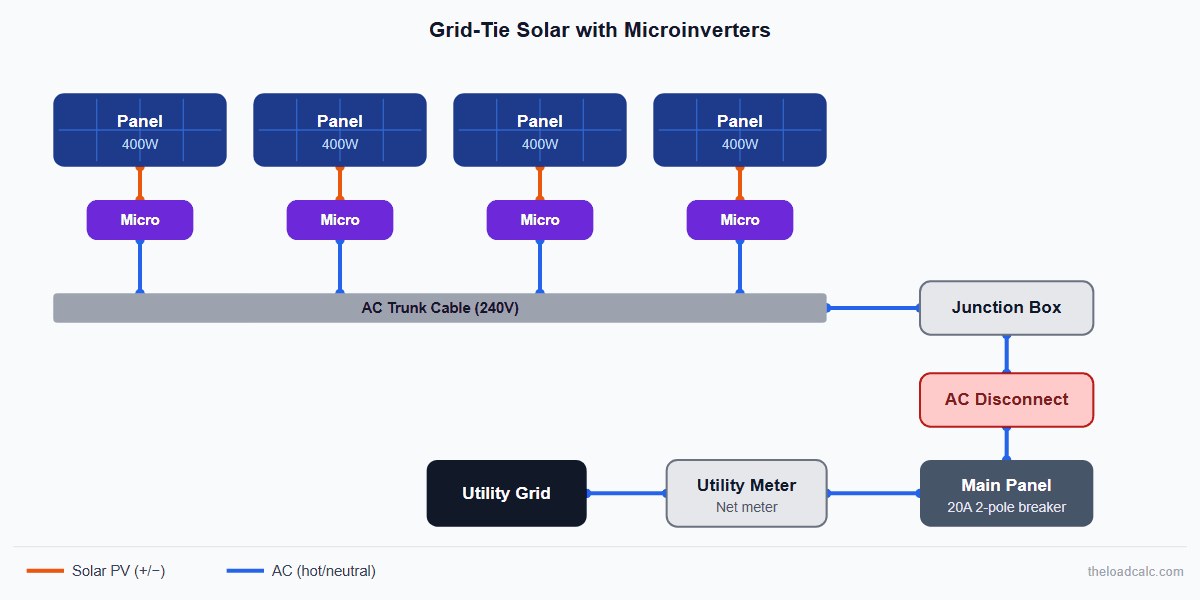
Grid-Tie Microinverter Wiring Diagram
Each panel gets its own inverter, and AC runs from the roof to your main panel. Every part of a microinverter system, in order.
Read more
How to Keep Your Internet On During a Power Outage
Wi-Fi is one of the cheapest things to keep running in a blackout. Here is how much battery it takes and the setup that wastes the least energy.
Read more