
Grid-Tie vs Off-Grid vs Hybrid Solar: Which System Is Right for You?
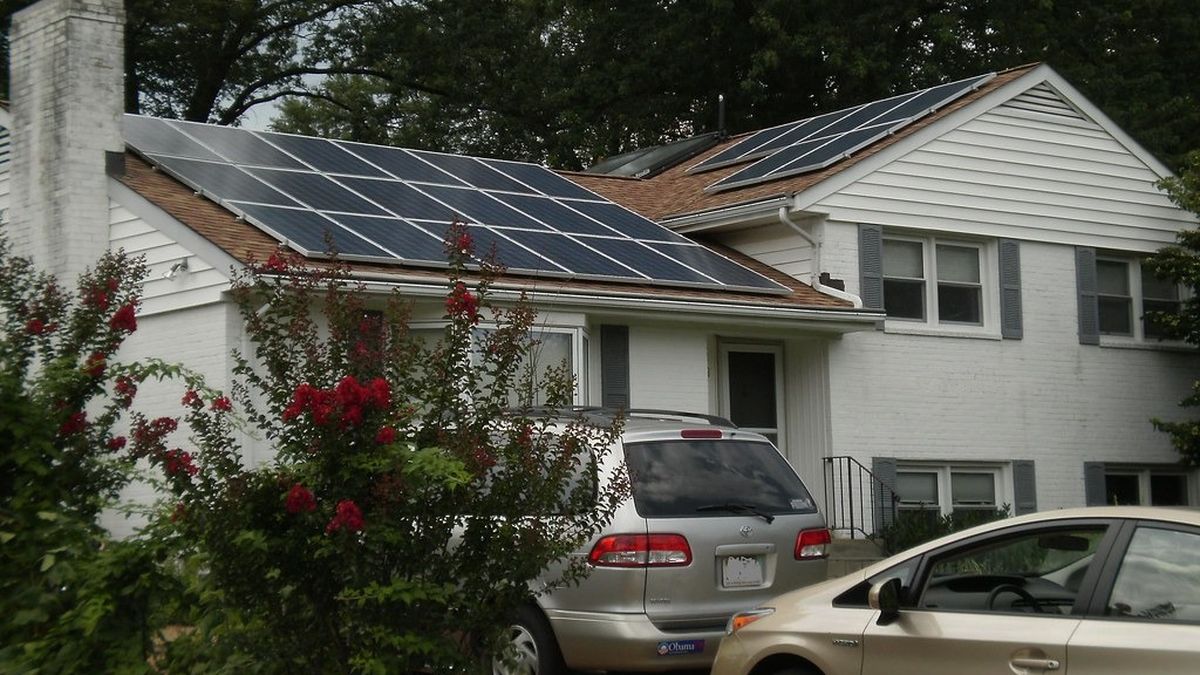
Before choosing panels or batteries, decide how your system will relate to the grid. Grid-tie, off-grid and hybrid systems use similar parts but behave very differently in an outage, cost very different amounts, and suit different goals.
Key takeaways
- Grid-tie is cheapest per watt and best for lowering bills, but shuts down in an outage.
- Off-grid gives full independence but must be sized for winter and needs backup charging.
- Hybrid adds batteries to a grid-tied system for backup and self-consumption.
- Your goal (savings, backup or independence) decides the architecture.
Side-by-side comparison
| Grid-tie | Off-grid | Hybrid | |
|---|---|---|---|
| Batteries | None | Required | Yes |
| Works in outages | No | Yes | Yes (backup loads) |
| Cost per kW | Lowest | Highest | Middle-high |
| Sizing | To offset annual use | To worst month + autonomy | Panels for savings, battery for backup |
| Main benefit | Lower bills | Independence | Backup + savings |
| Typical inverter | String or microinverters | Off-grid inverter-charger | Hybrid inverter |
Grid-tie: the money saver
Panels feed a string inverter or microinverters that synchronize with the grid. Surplus is exported through a net meter. Because the grid acts as an unlimited battery, there is no storage cost. The catch: anti-islanding rules require the system to shut down when the grid fails, to protect line workers.
Off-grid: complete independence
Off-grid systems must cover every hour of every day from panels and batteries, so they are sized for the darkest month with days of autonomy, and usually include a generator for long storms. They make sense where grid connection is expensive or unavailable: cabins, ranches, remote homes. Start with how to size an off-grid system and the complete off-grid living guide.
Hybrid: the best of both
A hybrid inverter with battery powers a backup loads panel during outages and uses the battery daily to store solar for the evening or shift usage away from peak rates. It suits homeowners in storm-prone areas or on time-of-use tariffs. See home battery backup for battery choices.
Which should you choose?
- Mainly want lower bills, rare outages: grid-tie. Add a portable power station for outages.
- Frequent or long outages: hybrid with a critical loads panel.
- No grid, or very expensive connection: off-grid.
- Renting or no roof: see apartment solar options.
Multi-orientation roofs work with any type. See the east-west array diagram. For whole-house planning, see the whole home solar guide.
Frequently asked questions
Does grid-tied solar work during a power outage?
No. Grid-tied inverters must shut down when the grid fails. You need batteries and a hybrid or backup-capable system to keep power on.
Is off-grid solar cheaper than being on the grid?
Rarely, if a grid connection is already available. Off-grid makes financial sense mainly where connecting to the grid is costly.
Can I add batteries to my grid-tie system later?
Usually yes, either by adding an AC-coupled battery system or replacing the inverter with a hybrid unit.
Estimate your system size
Find out how much solar you need for your goal.
Related guides and diagrams
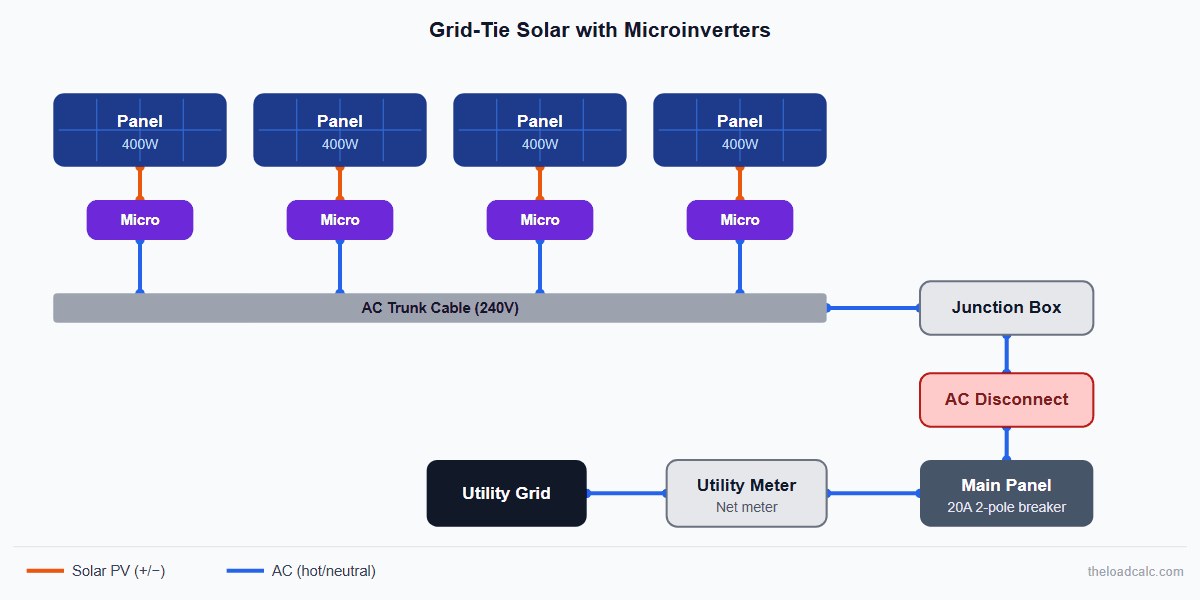
Grid-Tie Microinverter Wiring Diagram
Each panel gets its own inverter, and AC runs from the roof to your main panel. Every part of a microinverter system, in order.
Read more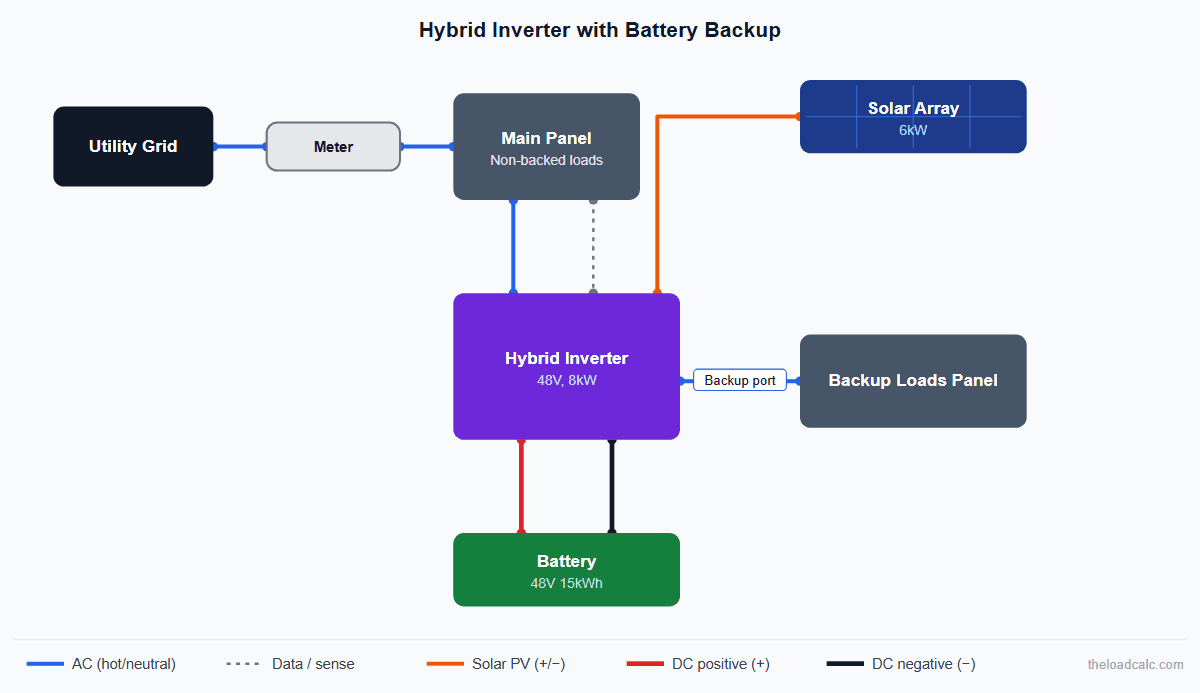
Hybrid Inverter with Battery Backup Wiring Diagram
Solar that keeps working in a blackout: grid, PV, battery and a backup loads panel all meet at the hybrid inverter.
Read more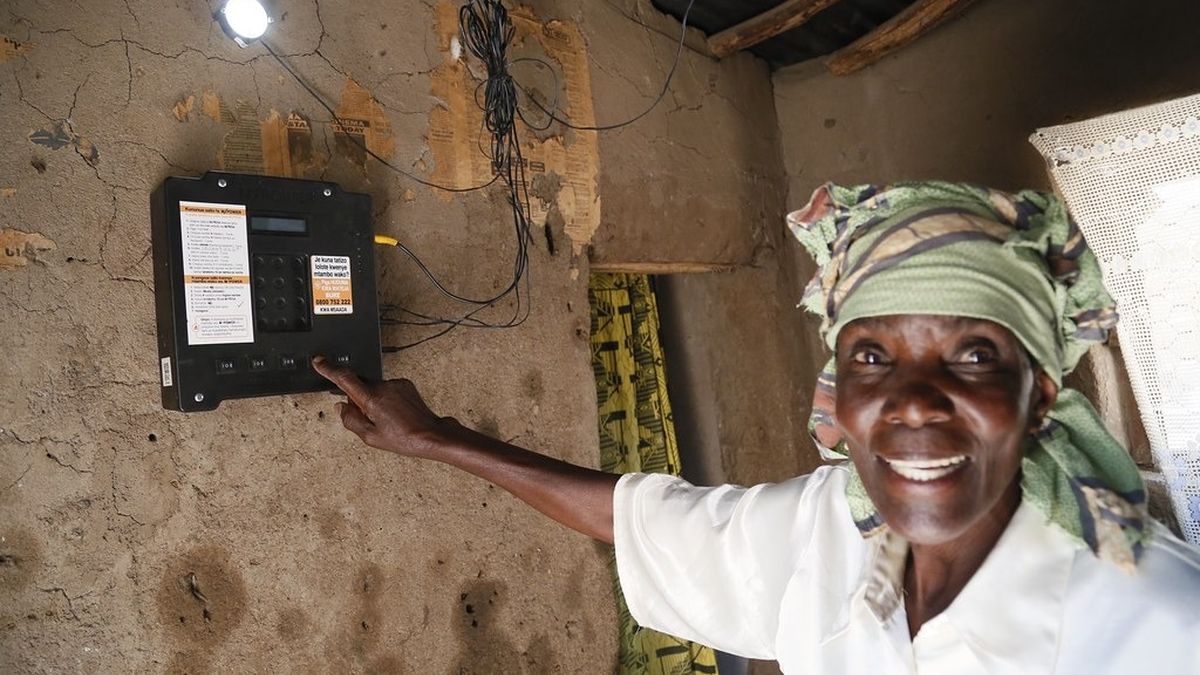
How to Size an Off-Grid Solar System: Step-by-Step
Six steps from your appliance list to a complete component list, with the formulas and a worked example you can copy.
Read moreWhole Home Solar: Complete Guide
Going solar for your whole home: system sizing, installation, real savings and the tax incentives available.
Read more