
Grid-Tie Microinverter Wiring Diagram
Each panel gets its own inverter, and AC runs from the roof to your main panel. Every part of a microinverter system, in order.
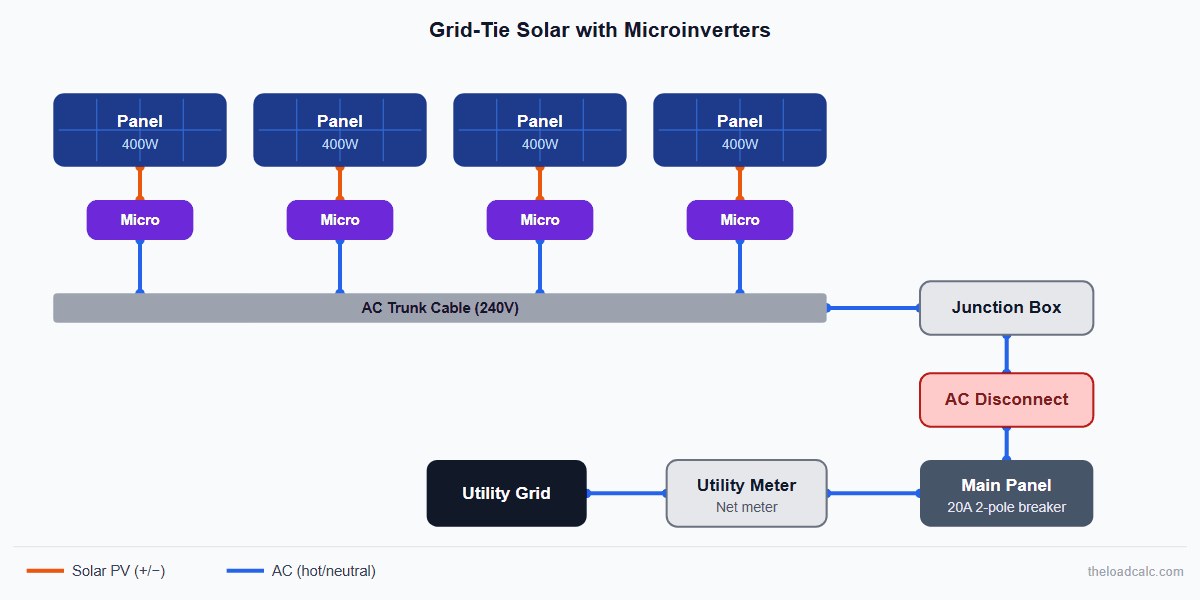
In a microinverter system, every panel has its own small inverter mounted underneath it. Each converts DC to grid-synchronized AC right at the panel, so only AC runs from the roof, through a junction box and disconnect, to a backfeed breaker in your main panel. The utility's net meter records what you export.
Key takeaways
- Each panel connects to its own microinverter; the micros link via an AC trunk cable.
- Branch circuits are limited to a set number of micros per breaker (see the manufacturer's table).
- The backfeed breaker must satisfy the panel busbar rule (often the "120% rule" in the US).
- Grid-tie systems shut down during outages unless paired with batteries and a backup gateway.
Components
| Component | Typical spec | Role |
|---|---|---|
| Solar panels | Matched to microinverter input rating | Generate DC |
| Microinverters | One per panel (or per two panels) | Convert DC to AC at the panel |
| AC trunk cable | Manufacturer system cable | Links micros on a branch |
| Junction box | Rooftop transition to building wire | Connects trunk to home run |
| AC disconnect | Lockable, if required by the utility | Service isolation |
| Backfeed breaker | 2-pole, sized to branch output | Connects to the main panel |
Step-by-step wiring
- 1Get the permit and utility interconnection approval before installing.
- 2Mount racking and attach microinverters, then mount panels and plug each into its micro.
- 3Connect the micros together with the trunk cable, observing the per-branch limit, and cap the open end.
- 4Run from the rooftop junction box to the AC disconnect and then to the main panel.
- 5Install the 2-pole backfeed breaker, typically at the opposite end of the busbar from the main breaker.
- 6Pass inspection; the utility installs or programs the net meter before you energize.
Disconnect all sources before working, follow the equipment manuals and local electrical codes, and use a licensed electrician for work on home wiring and panels.
The 120% rule
In the US, a common rule for load-side connections allows the main breaker plus the solar breaker to total up to 120% of the panel busbar rating. A 200A busbar with a 200A main allows up to 40A of solar backfeed (200 × 1.2 − 200), which is about 7.6kW of AC output at 240V after applying the 125% continuous factor. Larger systems need a supply-side connection or a main breaker downsize. Your installer and inspector will confirm what applies.
Microinverters also simplify rapid shutdown requirements and keep shading on one panel from affecting the rest. Compare architectures in grid-tie vs off-grid vs hybrid. For backup power, see the hybrid inverter diagram.
Common mistakes
- Exceeding the number of microinverters allowed per branch circuit.
- Energizing before utility permission to operate.
- Placing the backfeed breaker next to the main breaker where the 120% rule requires the opposite end.
- Expecting power during a grid outage without batteries.
Frequently asked questions
Do microinverters work during a power outage?
No. Grid-tie inverters must shut down when the grid fails (anti-islanding). Backup requires batteries and a system designed to island safely.
How many microinverters can be on one circuit?
It depends on the model's output current and breaker size. Manufacturers publish the maximum per 20A branch, often in the range of 7-16 units.
Microinverters or string inverter?
Microinverters handle shading and complex roofs better and allow panel-level monitoring. String inverters are usually cheaper for large unshaded arrays.
Estimate production
See how much your array could produce where you live.
Related diagrams and guides
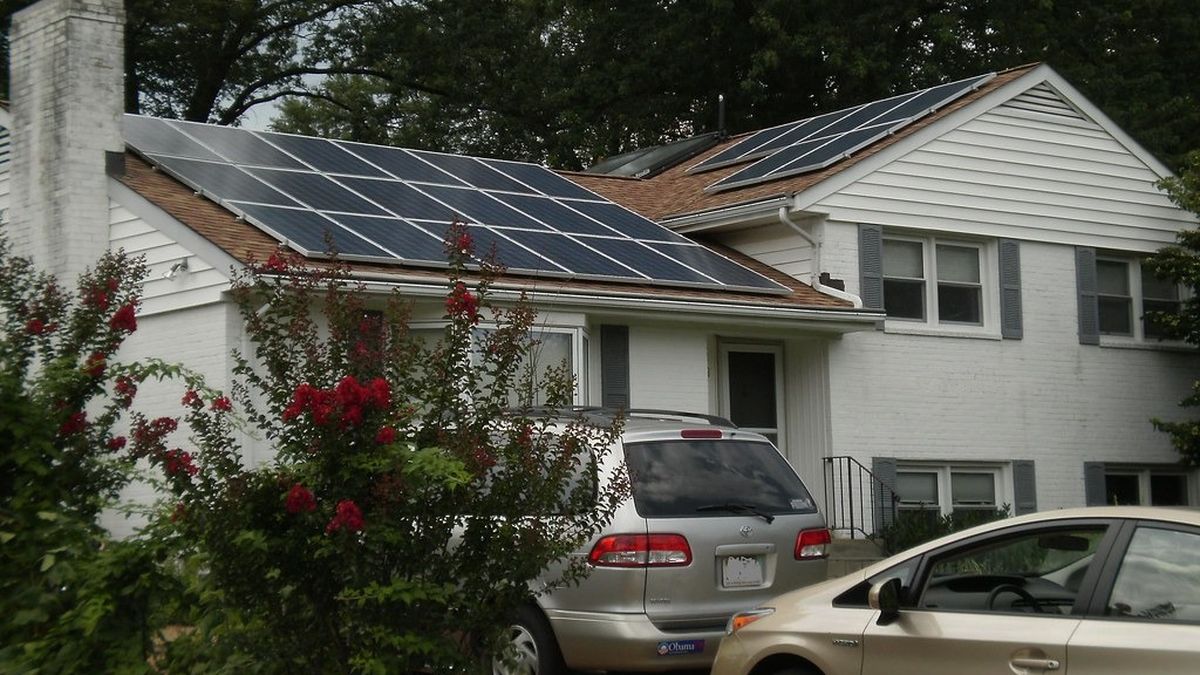
Grid-Tie vs Off-Grid vs Hybrid Solar: Which System Is Right for You?
The three ways to use solar at home, compared on cost, outage protection and complexity, so you can pick the right architecture.
Read more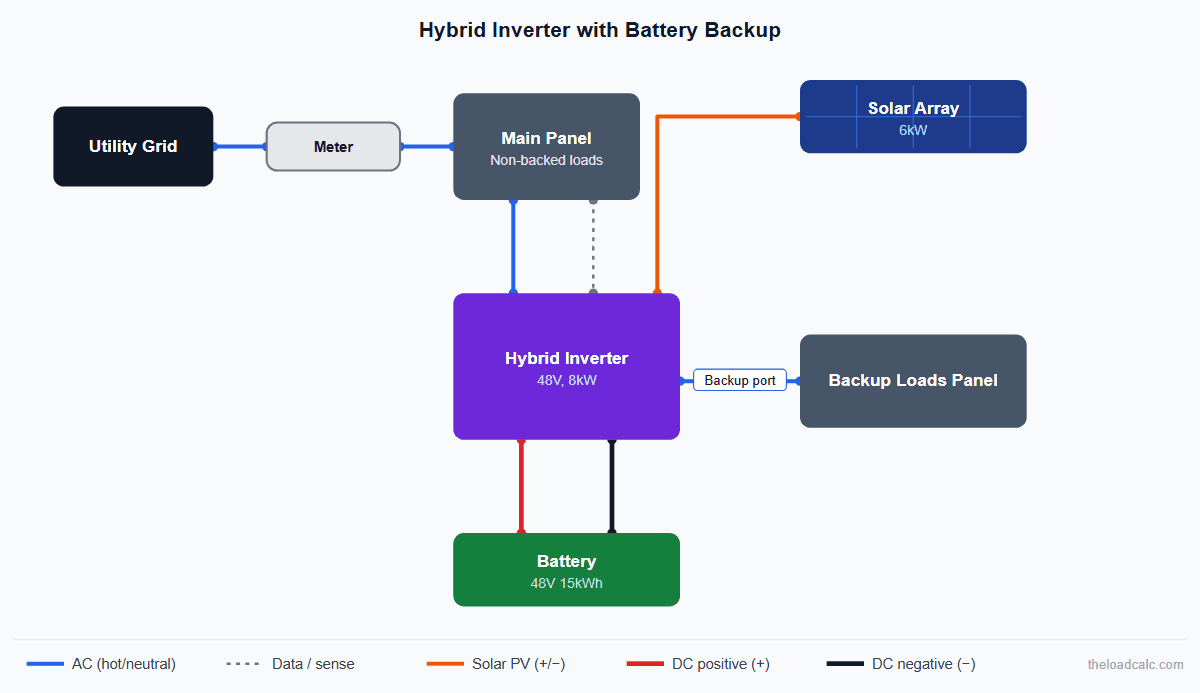
Hybrid Inverter with Battery Backup Wiring Diagram
Solar that keeps working in a blackout: grid, PV, battery and a backup loads panel all meet at the hybrid inverter.
Read more
Solar Power for Apartments and Renters
No roof, no problem: balcony panels, power stations and community solar options for renters, with realistic output numbers.
Read moreWhole Home Solar: Complete Guide
Going solar for your whole home: system sizing, installation, real savings and the tax incentives available.
Read more