
Generator Backup Wiring for an Off-Grid Inverter-Charger
Add a generator to an off-grid system so it recharges the batteries automatically during long cloudy spells.
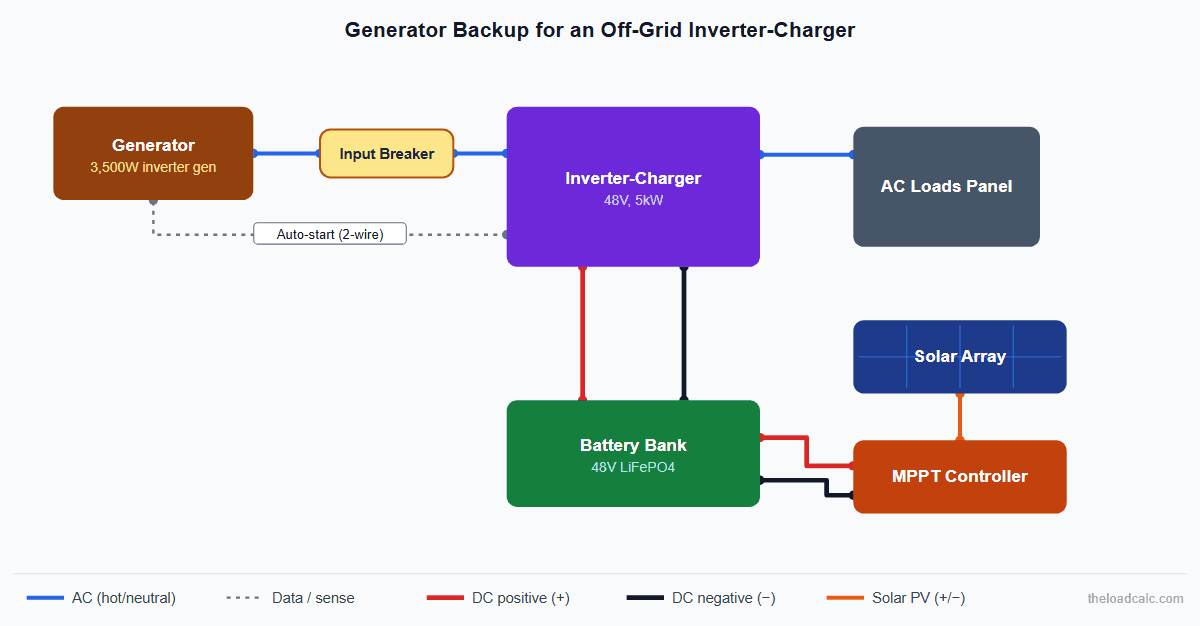
Even a well-designed off-grid system meets a week of storms. A backup generator connected to the AC input of an inverter-charger solves that: the inverter-charger passes generator power to your loads while charging the batteries, and with an auto-start connection it can start the generator automatically when the batteries run low.
Key takeaways
- The generator feeds the inverter-charger's AC input through a breaker, never the AC loads panel directly.
- Set the charger's input current limit below the generator's continuous rating.
- A two-wire auto-start connects a relay in the inverter to the generator's remote start terminals.
- Inverter generators produce clean power that inverter-chargers accept more reliably.
Components
| Component | Typical spec | Role |
|---|---|---|
| Generator | Inverter type, sized to charger + loads | Backup charging |
| AC input breaker | Sized to generator output and input wiring | Protects the input circuit |
| Inverter-charger | Off-grid, with AC input and auto-start relay | Inverts, charges, transfers |
| Auto-start wiring | Two-wire to generator remote start | Automatic operation |
| Battery bank | 48V LiFePO4 typical | Storage |
| Solar array + MPPT | Per system sizing | Primary charging |
Step-by-step wiring
- 1Install a generator inlet or hard-wired connection and run it through a breaker to the inverter-charger's AC input.
- 2Connect the inverter-charger's AC output to the AC loads panel.
- 3Wire the inverter's auto-start relay to the generator's two-wire remote start terminals (if supported).
- 4Program the charger profile, AC input current limit and generator start/stop conditions (for example start at 30% state of charge, stop at 85%).
- 5Address neutral-ground bonding per the inverter and generator manuals.
- 6Test a full start, transfer, charge and stop cycle.
Disconnect all sources before working, follow the equipment manuals and local electrical codes, and use a licensed electrician for work on home wiring and panels.
Sizing the generator
Add the charger's maximum AC draw to the loads you expect to pass through while it runs. A 48V charger delivering 60A (about 3.4kW) plus 1kW of loads needs a generator of around 4.5-5kW continuous, or you can lower the charger's current limit to fit a smaller generator. Charging only to about 85% before stopping avoids running the generator through the slow final stage.
For the whole design process, see how to size an off-grid solar system and the off-grid cabin guide. Need 240V output? Combine this with split-phase stacked inverters.
Common mistakes
- Feeding generator power straight into the AC panel, bypassing the inverter.
- Charger current limit set higher than the generator can supply, causing stalls.
- Two neutral-ground bonds when the generator and inverter both bond.
- Running the generator to 100% state of charge every time, wasting fuel.
Frequently asked questions
Can I connect a generator to an off-grid inverter?
Yes, to an inverter-charger's AC input. A plain inverter without a charger cannot use generator power.
What size generator do I need for battery charging?
Enough to cover the charger's AC draw plus any loads running at the same time, with margin. Many 48V systems pair with 4-7kW generators.
How does generator auto-start work?
The inverter closes a relay at a set battery level, signaling the generator's remote start terminals. It opens the relay when the stop condition is reached.
Plan for cloudy weeks
Work out how many days your battery covers without sun.
Related diagrams and guides
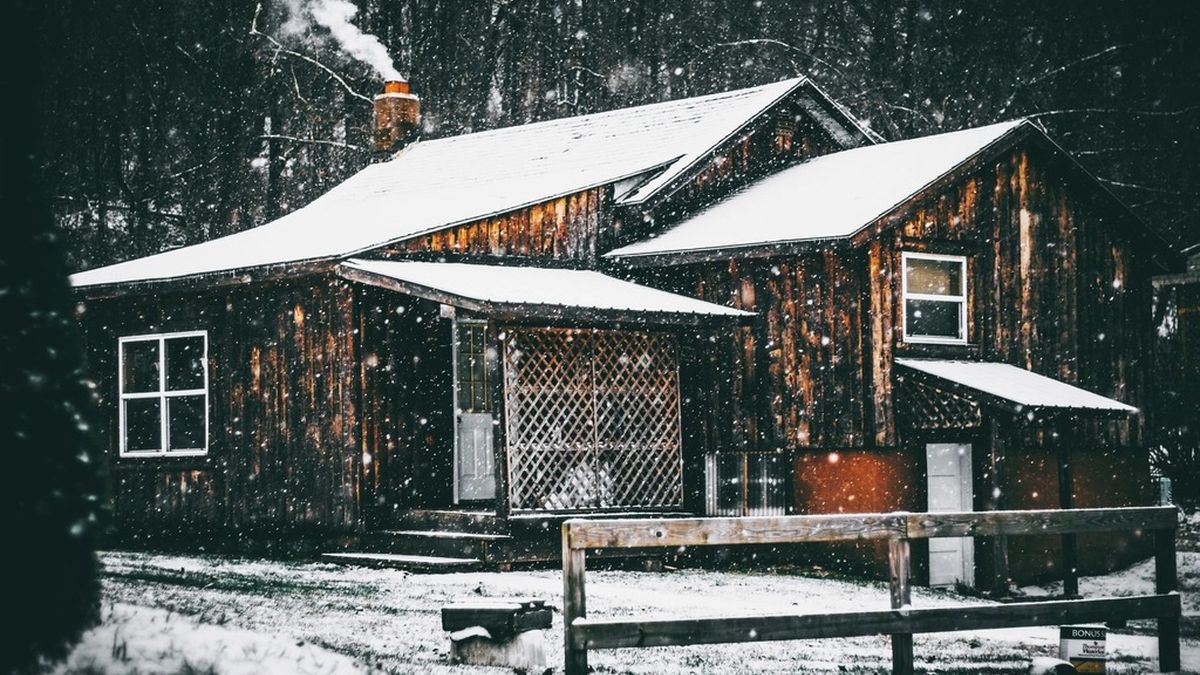
Off-Grid Cabin Solar: Weekend and Full-Time Systems
Weekend retreat or full-time home in the woods: how to size, protect and leave a cabin solar system unattended through the seasons.
Read more
How to Size an Off-Grid Solar System: Step-by-Step
Six steps from your appliance list to a complete component list, with the formulas and a worked example you can copy.
Read more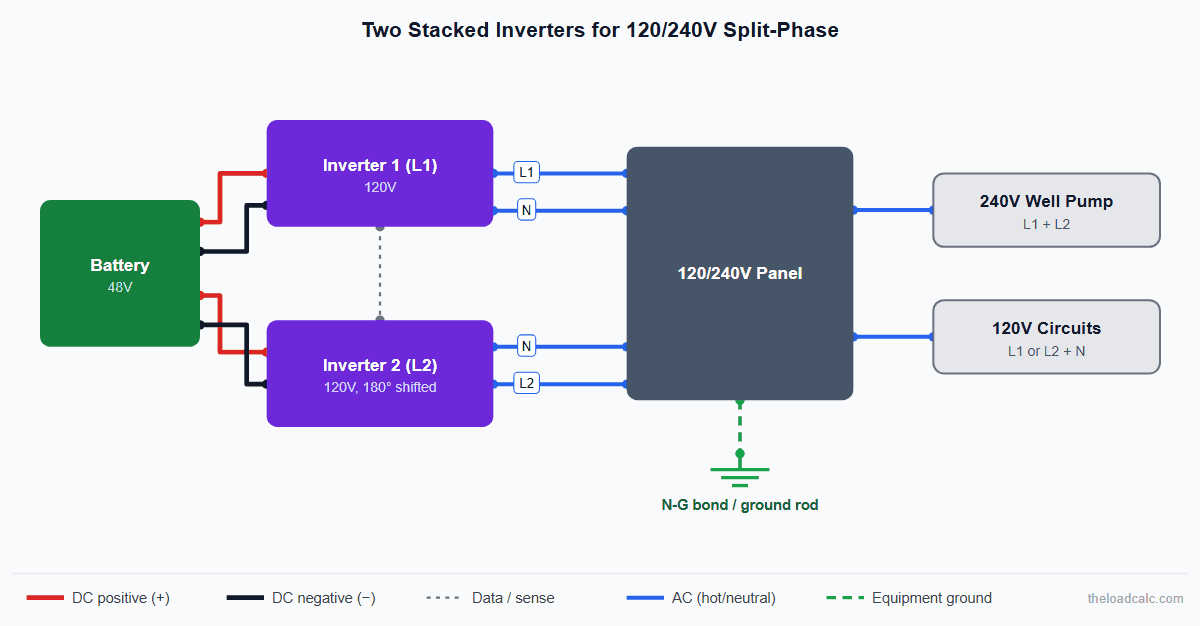
Split-Phase 240V Wiring with Two Stacked Inverters
Two 120V inverters, synchronized 180° apart, give you 240V for well pumps and dryers. Here is how it is wired.
Read more48V Solar System Wiring Diagram
How to wire a 48V solar system for larger off-grid homes, with component choices, wire sizing and safety.
Read more