
Off-Grid Cabin Solar: Weekend and Full-Time Systems
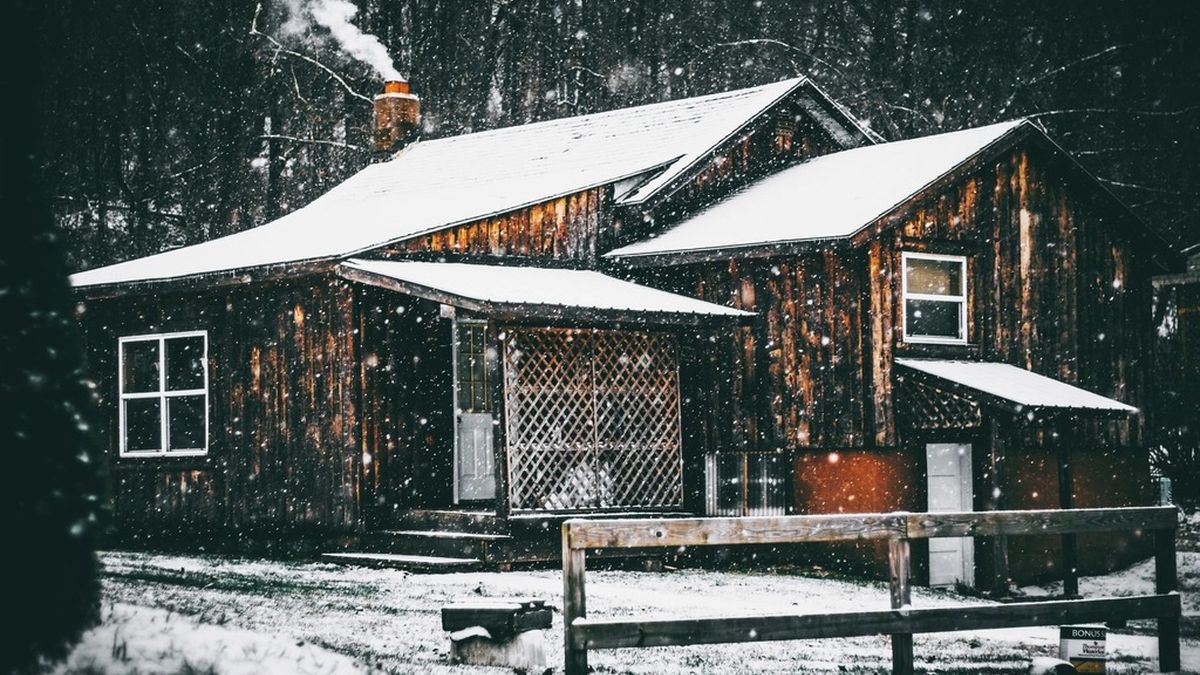
Cabins are where solar shines: often far from the grid, used seasonally, and simple in their needs. But cabin systems have their own challenges: they sit unattended for weeks, face freezing winters and must cope with heavy weekend use followed by days of nothing. This guide covers both weekend and full-time cabins.
Key takeaways
- Weekend cabins can use a modest array that refills a big battery during the week.
- Full-time cabins must be sized for the darkest month, with generator backup.
- Unattended systems need freeze protection, low-voltage protection and ideally remote monitoring.
- Propane or wood for heat, cooking and hot water keeps the electrical system affordable.
Weekend vs full-time
| Weekend cabin | Full-time cabin | |
|---|---|---|
| Daily use | 1-3kWh on weekends, near zero midweek | 3-8kWh every day |
| Battery | 5-10kWh | 10-30kWh |
| Solar | 400W-1.5kW | 2-6kW |
| Inverter | 2-3kW | 4-8kW, often split-phase |
| Backup | Optional | Generator recommended |
| Sizing basis | Battery refills over 5 days | Worst month + autonomy |
A weekend cabin's panels have all week to refill the battery, so the array can be smaller than daily use would suggest. Full-time cabins follow the standard process in how to size an off-grid system.
Leaving the system unattended
- Turn off the inverter when you leave to save its idle draw; let solar keep the battery at a healthy level.
- Freeze protection: batteries in an unheated cabin need low-temperature charge cutoff or self-heating. See LiFePO4 in cold weather.
- Remote monitoring: many controllers and inverters offer cellular or Wi-Fi monitoring, so you see problems before you arrive.
- Pests and theft: protect cables in conduit, and lock ground-mounted equipment.
Array placement
Cabins are often among trees. A ground mount in a clearing usually outperforms a shaded roof and makes snow clearing easy. See the ground-mount installation guide and estimate the shading cost with the shading impact calculator.
Backup power and 240V
Full-time cabins should plan for a week of storms: an inverter-charger with a generator on auto-start handles it. See the generator backup wiring diagram. If you have a 240V well pump, you need split-phase output. See split-phase stacked inverters and running a well pump in an outage.
Keep heat off the electrical system
Electric heating and hot water would multiply the system size several times. Wood stoves, propane heaters and on-demand propane water heaters keep cabin loads manageable. See can a solar generator run a space heater for the math. For full off-grid living, see the complete off-grid living guide.
Frequently asked questions
How much solar do I need for an off-grid cabin?
A weekend cabin often needs 400W-1.5kW with 5-10kWh of battery. A full-time cabin typically needs 2-6kW with 10-30kWh and a generator.
Can I leave a solar system unattended at a cabin all winter?
Yes, with freeze-protected batteries, the inverter off, a healthy state of charge and ideally remote monitoring.
Should a cabin system be 12V, 24V or 48V?
Small weekend systems can be 12V or 24V. Anything over about 2kW of inverter should be 48V.
Size your cabin system
Plan battery autonomy and array size for your season.
Related guides and diagrams
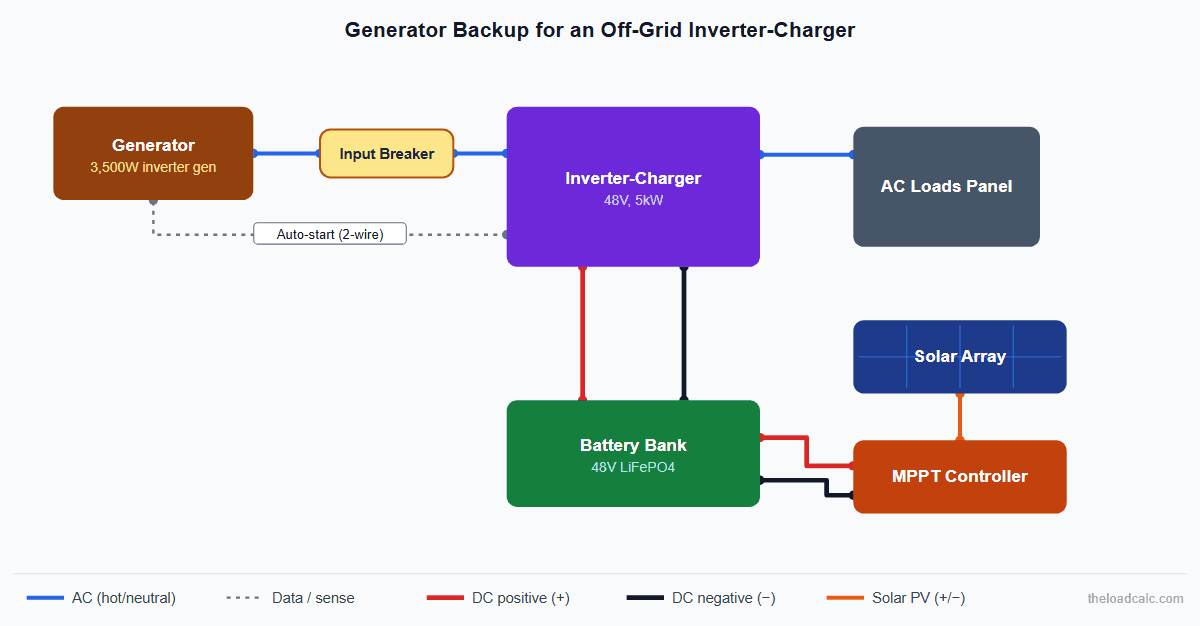
Generator Backup Wiring for an Off-Grid Inverter-Charger
Add a generator to an off-grid system so it recharges the batteries automatically during long cloudy spells.
Read more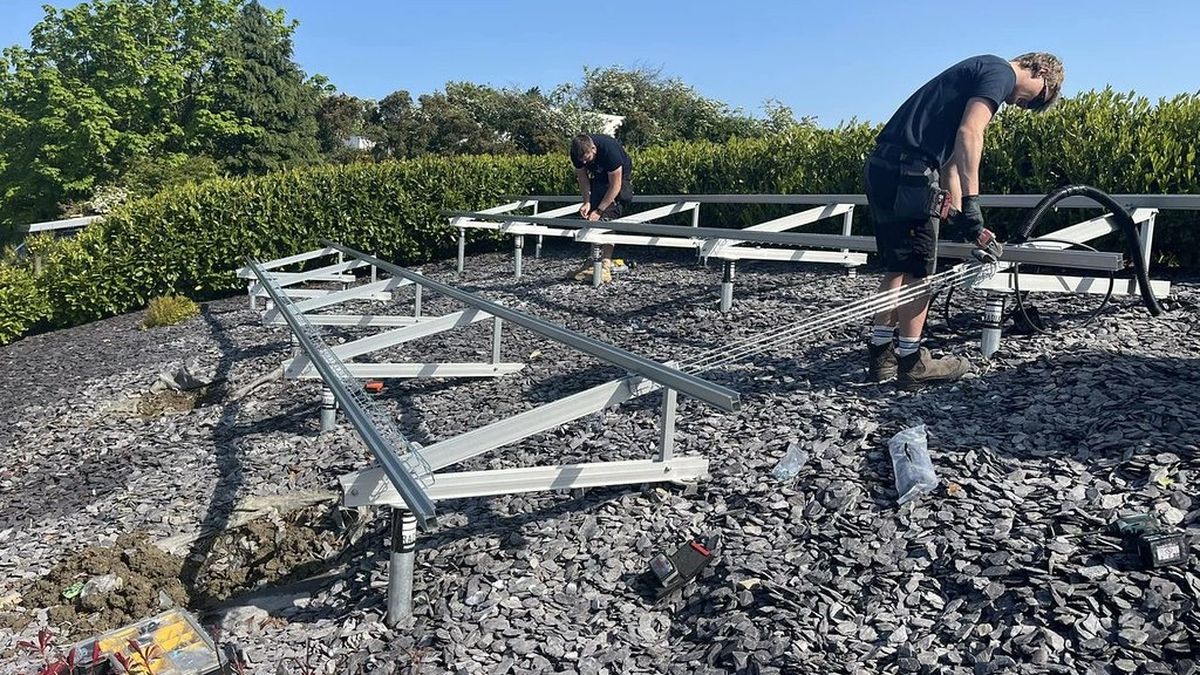
How to Install a Ground-Mount Solar Array
Siting, foundations, racking, trenching and grounding: how to build a ground mount that survives wind, snow and decades of sun.
Read more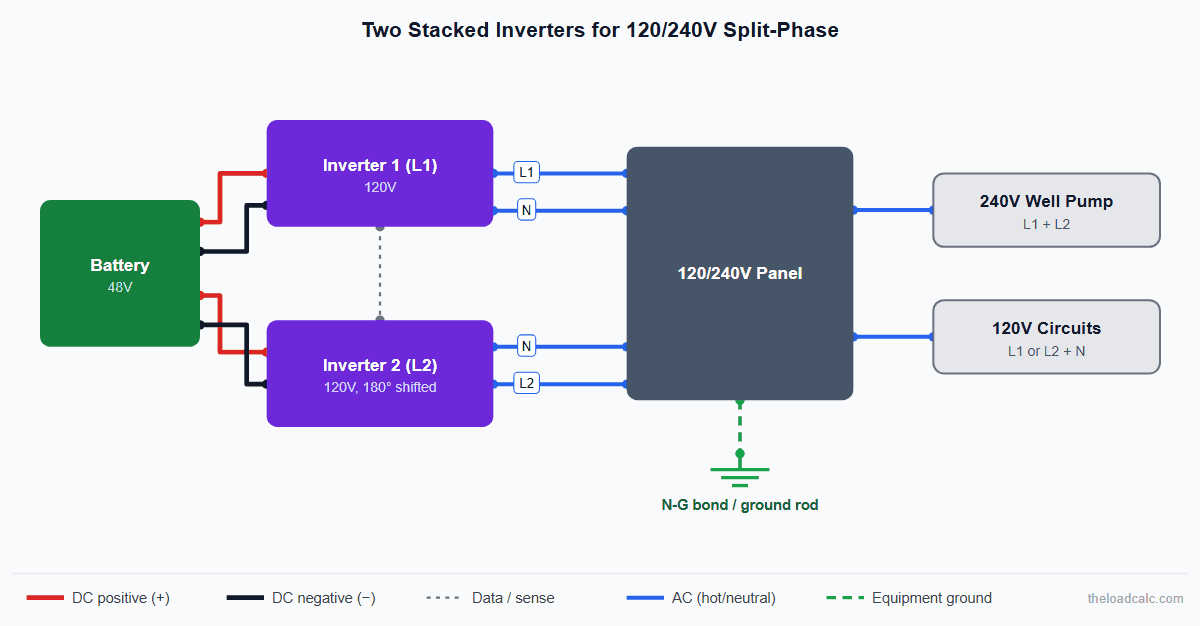
Split-Phase 240V Wiring with Two Stacked Inverters
Two 120V inverters, synchronized 180° apart, give you 240V for well pumps and dryers. Here is how it is wired.
Read more
How to Size an Off-Grid Solar System: Step-by-Step
Six steps from your appliance list to a complete component list, with the formulas and a worked example you can copy.
Read more