
Solar Power for a Shed or Workshop
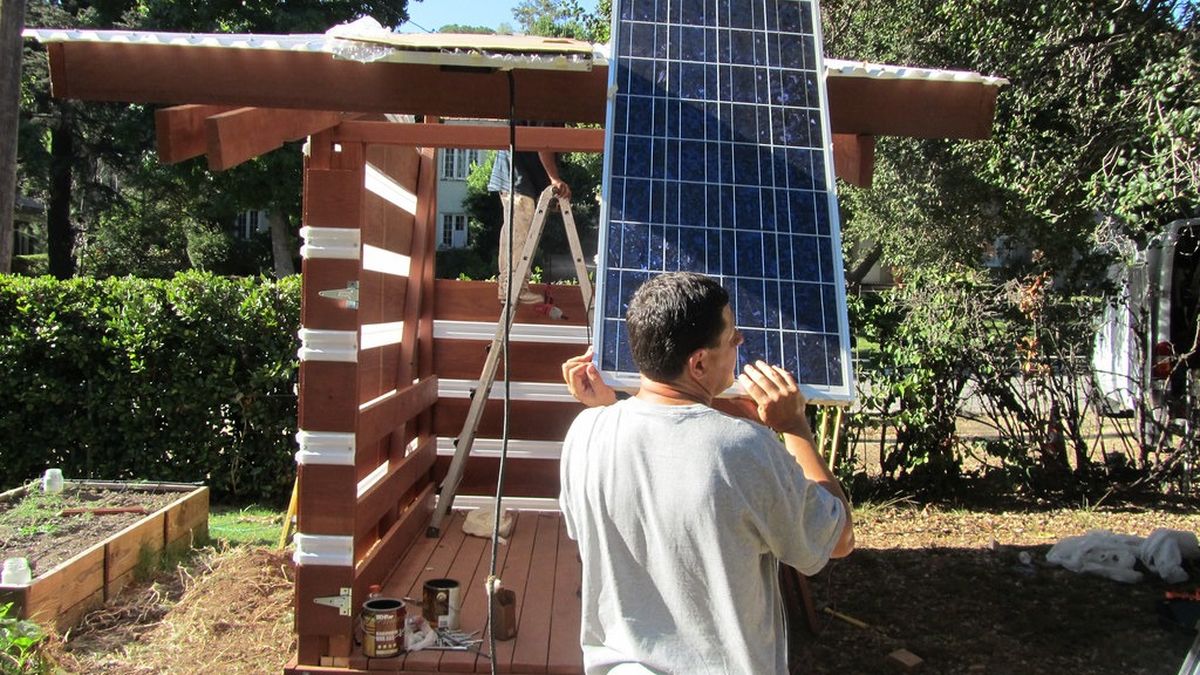
A shed or workshop is the perfect first solar project: modest loads, a short cable run and no need to involve the grid. Whether you want lights and a radio in a garden shed or regular power tools in a workshop, the process is the same: list the loads, choose the battery, size the panel and wire it safely.
Key takeaways
- Lights, chargers and a radio: 100-200W of solar and a 50-100Ah LiFePO4 battery.
- Regular power tool use: 400W+ of solar, 2kWh+ storage and a 2,000W+ inverter.
- A ready-made power station with a panel is the simplest option.
- Protect batteries from freezing in unheated sheds.
Typical shed loads
| Load | Watts | Use per day | Wh/day |
|---|---|---|---|
| LED lights (3) | 30W | 3 hours | 90 |
| Radio / speaker | 15W | 4 hours | 60 |
| Tool battery charger | 150W | 1.5 hours | 225 |
| Phone and laptop | 60W | 2 hours | 120 |
| Small fan | 30W | 3 hours | 90 |
| Total | 585 |
Saws, compressors and grinders change the picture because of their high running and startup watts. See power tools on a solar generator.
Option 1: power station + panel
A 1kWh power station with a 200W folding or fixed panel covers the light-use table above, with nothing to wire. Bring the station indoors in freezing weather. Connecting the panel is covered in the panels to power station diagram.
Option 2: a fixed 12V system
A permanent system is cheaper per watt-hour and runs lights automatically. The shed solar wiring diagram shows a 200W panel, 20A MPPT controller, 100Ah LiFePO4 battery, LED lights on the controller's load output and a small inverter.
- Mount the panel facing the equator at a tilt near your latitude, on the roof or a frame.
- Install the controller and battery inside, near each other.
- Fuse the controller-to-battery and battery-to-inverter cables near the battery.
- Run lights on the load output so the controller disconnects them before the battery is flat.
Controller choice: see how to choose a charge controller. Fusing: see fuse and breaker sizing.
Option 3: a workshop system
For a workshop running a table saw or compressor, plan a 24V or 48V system with 2-5kWh of battery, 800W-2kW of panels and a 3,000W+ inverter with good surge capacity. The off-grid sizing guide walks through it.
Cold, heat and security
- LiFePO4 must not charge below freezing. Use a battery with low-temperature charge protection or self-heating. See LiFePO4 in cold weather.
- Ventilate in summer; sheds can exceed battery temperature limits.
- Lock up portable panels and power stations.
New to solar? Start with solar power for beginners.
Frequently asked questions
How much solar do I need to power a shed?
For lights and charging, 100-200W of panels and a 50-100Ah lithium battery. For power tools, 400W+ and a much larger battery and inverter.
Can I run power tools in my shed on solar?
Yes, with a 2,000W+ pure sine inverter, at least 2kWh of battery and enough solar to recharge it.
Do I need a permit for shed solar?
Small standalone systems often do not, but rules vary. Permanent electrical work may need a permit, so check locally.
Size your shed system
Add your loads to get panel and battery sizes.
Related guides and diagrams
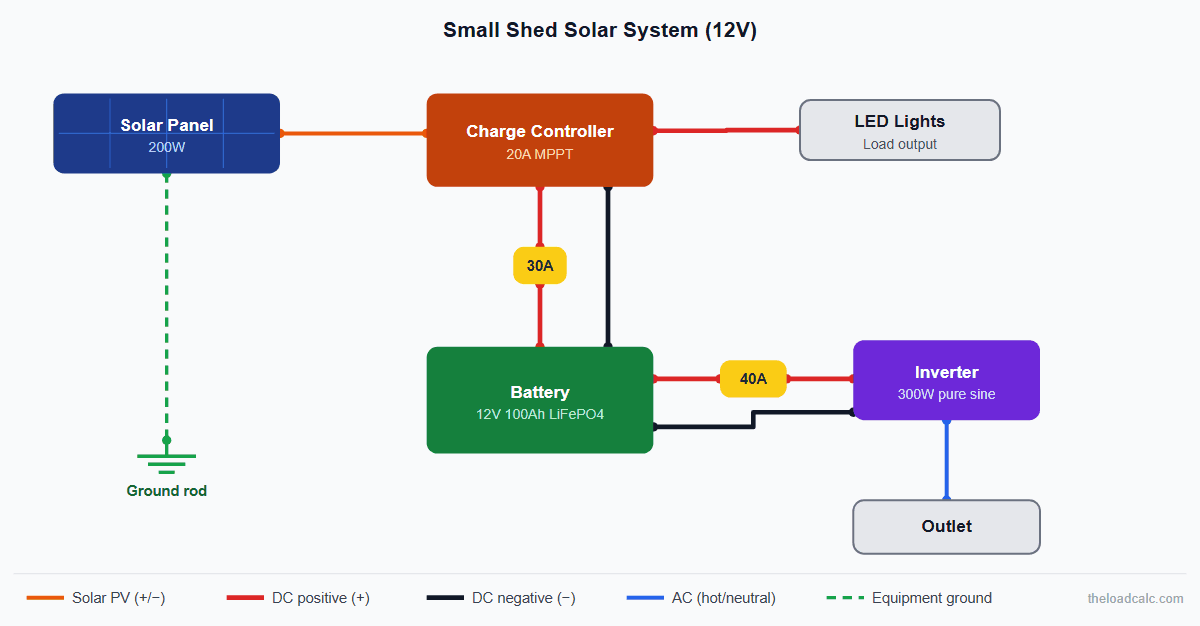
Shed Solar System Wiring Diagram (12V)
Panel, controller, battery, lights and a small inverter: everything a shed or small workshop needs, wired and fused.
Read more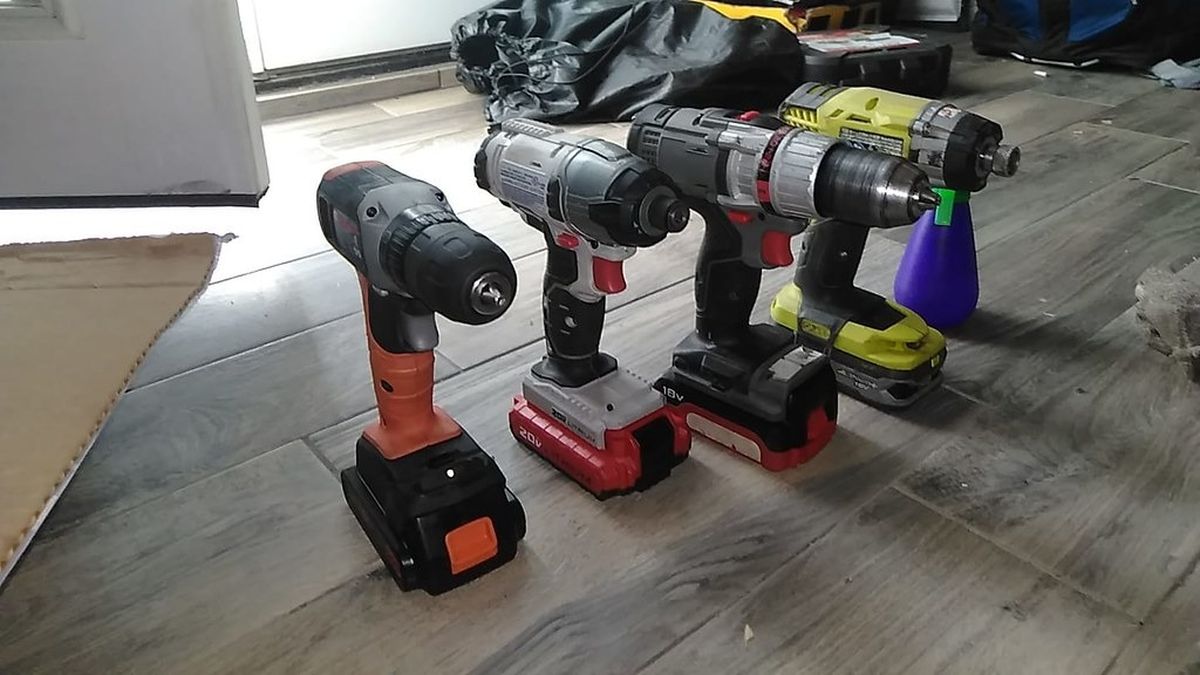
Running Power Tools on a Solar Generator: Saws, Drills and Compressors
A quiet, fume-free power station is great on a jobsite or remote project, if it can handle the startup kick of a saw. Here is what works and what does not.
Read more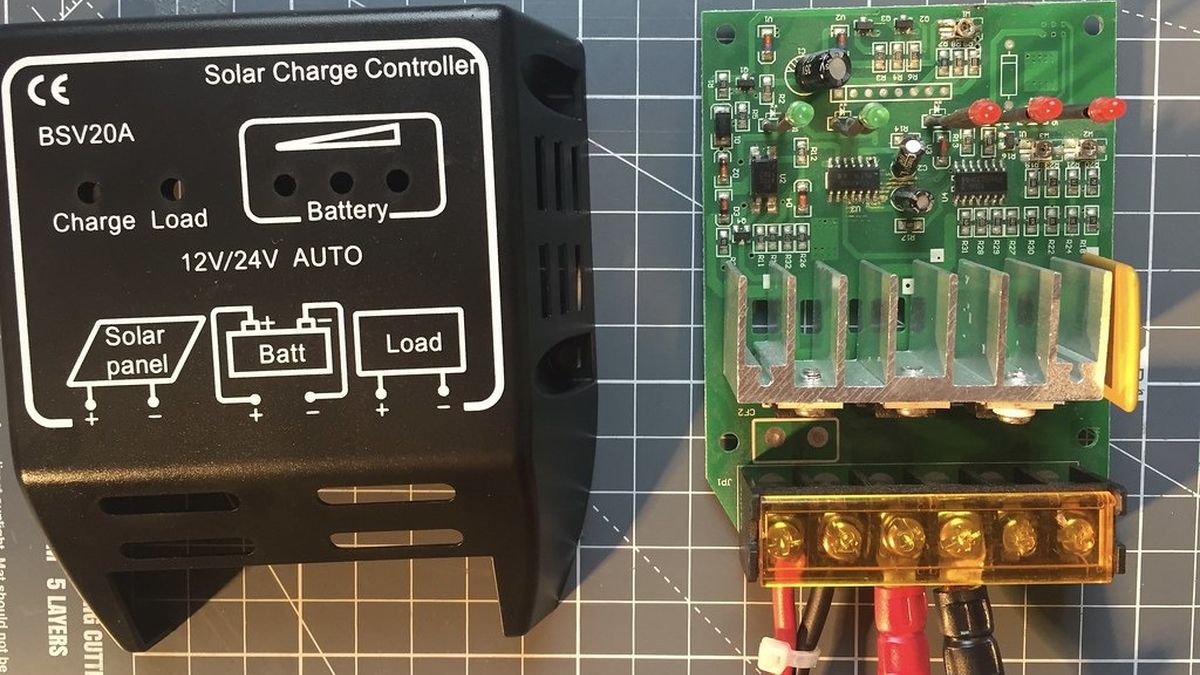
How to Choose a Solar Charge Controller
Current rating, maximum PV voltage, battery profiles and the cold-morning voltage check that protects your controller.
Read more
Solar Power for Beginners: How an Off-Grid System Works
Panels, controllers, batteries and inverters explained in plain English, with the five numbers you need before you buy anything.
Read more