
How to Choose an Inverter for Solar and Battery Systems
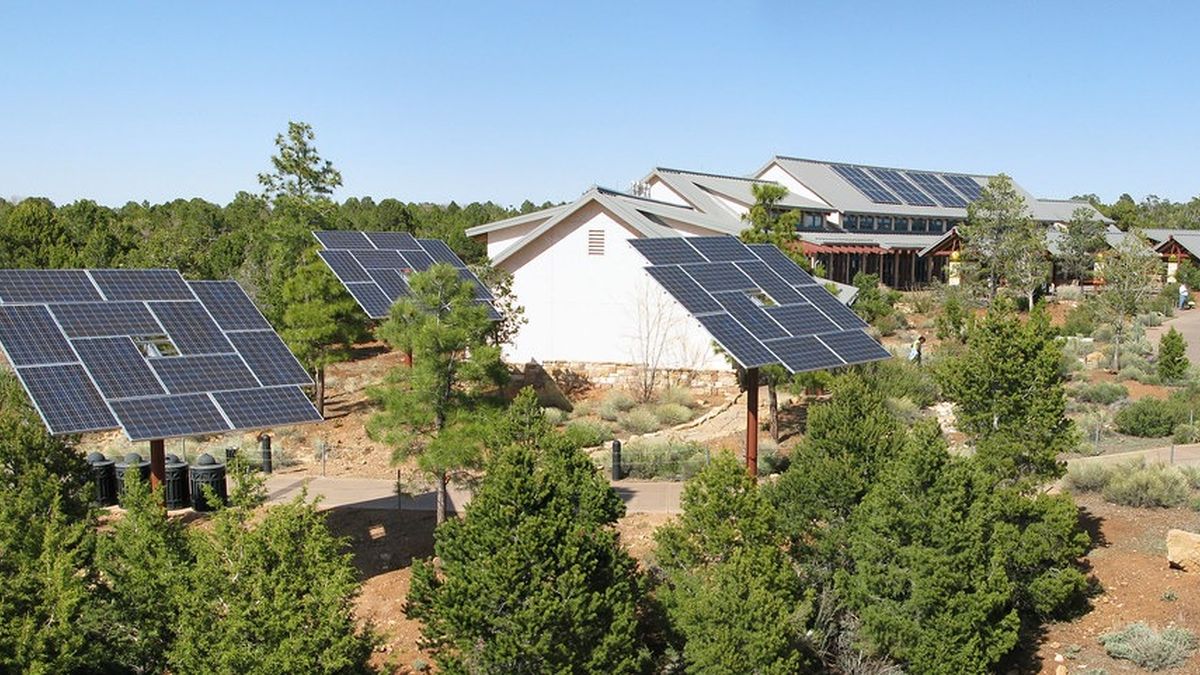
The inverter is the bridge between your battery and your appliances, and the component most often chosen wrong. Too small and it trips every time the fridge starts; too large and it wastes energy all day. Here is how to choose the type, size and features that fit your system.
Key takeaways
- Choose pure sine wave. Modified sine causes problems with motors and electronics.
- Continuous rating covers your running load; surge rating covers motor startup.
- An inverter-charger adds grid or generator charging and an automatic transfer switch.
- Idle draw can use 0.5-1kWh a day. It matters in off-grid systems.
Inverter types
| Type | What it does | Best for |
|---|---|---|
| Standalone inverter | Battery DC to AC only | Vans, sheds, simple systems |
| Inverter-charger | Inverts, charges from AC input, auto-transfers | RVs, off-grid homes with generator |
| Hybrid inverter | Inverter-charger + solar MPPT + grid interaction | Grid-tied homes with batteries |
| All-in-one off-grid | Inverter-charger + MPPT in one box | Cabins and off-grid homes |
| Grid-tie inverter | Solar to grid only, no battery | Grid-tie systems |
Pure sine vs modified sine
Pure sine wave inverters produce power equivalent to the grid. Modified sine inverters are cheaper but make motors run hot and noisy, can damage some chargers and medical devices, and cause buzzing in audio equipment. For anything beyond a work light, choose pure sine. Compare with the pure sine vs modified sine calculator.
Sizing: continuous and surge
- Add the running watts of everything that may run at the same time.
- Replace the largest motor's running watts with its startup watts. See surge vs running watts.
- Choose a surge rating above that peak, and a continuous rating about 25% above the running total.
Oversizing has costs: bigger inverters draw more idle power and need heavier battery cables. The inverter oversizing calculator shows the trade-off, and the inverter sizing calculator does the arithmetic.
Specs worth comparing
- Battery voltage: must match your bank (12V, 24V or 48V). See 12V vs 24V vs 48V.
- Idle (no-load) draw: 10-50W is common; search or eco modes cut it when nothing is running.
- Efficiency: 90-95% at typical loads. Check with the inverter efficiency loss calculator.
- Output voltage: 120V only, or 120/240V split-phase for well pumps and dryers. See split-phase stacked inverters.
- Charger current and AC input limit for inverter-chargers.
- Transfer time if you need UPS-like behavior. See pass-through charging and UPS mode.
- Low-frequency vs high-frequency: transformer-based low-frequency units handle long motor surges better; high-frequency units are lighter and cheaper.
Installation essentials
Keep battery cables short and heavy, fuse them at the battery, and give the inverter ventilation. Match the inverter to your battery's discharge limits with the inverter-battery matching calculator. For home backup, a critical loads subpanel keeps the inverter's load manageable, and the inverter connection diagram shows the DC side.
Frequently asked questions
What size inverter do I need?
One whose continuous rating exceeds your running load by about 25% and whose surge rating exceeds your highest startup moment.
Is a bigger inverter always better?
No. Larger inverters have higher idle draw, cost more and need thicker cables. Size for your real peak load.
Do I need an inverter-charger?
If you will ever charge from shore power, the grid or a generator, yes. It also provides automatic transfer between sources.
Size your inverter
Find the continuous and surge rating you need.
Related guides and diagrams
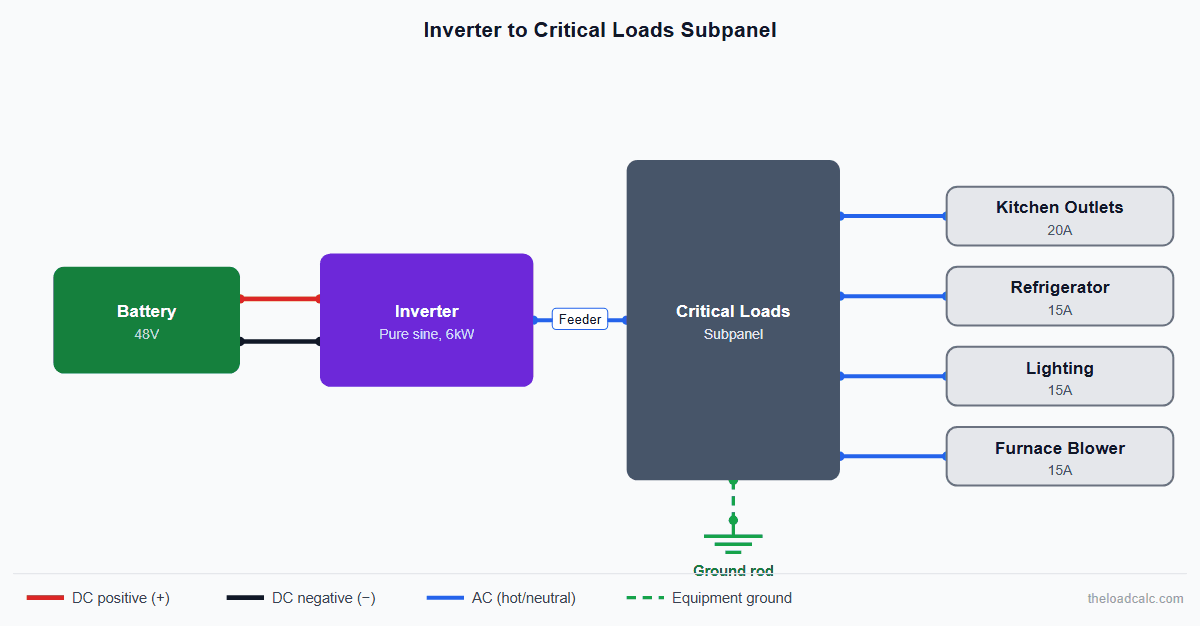
Inverter to Critical Loads Subpanel Wiring Diagram
Move your essential circuits to a subpanel that the inverter keeps powered when the grid goes down.
Read more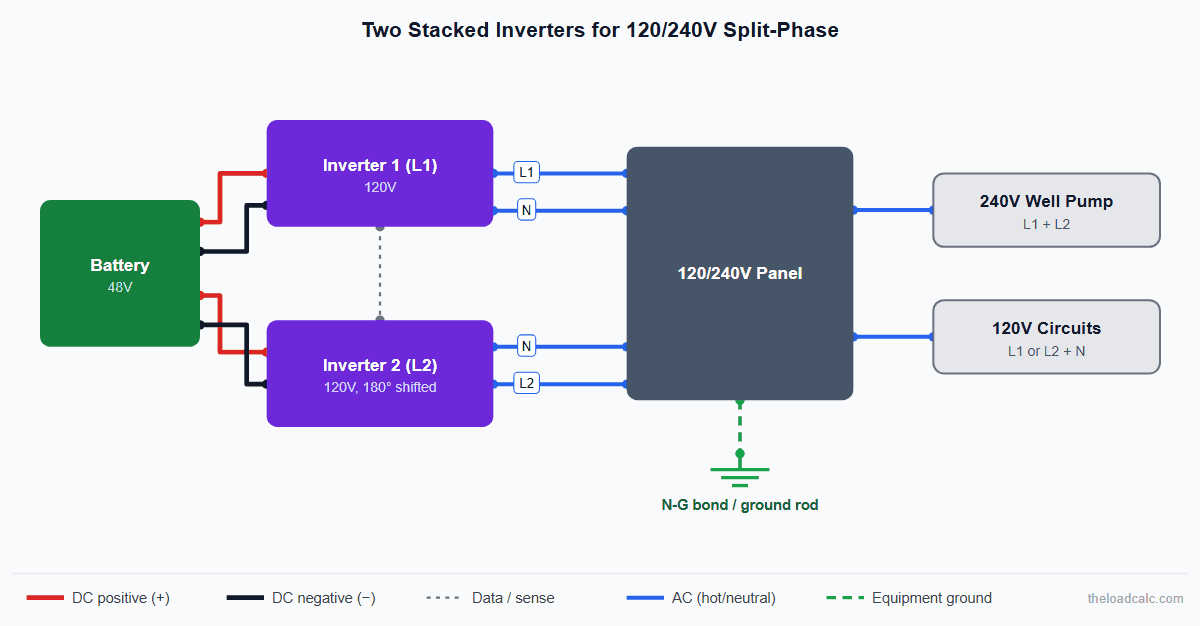
Split-Phase 240V Wiring with Two Stacked Inverters
Two 120V inverters, synchronized 180° apart, give you 240V for well pumps and dryers. Here is how it is wired.
Read more
Surge Watts vs Running Watts: Why Your Inverter Trips
Your fridge uses 150 watts, so why does it trip a 600W inverter? Startup surge explained, with a table of real appliances and how to size around it.
Read more
How to Choose Solar Batteries: LiFePO4, AGM and Server-Rack Packs
Chemistry, usable capacity, BMS features and lifetime cost per kWh: a practical framework for choosing the battery your system depends on.
Read more